The PULSE Lab will attend the 2026 IEEE International Ultrasonics Symposium (IUS) in Raleigh, NC with 8 accepted abstracts and 1 invited talk. Congratulations to the entire team!

Symposium website: https://ieee-ius.org/2026

The PULSE Lab will attend the 2026 IEEE International Ultrasonics Symposium (IUS) in Raleigh, NC with 8 accepted abstracts and 1 invited talk. Congratulations to the entire team!
Symposium website: https://ieee-ius.org/2026
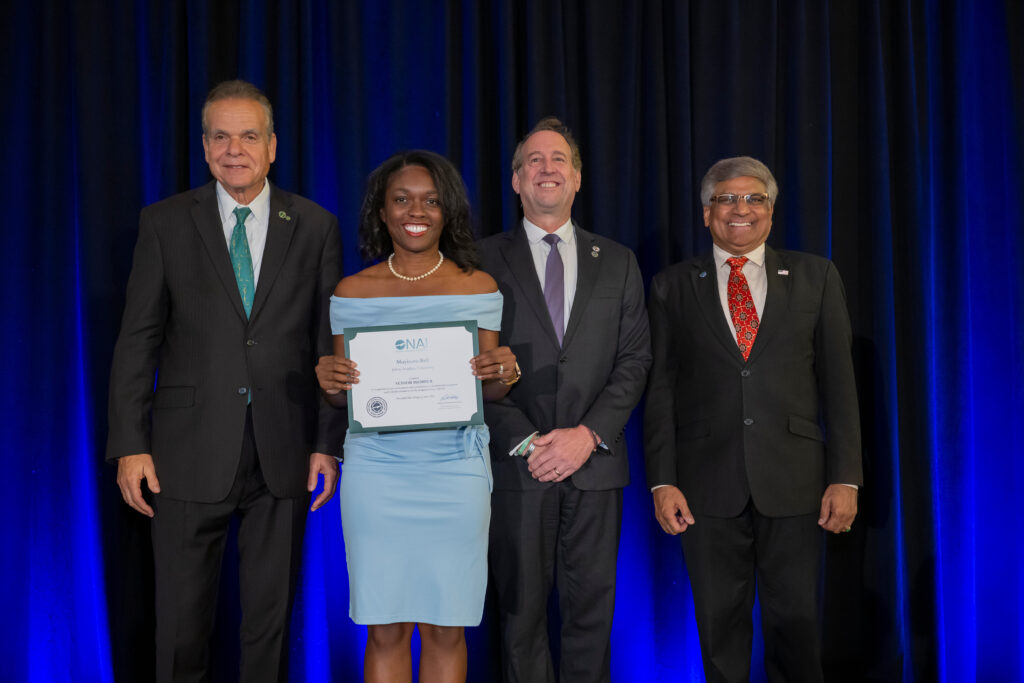
Congratulations to Prof. Bell! She was inducted as a Senior Member of the National Academy of Inventors (NAI). NAI Senior Members consist of faculty with success in patents, licensing, and/or commercialization, producing technologies that impact society’s welfare. Senior members foster a spirit of innovation within their communities and institutions while educating and mentoring the next generation of inventors.
Prof. Bell was inducted at the15th Annual NAI Conference taking place in Hollywood, California, June 1-4, 2026. The theme of this conference was From Discovery to Destiny. As part of her induction, Prof. Bell received a senior member certificate, pin, and challenge coin from NAI founder Paul Sanberg, USPTO Director John A. Squires, and former NSF Director (and creator of the NAI senior member program) Sethuraman Panchanathan.
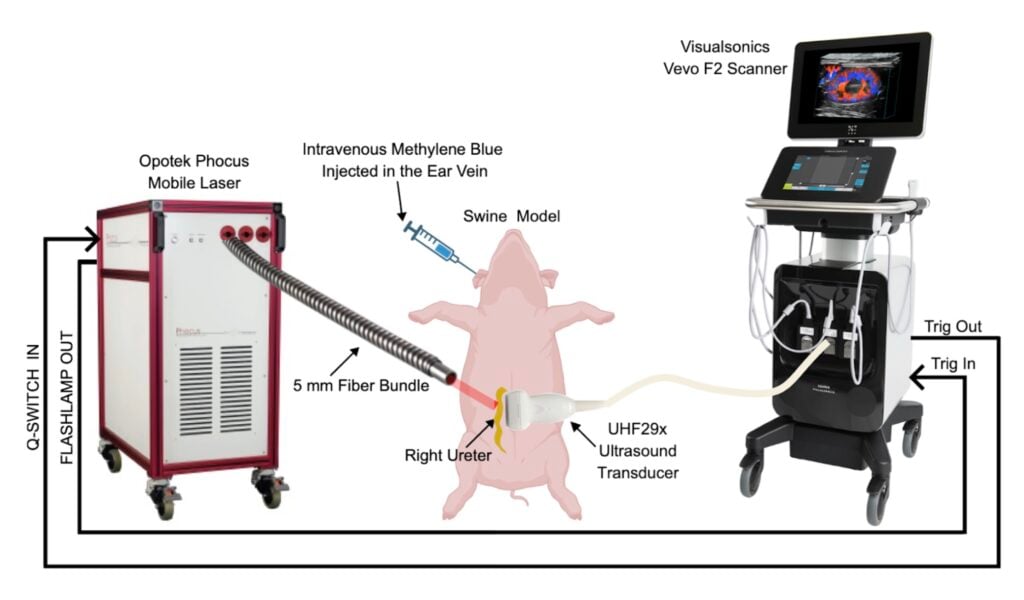
Congratulations to Junior Arroyo, Junhao Zhang, Jiaxin Zhang, Nethra Venkatayogi, Manik Kakkar! These PULSE Lab members successfully collaborated to co-publish a paper entitled In vivo photoacoustic imaging of swine ureters injected with methylene blue in the Journal of Biomedical Optics.
This work demonstrates the first known in vivo photoacoustic imaging of a ureter containing an FDA-approved contrast agent (i.e., methylene blue). To achieve this, an Opotek Phocus Mobile laser was integrated with a Vevo F2 ultrasound system, co-registered ultrasound and photoacoustic images were acquired. Maximum image quality was achieved 20-30 minutes after methylene blue injection with consistent ureter visibility maintained over a time duration consistent with surgical procedures. This indicates prolonged contrast agent retention and sustained imaging contrast. There was also no renal function impairment. Our findings support the clinical potential of photoacoustic-guided surgery to improve intraoperative ureter identification and reduce the risk of accidental ureteral injury.
Citation: Junior Arroyo, Junhao Zhang, Jiaxin Zhang, Nethra Venkatayogi, Manik Kakkar, Amanda Maxwell, Kathleen Gabrielson, and Muyinatu A. Lediju Bell, “In vivo photoacoustic imaging of swine ureters injected with methylene blue,” Journal of Biomedical Optics, 31(3):036004, 2026 [pdf]
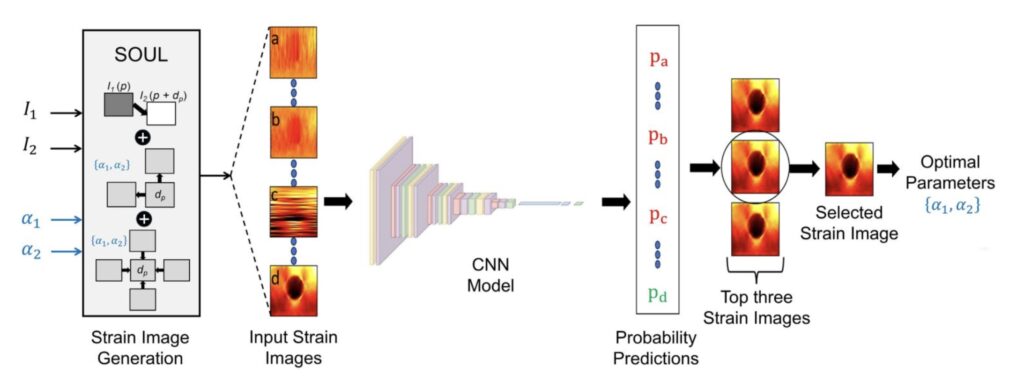
Congratulations to Md Ashikuzzaman and MD Jahin Alam! Their co-first-authored paper entitled AutoSOUL: Deep Convolutional Neural Network for Autonomous Selection of Ultrasound Speckle Tracking Parameters was accepted for publication in IEEE Transactions on Ultrasonics.
This paper is the first to introduce a deep learning–based framework, AutoSOUL, that automates the selection of speckle tracking parameters in second-order ultrasound elastography (SOUL). By training a custom convolutional neural network to classify strain images as acceptable or unacceptable and to recommend corresponding optimal parameter sets, AutoSOUL eliminates the need for labor-intensive and user-dependent manual tuning. The proposed method was validated on simulated, phantom, and in vivo breast datasets, where AutoSOUL demonstrated strong classification performance, produced strain images comparable to or better than manually tuned SOUL results, and reduced parameter-selection time by a factor of 84.4×. This work lays a foundation for streamlining elastography-guided disease diagnosis, treatment monitoring, and clinical intervention.
Citation: Md Ashikuzzaman, MD Jahin Alam, Ahmed El-Desoky, Eniola Oluyemi, Kelly Myers, Emily Ambinder, and Muyinatu A. Lediju Bell, “AutoSOUL: Deep Convolutional Neural Network for Autonomous Selection of Ultrasound Speckle Tracking Parameters,” IEEE Transactions on Ultrasonics (accepted January 1, 2026) [pdf]
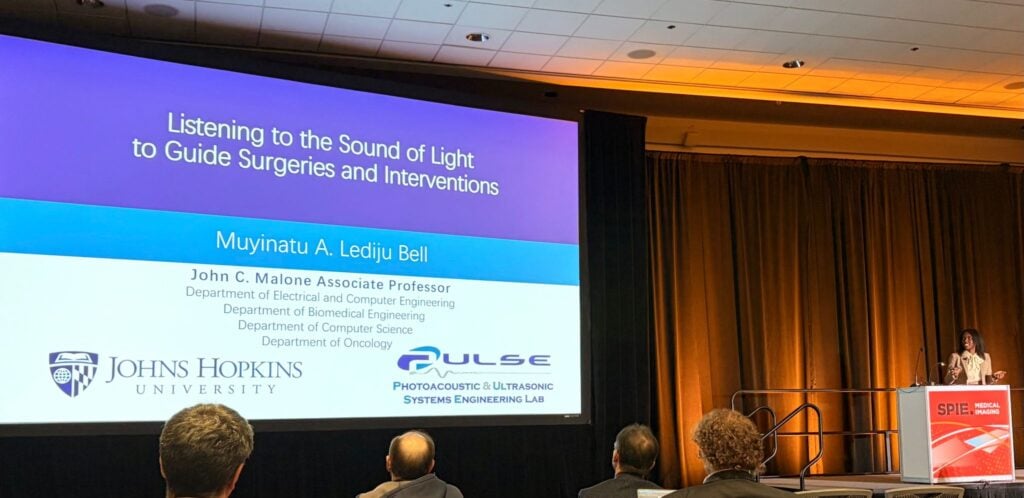
Prof. Bell was invited to deliver the keynote presentation to the SPIE Medical Imaging Image-Guided Procedures, Robotic Interventions, and Modeling conference in Vancouver, BC, Canada on February, 19, 2026. The presentation was recorded and a corresponding proceedings paper was created as a handy guide for all the PULSE Lab work referenced during the presentation.

Three PULSE Lab abstracts were accepted to SPIE Photonics West, which took place place January 17-22, 2026. The following work was be presented:
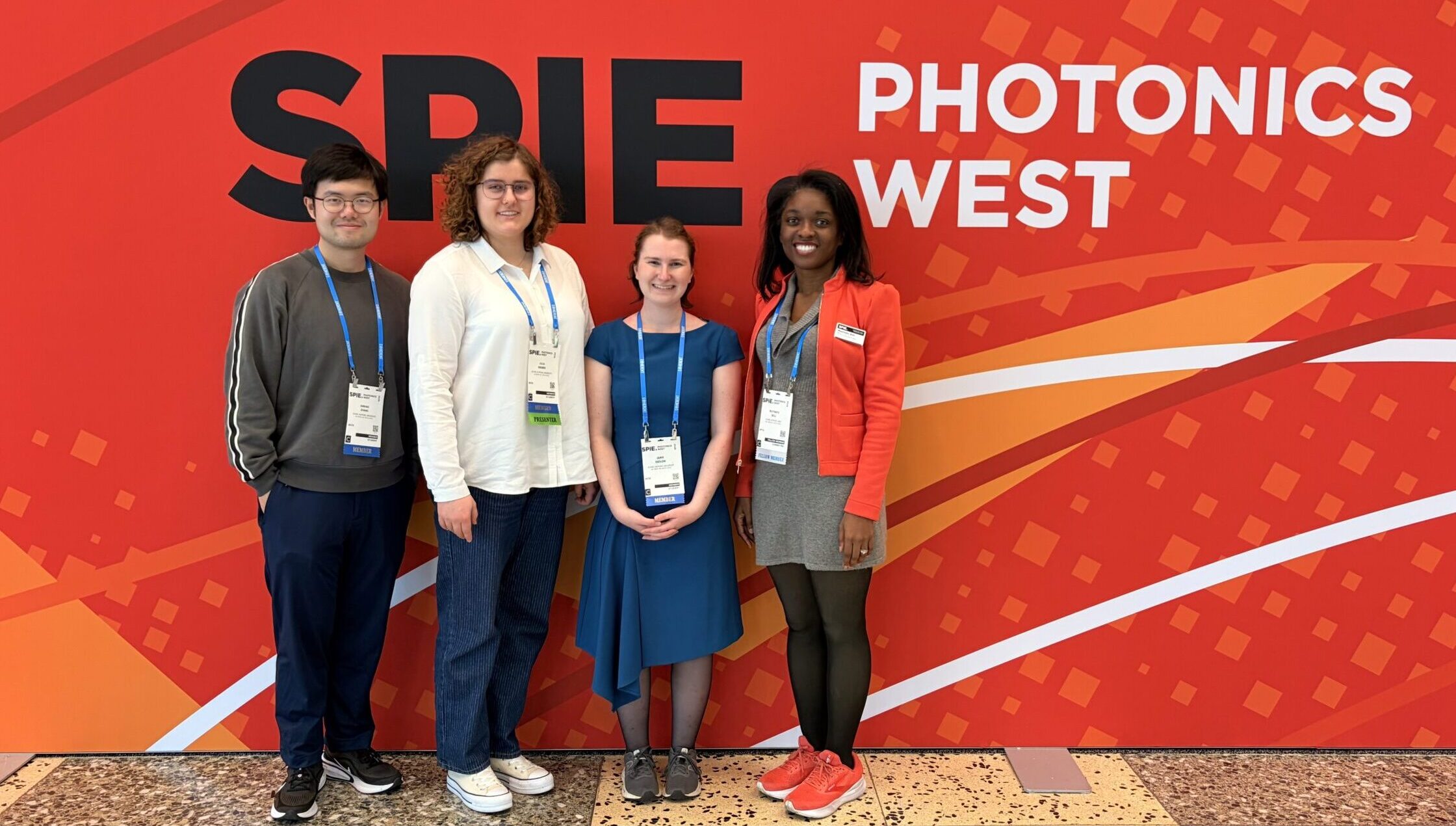
Congratulations to Jamie, Julia, and Junhao!
In addition to the accepted papers, Prof. Bell was invited to speak on recent work from the PULSE Lab:
And, Prof. Bell co-hosted the three-minute poster competition as EIC of JBO.
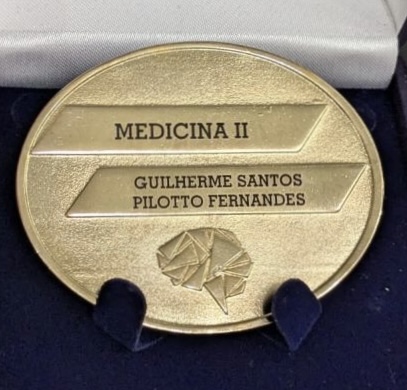
Congratulations to Guilherme Fernandes, visiting PULSE Lab PhD student, whose thesis (based on work completed in the PULSE Lab) won the 2025 CAPES Thesis Award in the field of Medicine II in Brazil. The CAPES Thesis Award recognizes the best doctoral theses defended in Brazilian postgraduate programs based on the following criteria: originality, relevance to scientific, technological, cultural, social, and innovation development, and the value added by the educational system to the candidate.
Guilherme’s thesis “Impact of skin tone on photoacoustic images with linear transducer: in vivo and in silico studies” used short-lag spatial coherence (SLSC) beamforming of photoacoustic images (the theory for which was developed by the PULSE Lab) to demonstrate acoustic clutter reduction in images of radial arteries of multiple volunteers with a wide range of skin tones. This work has implications for the detection of cancer and other diseases in multiple fields of medicine.

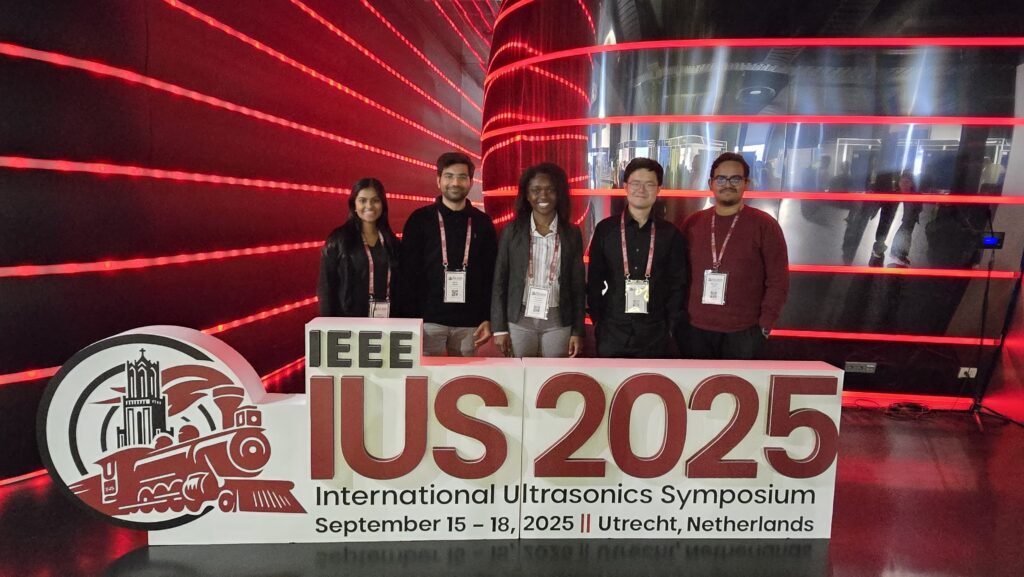
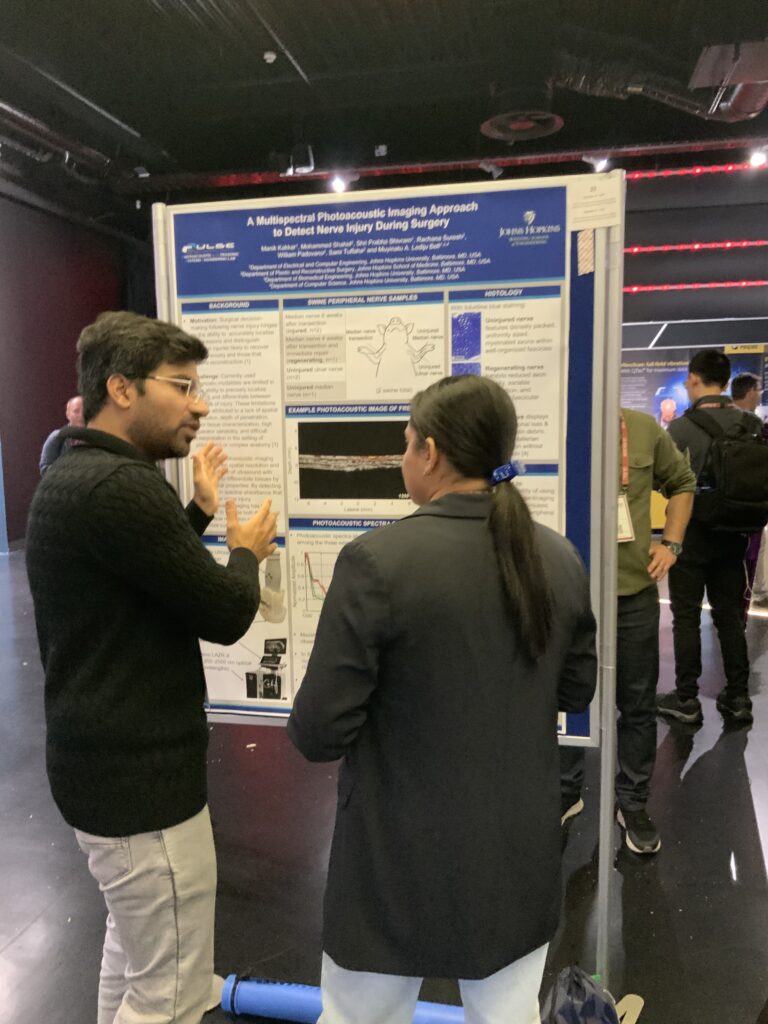
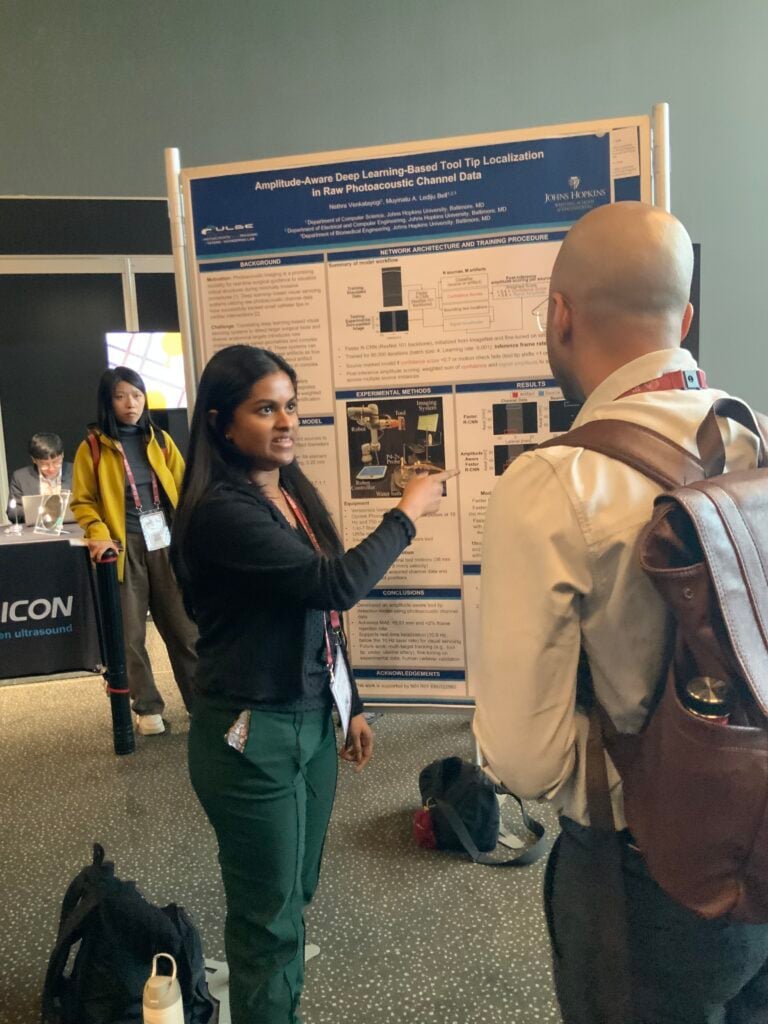
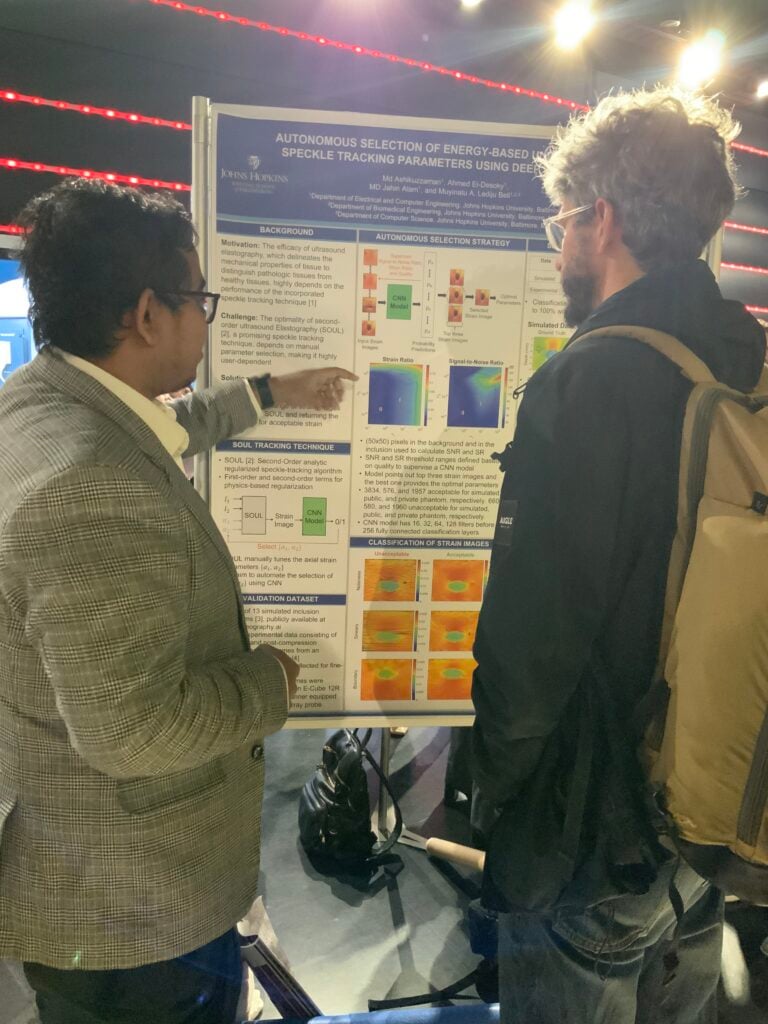
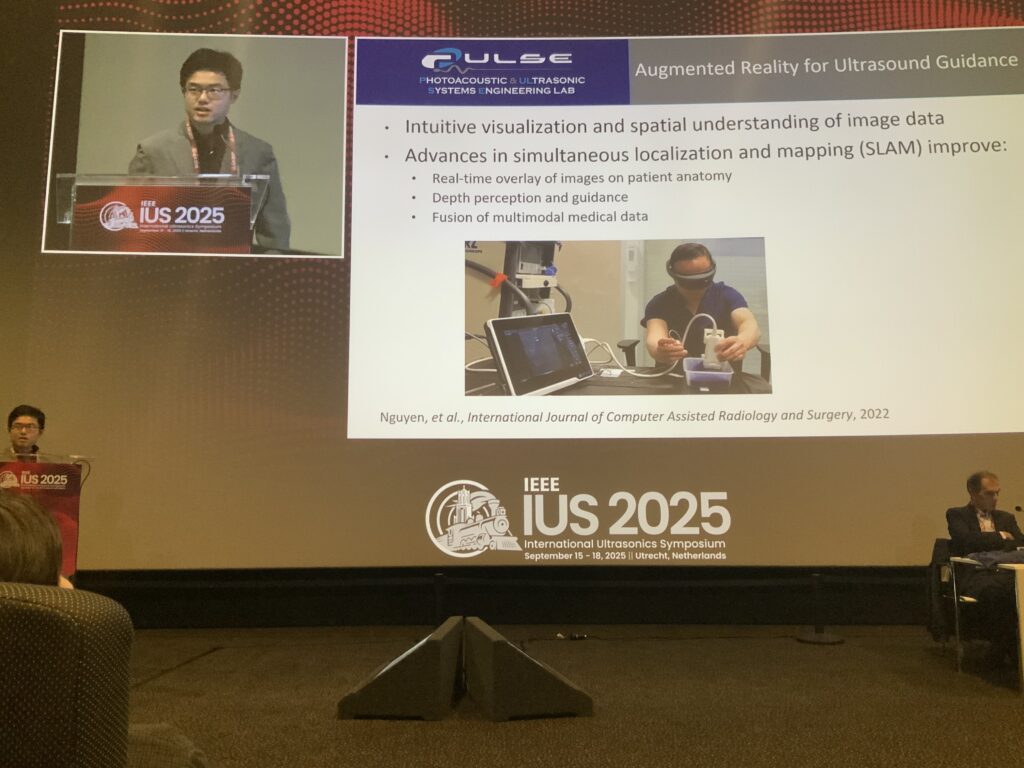
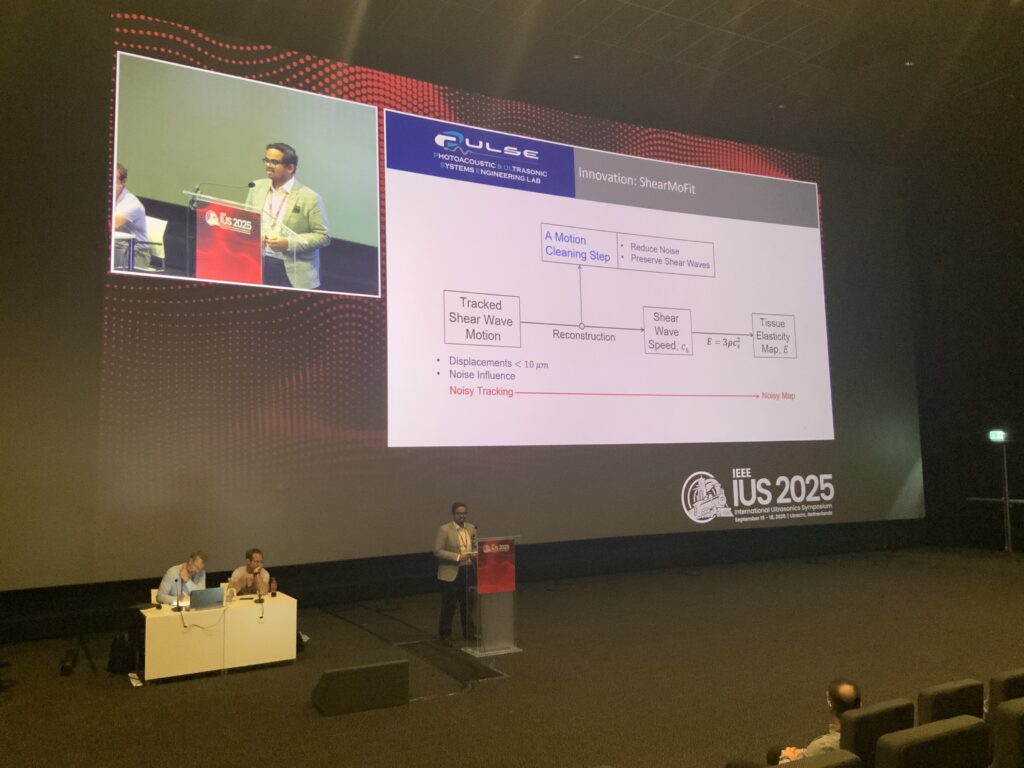
Five PULSE Lab abstracts were accepted for presentation during the 2025 IEEE International Ultrasonics Symposium (IUS), held September 15-18, 2025 in Utrecht, Netherlands.
*asterisks indicate the presenters of each abstract
In addition to being the senior author and advisor of the above publications, Prof. Bell chaired two sessions:
Congrats to Jahin, Nethra, Junhao, Manik, and Prof. Bell!
Symposium website: https://2025.ieee-ius.org
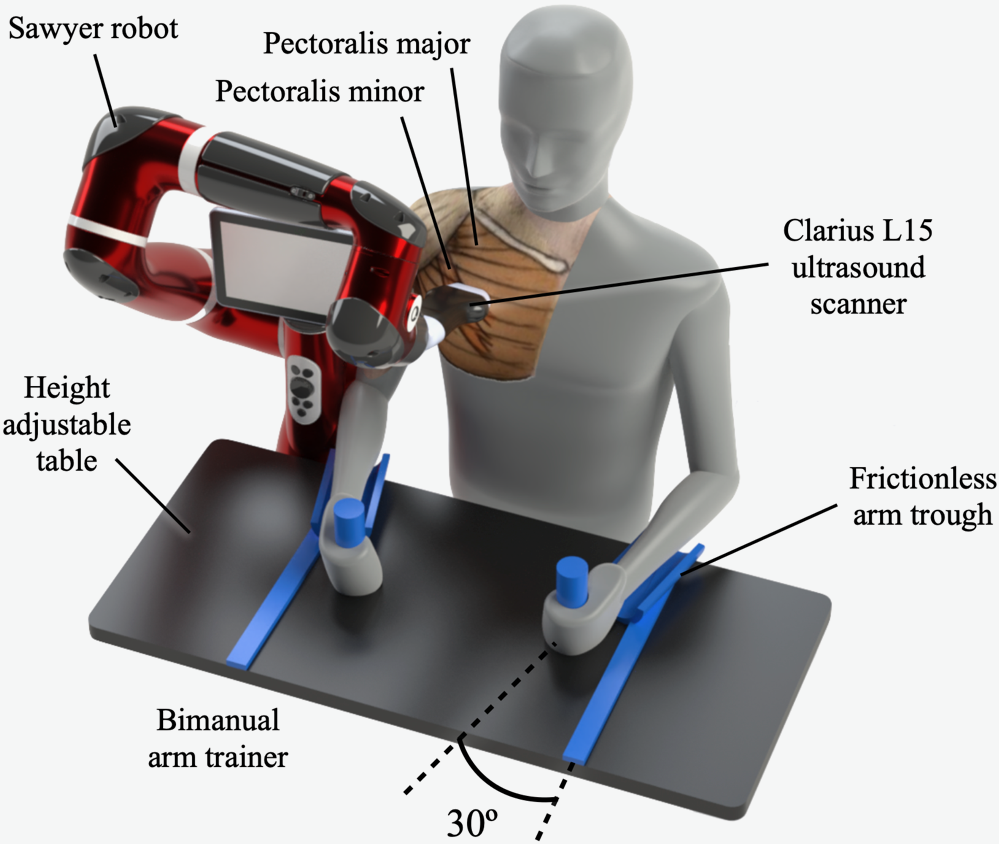
Congratulations to Md Ashikuzzaman! His first-author paper titled Ultrasound Displacement Tracking Techniques for Post-Stroke Myofascial Shear Strain Quantification was accepted for publication in IEEE Transactions on Biomedical Engineering.
This study is the first to assess and compare four ultrasound displacement tracking algorithms employed to quantify myofascial shear strain in patients with post-stroke shoulder pain. Leveraging simulated and in vivo data, we additionally validated a novel clinical hypothesis that the mobility of myofascial shear strain is reduced in the painful stroke-affected (i.e., paretic) shoulders, relative to each patient’s non-paretic shoulders. One of the tracking algorithms, named L1-SOUL-Search, offered smooth displacement gradients and sharp visualization of fascial layers, advancing the potential of shear strain imaging as a biomarker for myofascial dysfunction. In addition, a deep learning approach named RAFT was demonstrated as an option to address computational bottlenecks, showing promise for real-time clinical deployment. This work lays the foundation necessary to develop reliable image-based biomarkers to guide diagnosis and treatment in musculoskeletal health applications.
Citation: Md Ashikuzzaman, Jonny Huang, Steve Bonwit, Azin Etemadimanesh, Ali Ghasemi, Patrick Debs, Robert Nickl, Jamie Enslein, Laura M. Fayad, Preeti Raghavan, and Muyinatu A. Lediju Bell, “Ultrasound Displacement Tracking Techniques for Post-Stroke Myofascial Shear Strain Quantification”, IEEE Transactions on Biomedical Engineering (accepted June 13, 2025) [pdf]
Congratulations to Prof. Bell! She is the winner of the 2025 Benjamin Franklin NextGen Award from The Franklin Institute.
For two centuries, The Franklin Institute Awards has paid tribute to America’s first citizen scientist, Benjamin Franklin, by honoring great minds in science, engineering, and industry, including Nikola Tesla, Marie and Pierre Curie, Thomas Edison, Max Planck, Albert Einstein, etc. Since 2021, the Benjamin Franklin NextGen Award has been presented annually to an early-career investigator for a transformative discovery, development, innovation, or invention in science or engineering. Dr. Bell is being recognized “for her contributions to the novel design of medical imaging systems involving ultrasound and light that make robotic and non-robotic guided surgery safer and more effective.”
The following video was created for the general public to get to know Prof. Bell as she shares something on her bucket list, advice for aspiring scientists, a fun science fact, and more!
Beginning April 29, the Franklin Institute will present a series of Awards Week events, including the 2025 Franklin Institute Awards Ceremony and Dinner, which will be live streamed on May 1, 2025 at 7pm. Earlier that day, Dr. Bell will present a public lecture.
Convocation Book (contains details about award laureates)
Public Lecture (virtual attendance registration link)
Livestream Link (for the Awards Ceremony)
Six PULSE Lab abstracts were accepted to SPIE Photonics West, which is taking place place January 25- 30, 2025, and the following work will be presented:
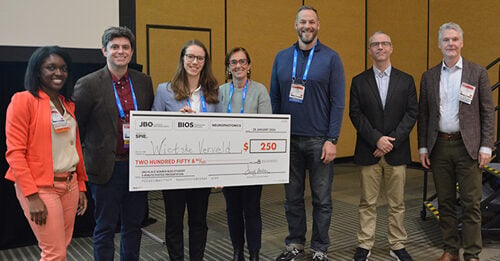
Congratulations to Junior, Gareth, Taylor, Rhea, and Nethra!
In addition to the accepted papers, Rhea Rasquinha will participate in the 3-minute poster competition:
Prof. Bell was invited to speak on recent work from the PULSE Lab:
And, Prof. Bell will deliver a lightning talk on leadership at the celebration of Women in Optics event:
Congratulations to Junior Arroyo! His first-author publication is featured on the cover of Biophotonics Discovery. The figure is from the article Predictive model for laser-induced tissue necrosis with immunohistochemistry validation by J. Junior Arroyo, Arunima Sharma, Jiaxin Zhang, and Muyinatu A. Lediju Bell.
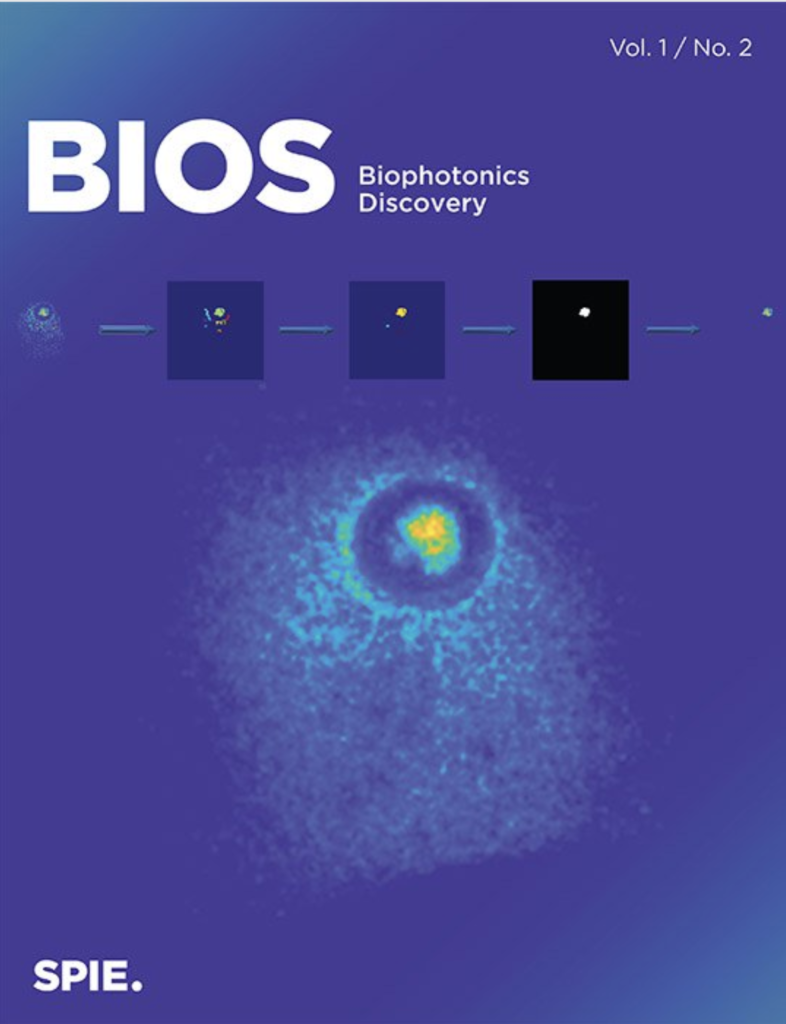
This work is the first to demonstrate a unified theoretical, computational, and experimental approach with quantitative immunohistochemistry (IHC) validation to determine laser safety for biological tissues other than skin or eyes. Although photoacoustic imaging has the potential to provide critical guidance in surgical interventions, its widespread use is challenged by the absence of applicable safety guidelines across diverse target tissues. Maximum permissible exposure (MPE) guidelines currently focus solely on skin and eyes. Results are promising to provide tissue-specific MPE guidelines to maintain healthy liver tissue during laser-based optical and photoacoustic surgeries and interventions. The presented approach and associated outcomes are promising for the introduction of tissue-specific safety guidelines for photoacoustic imaging and other optics-based imaging technologies that are designed to maximize signal-to-noise ratios while being designated as safe for patient use. In addition, the presented simulation framework and corresponding experimental protocols may be applied to other internal organs to achieve similar benefits.
Citation: Arroyo J, Sharma A, Zhang J, Bell MAL, Predictive model for laser-induced tissue necrosis with immunohistochemistry validation, Biophotonics Discovery 1(2):025003, 2024 [pdf]
Prof. Bell was invited to give the annual Lopez Lecture to a prestigious group of individuals who are members of the National Institutes of Health (NIH) National Advisory Council for Biomedical Imaging and Bioengineering. Her lecture took place on September 10, 2024, followed by Q&A with council members and awarding of a crystal memento from NIH National Institute of Biomedical Imaging and Bioengineering (NIBIB) Director Bruce Tromberg.

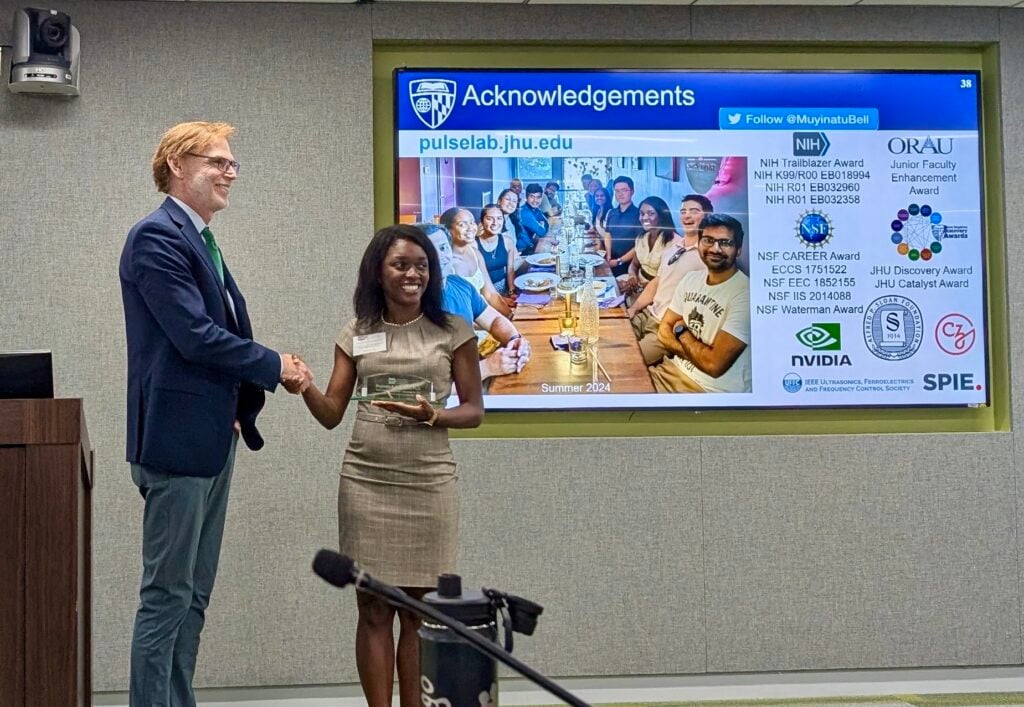
The National Advisory Council for Biomedical Imaging and Bioengineering advises the Department of Health and Human Services, the NIH, and the NIBIB on matters relating to the conduct and support of research, training, health information dissemination and other programs that address biomedical imaging, biomedical engineering and associated technologies and modalities with biomedical applications. Council members provide the second level review for all applications for funding of research and training grants or cooperative agreements by the NIBIB. The Council also advises on policy and program priorities.
This council meets three times per year, typically in January, May, and September. The September 2024 session was live-streamed and recorded, with the introduction to Prof. Bell’s lecture starting at the 2:55:30 timestamp of the NIH videocast: https://videocast.nih.gov/watch=54954.

The following PULSE Lab abstracts were accepted for presentation during the 2024 IEEE Ultrasonics, Ferroelectrics, and Frequency Control Joint Symposium (UFFC-JS) to be held September 22-26, 2024 in Taipei, Taiwain.
In addition, Md Ashikuzzaman will be presenting a poster on his solution to the a-MEM challenge.
Congrats to Jiaxin, Manik, Mahban, Junhao, Junior, Ashik, and Prof. Bell!
Symposium website: https://2024.ieee-uffc-js.org/
(updated September 19, 2024)
Prof. Bell delivered the the NSF Waterman Awardee Distinguished Lecture on Equitable Medical Imaging on August 21, 2024, followed by Q&A with attendees. The session was live-streamed and recorded.
The recorded lecture is also available at the bottom of the webinar event page at this link: https://players.brightcove.net/679256133001/NkgrDczuol_default/index.html?videoId=6360892996112. This version has no lag in start time and includes videos of the co-hosts and presenter as they speak, but the upper right corner of slides are blocked by each speakers’ videos. The copy above has no speaker videos and as a result, none of the slides are blocked.
Prof. Bell delivered an outstanding invited talk to the President’s Council of Advisors on Science and Technology (PCAST) on July 11, 2024. She was the third speaker on a panel of three impressive back-to-back talks, presenting in the “Research and Researchers on the Horizon” session, followed by Q&A with PCAST. The session was live-streamed and recorded.
Agenda: https://www.whitehouse.gov/wp-content/uploads/2024/06/PUBLIC-AGENDA-JULY-2024-MEETING_as-of-28June-1.pdf
Speaker bios: https://www.whitehouse.gov/wp-content/uploads/2024/07/Speaker-Bios-Public-Sessions-July-11-2024.pdf

The PULSE Lab received a $115,000 TEDCO Technology Assessment Award from the Maryland Innovation Initiative to commercialize technology related to peripheral nerve injury. The project title is “A Non-invasive Imaging Device to Modernize Treatment of Peripheral Nerve Injury.”
Peripheral neuropathy occurs when the nerves that are located outside of the brain and spinal cord (peripheral nerves) are damaged. Causes of peripheral nerve injuries include injury from
accidents (sports), injury from medical conditions (autoimmune disease, diabetes, Guillain-Barre syndrome and carpal tunnel syndrome), and injury during surgical interventions. Severe nerve
injuries affect the sensory and motor functions, and lead to devastating impact on patient’s quality of life. The main treatment method of severe nerve damage is through nerve reconstruction
surgery. 250K patients are affected by peripheral nerve injury each year in the US and 150K are managed surgically. The choice of technique for surgical nerve repair is largely determined by nerve injury location. During surgery however, it is very difficult to establish the exact location and extent of a nerve injury. Viopsy will be the first commercially available device to quantify peripheral nerve viability intraoperatively and monitor nerve regeneration prior to target organ reinnervation. In doing so, this device is anticipated to transform the practice of peripheral nerve surgery. This work will be completed as a collaboration among Prof. Bell (PI), Sami Tuffaha, MD (co-investigator), and Shri Prabha Shivram (research specialist).
The PULSE Lab’s pioneering publications in this area include:
The foundational research to support this work was initially funded by a Johns Hopkins Discovery Award.
 Congratulations to Md Ashikuzzaman! His paper, Deep learning-based displacement tracking for post-stroke myofascial shear strain quantification, was accepted for presentation at the IEEE International Symposium on Biomedical Imaging (ISBI), Athens, Greece, May 27-30, 2024. This peer-reviewed paper was also accepted for inclusion in the conference proceedings.
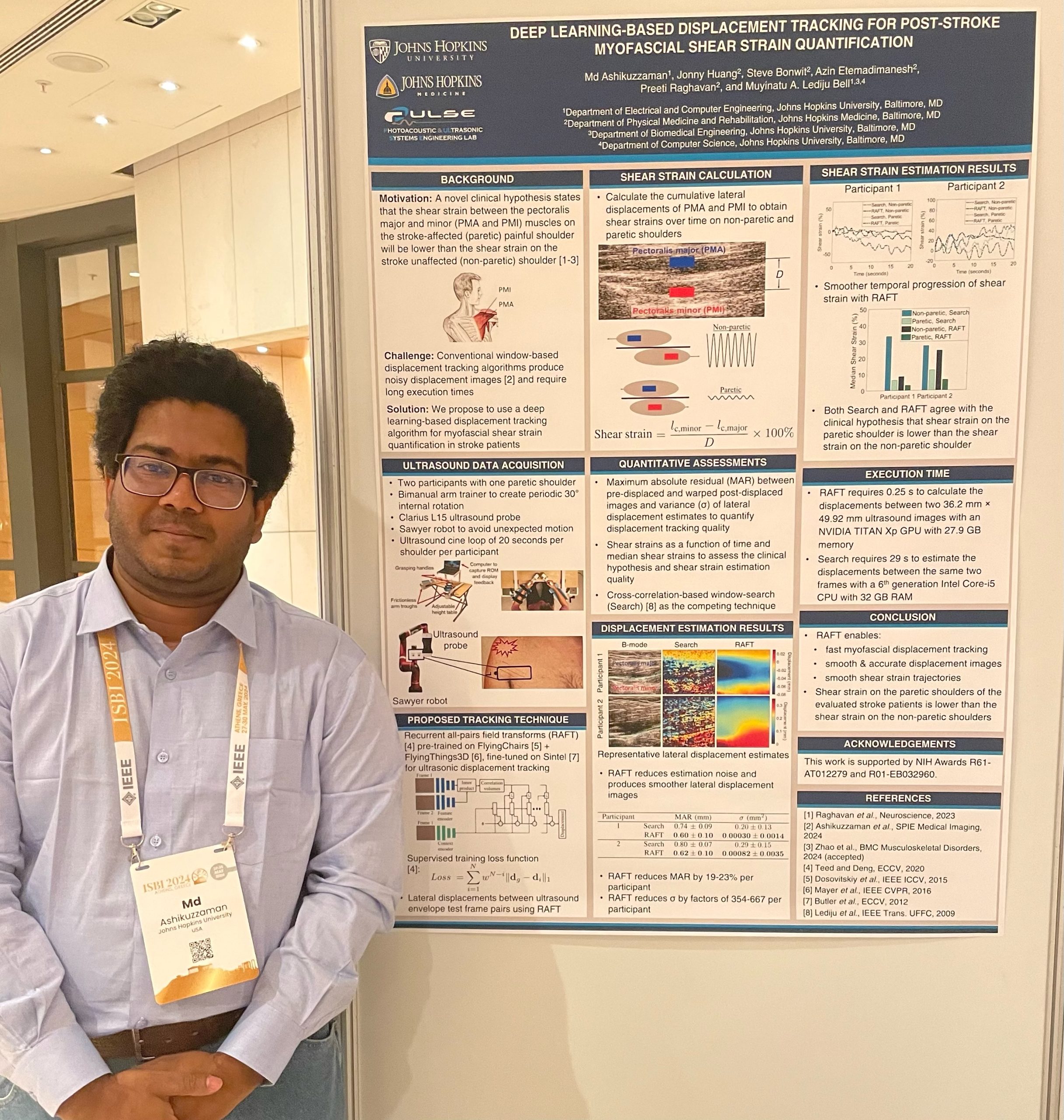 Congrats again on this significant achievement and milestone, Ashik!
Citation: M Ashikuzzaman, J Huang, S Bonwit, A Etemadimanesh, P Raghavan, MAL Bell, Deep learning-based displacement tracking for post-stroke myofascial shear strain quantification, IEEE International Symposium on Biomedical Imaging (ISBI), Athens, Greece, May 27-30, 2024
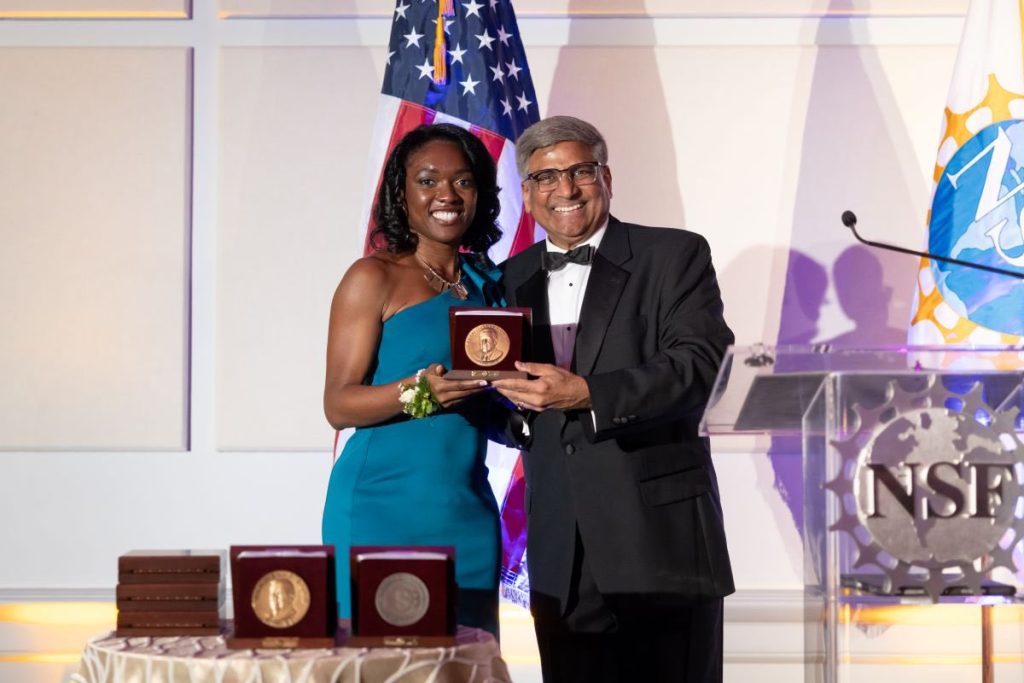
Prof. Bell was selected to receive the 2024 NSF Alan T. Waterman Award, which is the highest honor in the United States offered to early-career scientists and engineers. The award comes with a medal and $1,000,000 to advance each recipient’s research. Prof. Bell is the first ever recipient from Johns Hopkins University in the award’s 48-year history, which is a significant achievement for America’s first research university. Prof. Bell is also one of few women and Black scientists to receive the award. There is a lot of rich history behind this win.
When receiving this award, Prof. Bell was recognized “for pioneering innovations in ultrasound and photoacoustic imaging, particularly coherence-based beamforming, photoacoustic-guided surgery, and deep learning. These innovations cross interdisciplinary boundaries to improve medical image quality in patients, reduce patient deaths during surgery, inspire new surgical designs, and provide more equitable healthcare.” Congratulations to Prof. Bell!
Waterman Awardee Distinguished Lecture (delivered August 21, 2024)
The recorded lecture is also available at the bottom of the lecture event page at this link: https://players.brightcove.net/679256133001/NkgrDczuol_default/index.html?videoId=6360892996112
Congratulations to former PULSE Lab postdoc Lingyi Zhao! Her first-author journal paper entitled Detection of COVID-19 features in lung ultrasound images using deep neural networks was published in Communications Medicine, which is a Nature Publishing group journal). This paper is the first to demonstrate that simulations can be used to train deep neural networks to detect COVID-19 features in lung ultrasound images of patients. Therefore, DNNs trained with simulated and in vivo data are promising alternatives to training with only real or only simulated data when segmenting in vivo COVID-19 lung ultrasound features.

We offer public access (https://gitlab.com/pulselab/covid19) to the datasets and code described in the paper “Detection of COVID-19 features in lung ultrasound images using deep neural networks.” Communications Medicine, 2024. https://www.nature.com/articles/s43856-024-00463-5.
Access includes simulated B-mode images containing A-line, B-line, and consolidation features with paired ground truth segmentations, as well as our segmentation annotations of publicly available point of care ultrasound (POCUS) datasets (originating from https://github.com/jannisborn/covid19_ultrasound).
If you find our datasets and/or code useful, please cite the following references:
Three PULSE Lab abstracts were accepted to SPIE conferences this year.
SPIE Photonics West took place January 27- February 1, 2024, and the following work was presented by Jiaxin Zhang.

SPIE Medical Imaging is taking place February 18-22, 2024, and the following work was presented by Md Ashikuzzaman.
In addition to the above papers, Prof. Bell was invited to be a session chair at SPIE Photonics West for the the Advanced Biomedical and Clinical Diagnostic and Surgical Guidance Systems XXII, Session 6: Diffuse Reflectance Spectroscopy on January 28th from 11:00 AM-12:20 PM PST.
Congratulations to Prof. Bell on being elected as a Fellow of Optica!
Optica, formerly the Optical Society of America (OSA), is the oldest preeminent professional society in the field of optics and photonics, uniting and educating scientists, engineers, educators, technicians and business leaders, with over 22,000 members from more than 180 countries and 45 Nobel Laureates in its ranks.
Optica Fellows are members who have served with distinction in the advancement of optics and photonics through distinguished contributions to education, research, engineering, business, and society. Fellows are selected by the society’s board of directors for this distinction, recognition, and honor, which is annually limited to approximately 0.5% of the society’s membership total at the time of election.
Prof. Bell is honored specifically “for pioneering contributions to photoacoustic imaging techniques and applications for surgical guidance.”
Optica News Release (Prof. Bell appears under surname “Lediju Bell” in this news release)

Research conducted by PULSE Lab visiting PhD student, Guilherme S. P. Fernandes, and co-advisor, Prof. Muyinatu Bell, is featured on CNN.
The topic of the feature is an algorithm that Prof. Bell invented as a graduate student, which is now revealing capabilities to address skin tone bias in photoacoustic imaging. When using this technique to image through skin with light, darker skin tones produce more acoustic clutter than lighter skin tones, which introduces unwanted biases (e.g., Black patients have worse images than white patients, leading to a disparity in the ability to see the important content needed to make an accurate diagnosis). The novel and innovative algorithm, termed short-lag spatial coherence (SLSC) beamforming, makes clearer pictures for all patients, regardless of skin tone. Prof. Bell collaborated with Prof. Theo Pavan and colleagues at the University of São Paulo in Brazil to test this algorithm on multiple volunteers, and the PULSE Lab hosted Guilherme over the past year to finalize this work, leading to the publication Mitigating skin tone bias in linear array in vivo photoacoustic imaging with short-lag spatial coherence beamforming.
SLSC beamforming was previously shown to reduce acoustic clutter in cardiac ultrasound images and in abdominal ultrasound images of patients with higher body mass indexes. The technique and its derivatives can also be used to clarify the fluid vs. solid content of indeterminate breast masses surrounded by dense breast tissue, thereby reducing unnecessary procedures and follow-ups when trying to detect breast cancer. Additional use cases include clarifying anatomical details in photoacoustic-guided surgery. These multiple examples demonstrate the expansive power, potential, and capabilities of designing more equitable imaging and healthcare technologies that serve a wider range of our global patient population.

Prof. Bell received a $1.5M NIH R01 grant from the National Institute of Biomedical Imaging and Bioengineering to support our project entitled, Photoacoustic Image Guidance of Hysterectomies. This project is motivated by the clinical challenges surrounding ureteral injury during hysterectomies, due to the close proximity of uterine arteries (which must be severed) and ureters (which must be preserved). Complications from accidental ureteral injuries include extensive repeat surgeries, complete kidney failure, sepsis, acute renal insufficiency, and patient death. The goal of this project is to establish optimal parameters to advance photoacoustic technology toward differentiation of ureters, uterine arteries, and tool tips during hysterectomies. This work will be completed in collaboration with primary co-investigator, Karen Wang, MD.
Four of our pioneering publications in this area include:
This work was initially funded by a Johns Hopkins Discovery Award.
PULSE Lab alums Alycen Wiacek, PhD (ECE), Michelle Graham, PhD (ECE), and Eduardo Gonzalez, PhD (BME) returned to the Johns Hopkins University campus for the Whiting School of Engineering doctoral hooding ceremony on Monday, May 22, 2023. Current PULSE Lab members, families, and friends of the graduates attended the joyous celebration. Eduardo Gonzalez, PhD additionally participated in the the School of Medicine doctoral hooding ceremony for BME PhD graduates two days later on Wednesday, May 24, 2023.
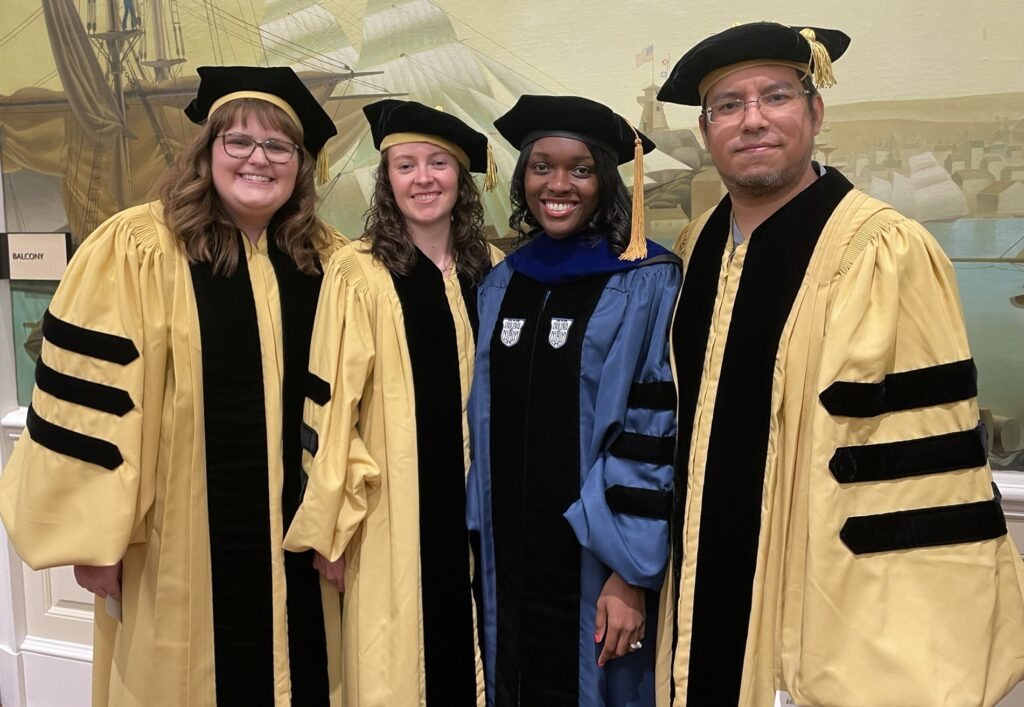
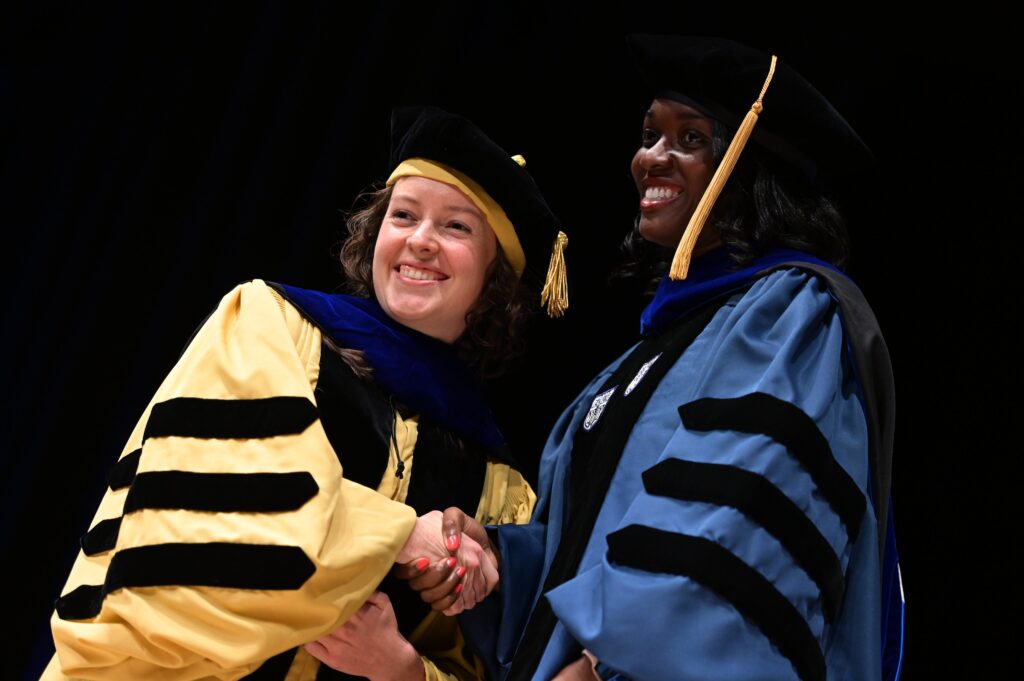
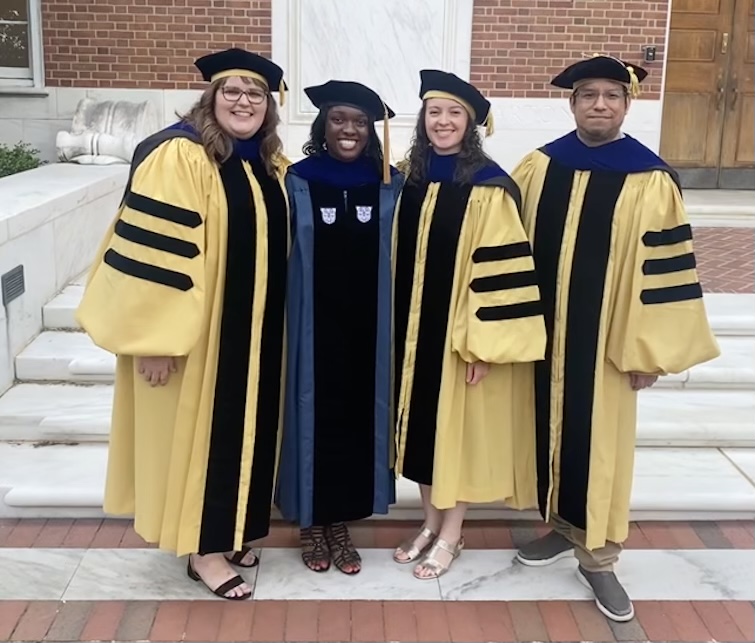
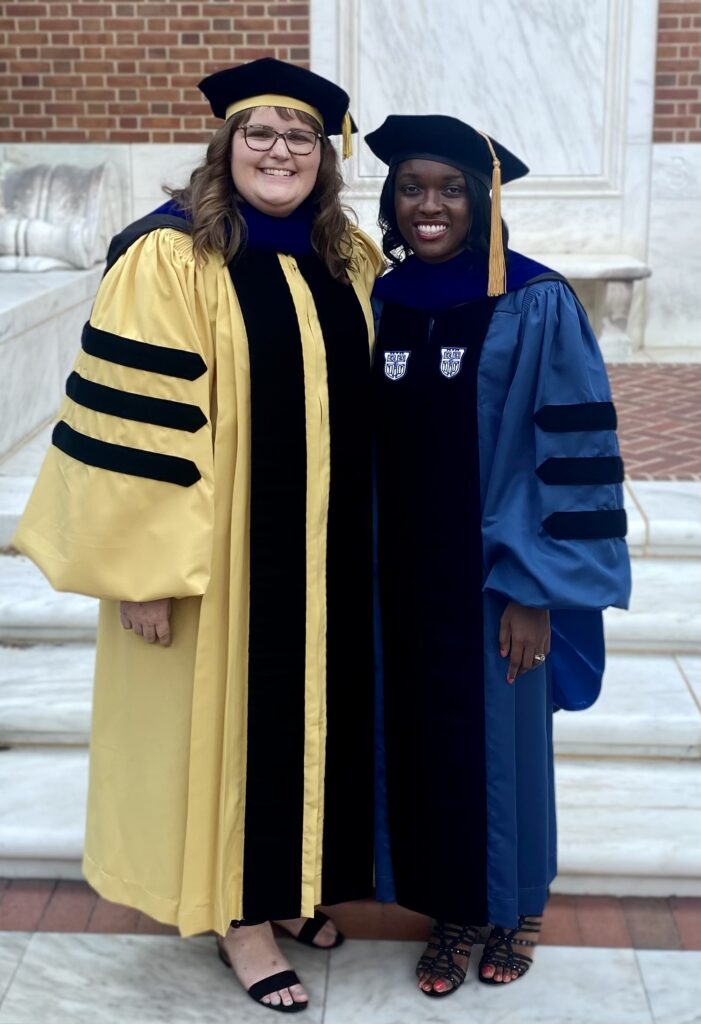
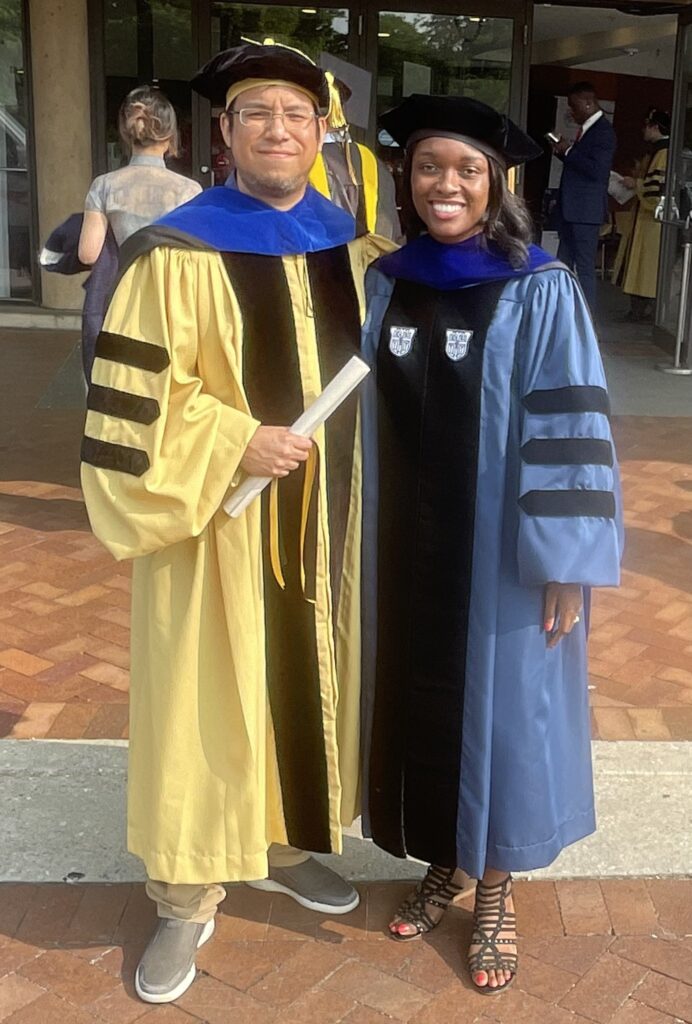

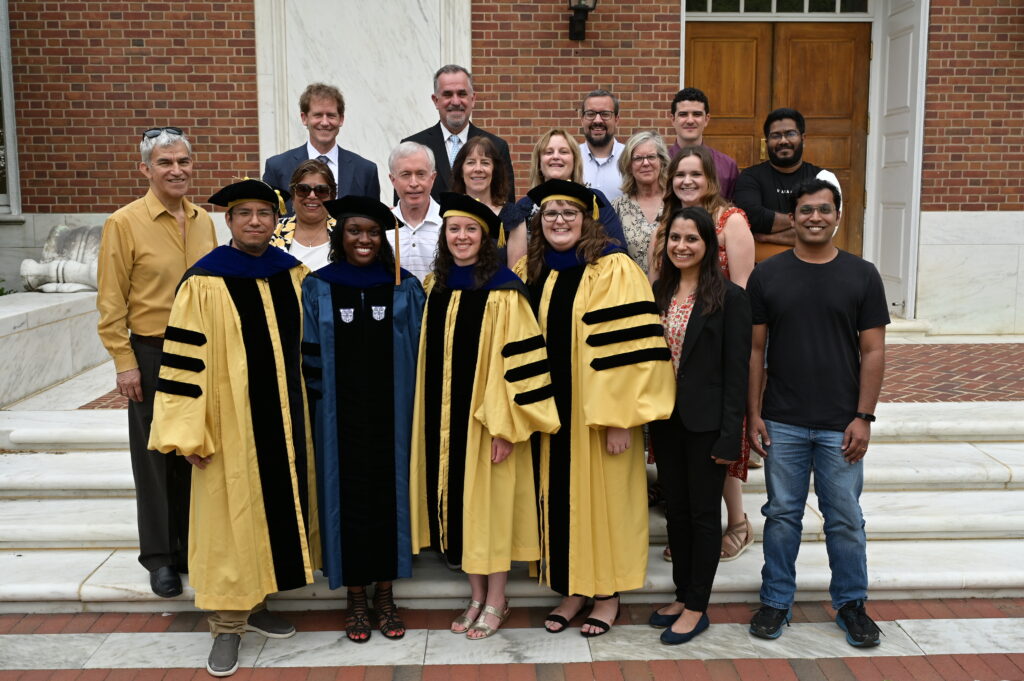
We are thrilled for these bright and audacious PULSE Lab PhD pioneers, and we wish them well in all of their future endeavors!
The following PULSE Lab abstracts have been accepted for presentation during the 2023 IEEE International Ultrasonics Symposium (IUS) to be held September 3-8, 2023 in Montreal, Canada.
Congrats to Arunima, Guilherme, and José!
In addition to co-authoring the above publications:
Symposium website: https://2023.ieee-ius.org/
(This post was updated on September 4, 2023)
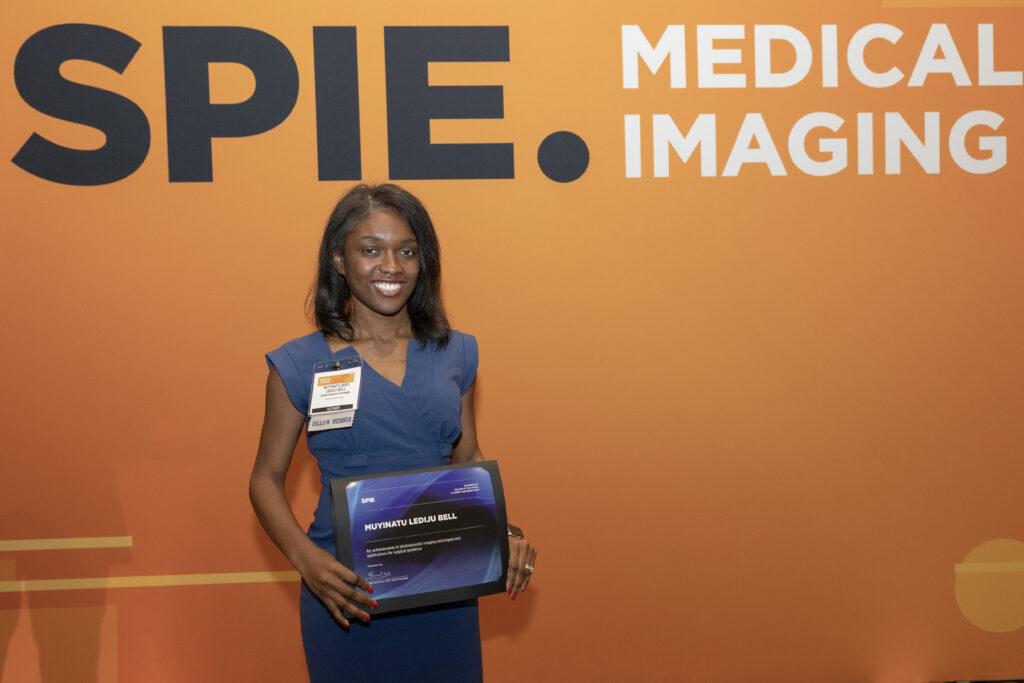
Congratulations to Prof. Bell on being elected as a Fellow of SPIE! SPIE Fellows are are members of distinction who have made significant scientific and technical contributions in the multidisciplinary fields of optics, photonics, and imaging and are honored for their technical achievements, service to the general optics community, and service to SPIE.
Prof. Bell was recognized for her “achievements in photoacoustic imaging techniques and applications for surgical guidance.” She is a regular attendee and author of two SPIE communities and was honored as a new 2023 Fellow within both communities. Prof. Bell received her SPIE Fellow pin and certificate at SPIE Photonics West, presented by Symposium Chair Jennifer Barton and SPIE President Bernard Kress. Three weeks later, she was honored with a Fellow certificate presentation at SPIE Medical Imaging, delivered by Symposium Chair Despina Kontos.
Congratulations to PULSE Lab summer undergraduate student Khadijat Kokumo, who won the Best Paper Award runner up at the 2023 SPIE Physics of Medical Imaging conference! This conference features a student paper award specifically to recognize outstanding papers in development and application of medical imaging and diagnosis.
Khadijat’s first-author paper, entitled “Theoretical basis and experimental validation of harmonic coherence-based ultrasound imaging for breast mass diagnosis,” describes and summarizes research she completed in summer 2022 as a CSMR REU student from Northwestern University.
The award is sponsored by Konica Minolta, and it was presented to Khadijat by John Sabol from Konica Minolta Healthcare Americas, Inc. Lifeng Yu (Mayo Clinic) and Rebecca Fahrig (Siemens Healthcare GmBH) are the conference chairs. Prof. Bell is the senior author of the paper.


Two PULSE Lab abstracts were accepted to SPIE conferences this year.
SPIE Photonics West is taking place January 28- February 2, 2023, and the following work was presented by Jiaxin Zhang.
SPIE Medical Imaging will take place February 20-24, 2023, and the following work will be presented by Khadijat Kokumo.
The PULSE Lab also contributed to the following two collaborative works, which will also be presented at SPIE Medical Imaging.
In addition to the above papers, Prof. Bell was invited to be a session chair at SPIE Photonics West for the the Advanced Biomedical and Clinical Diagnostic and Surgical Guidance Systems XXI, Session 8: Novel Techniques on January 29th from 3:40-5:20 PM PST and for Multiscale Imaging and Spectroscopy IV, Session 7: Emerging Sources of Multiscale Contrast II on January 29th from 1:20 – 3:10 PM PST.
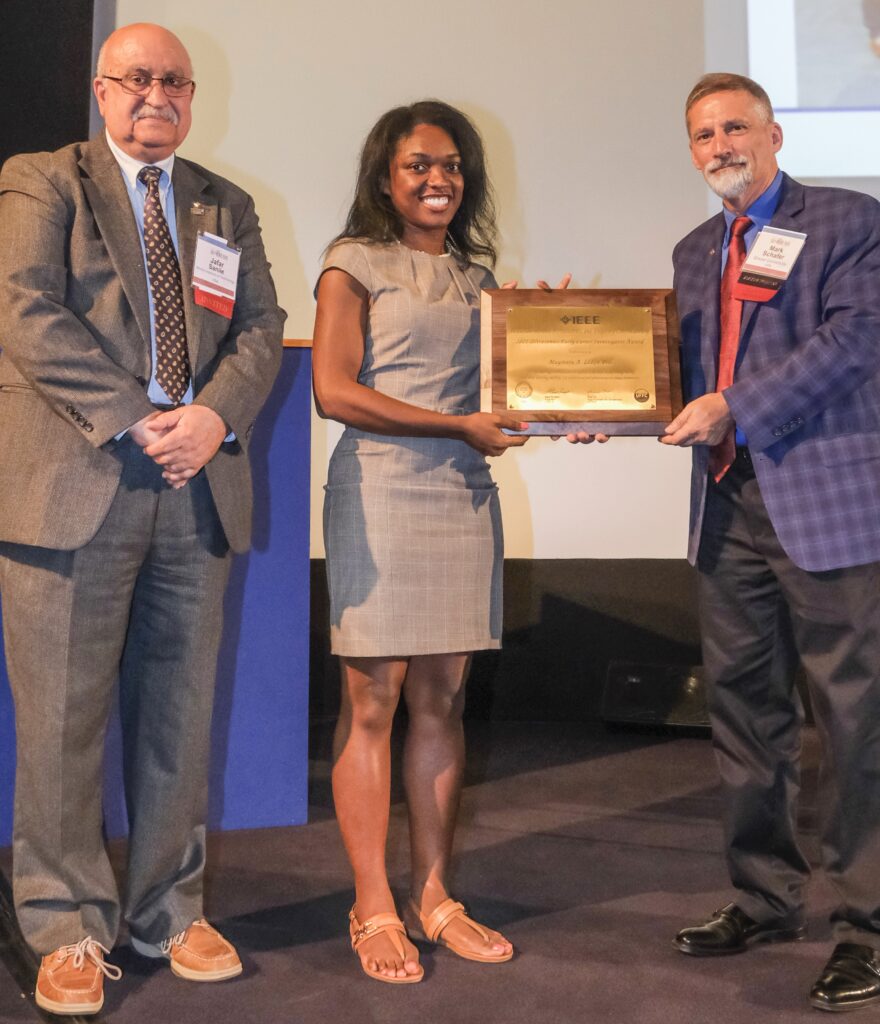
Prof. Bell was selected to receive the 2022 IEEE Ultrasonics Early Career Investigator Award, which was announced on at the IEEE International Ultrasonics Symposium in Venice, Italy. This award recognize the achievements of a young researcher in the area of ultrasonics and its applications. Prof. Bell was recognized for “pioneering contributions to spatial coherence beamforming theory and deep learning methods for ultrasound and photoacoustic image formation.”

Congratulations to Prof. Bell on winning the inaugural Science Diversity Leadership Award!
This $1.15 million award is offered by the Chan Zuckerberg Initiative (CZI) in partnership with the National Academies of Sciences, Engineering, and Medicine to launch this program. The award recognizes and furthers the leadership and scientific accomplishments of excellent biomedical researchers who—through their outreach, mentoring, and teaching—have a record of promoting diversity, equity and inclusion in their scientific fields. Recipients will additionally connect with each other and international scientific leaders through
gatherings over the course of the five years.

Congratulations to Prof. Bell on winning the 2022 Johns Hopkins Catalyst Award!
Awarded to 38 early-career faculty this year, across all divisions within Johns Hopkins, the Catalyst Award honors the accomplishments, creativity, originality, and academic impact of its recipients. The award provides a $75,000 grant to conduct preliminary studies with the eventual goal of redefining laser safety for photoacoustic-guided liver surgery. In addition to the grant, the award comes with mentoring opportunities and institutional recognition.
Two of our pioneering journal publications in this area include:
It is a huge honor to be a recipient of this award, and all recipients will be celebrated at a university-sponsored event taking place on October 20, 2022! Congrats again to Prof. Bell!
The following PULSE Lab abstracts were accepted for presentation during the 2022 IEEE International Ultrasonics Symposium (IUS) to be held October 10-13, 2022 in Venice, Italy.
Congrats to Prof. Bell, Jiaxin, Arunima, Lingyi, Mardava, and Guilherme!
In addition to co-authoring the above publications:
Symposium website: https://2022.ieee-ius.org/
Prof. Bell received a $1.4M NIH R01 grant from the National Institute of Biomedical Imaging and Bioengineering to support our project entitled, Minimizing Uncertainty in Breast Ultrasound Imaging with Real-Time Coherence-Based Beamforming. This project is motivated by the clinical challenges surrounding ultrasound images yielding inconclusive results in a subset of patients, necessitating biopsies, aspirations, or follow-up imaging, which increase patient anxiety and places additional burdens on the time available for clinical care and the resource allocations of our healthcare system. The goal of this project is to develop new, real-time ultrasound imaging technology that will simplify clinical workflows by distinguishing fluid-filled masses from solid masses and from complex cystic and solid masses, which all appear hypoechoic in traditional ultrasound B-mode images. This work will be completed in collaboration with breast radiologists Eniola Oluyemi, MD, Kelly Myers, MD, Emily Ambinder, MD, and Lisa Mullen, MD.
Three of our pioneering journal publications in this area include:
This work has also been featured in the following articles and press releases:
We additionally have a pending patent for these ideas.
Congratulations to PULSE Lab member Dr. Eduardo González! He successfully defended his PhD dissertation on September 26, 2022. His defense presentation was entitled Ultrasound and Photoacoustic Techniques for Surgical Guidance Inside and Around the Spine. Eduardo intends to pursue a career in industry, starting with post-academic training with Philips (one of the three major manufacturers of ultrasound imaging systems), with an offer to start in mid-October.

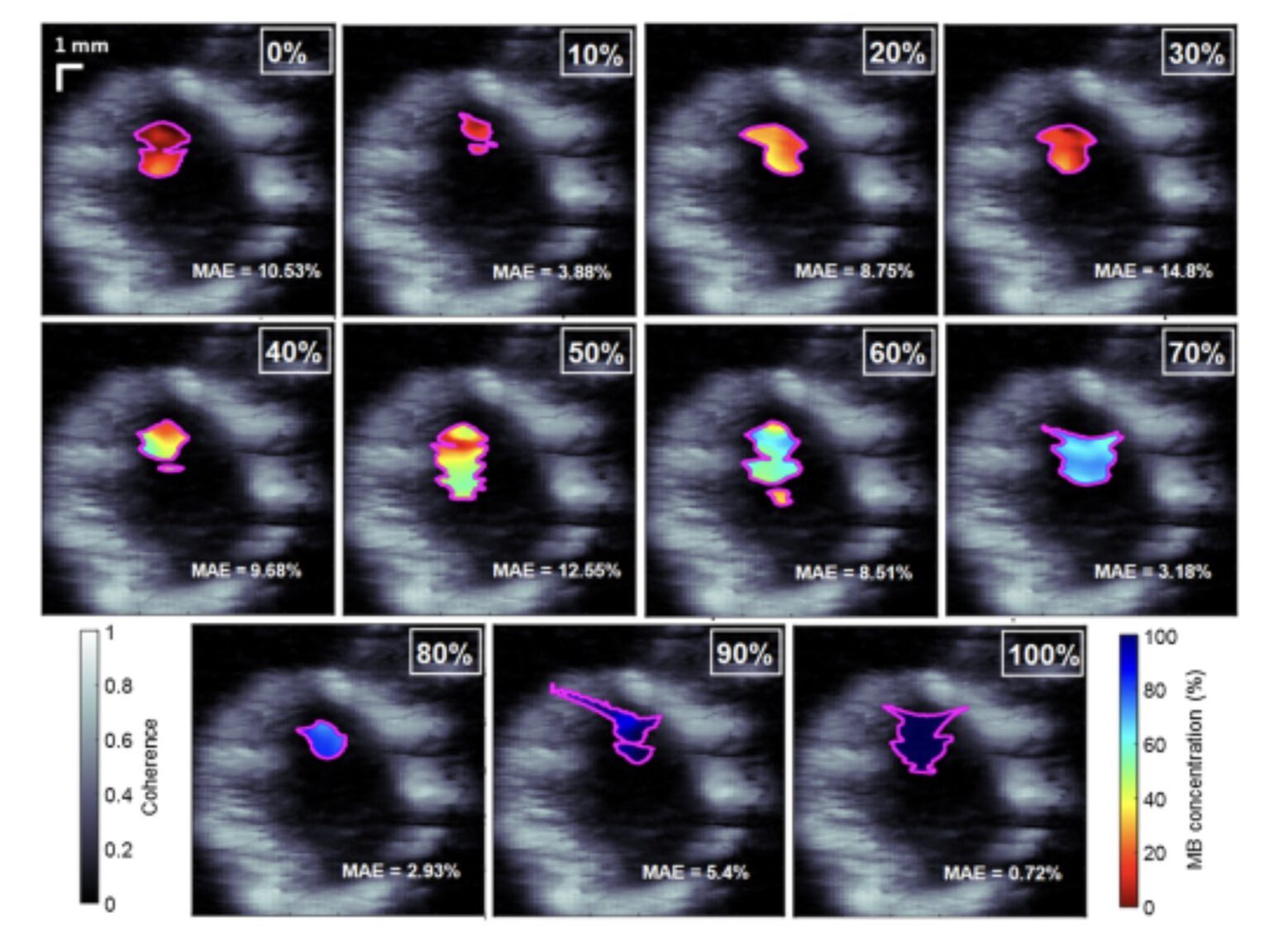
Congratulations to Eduardo González! His first author paper entitled, Dual-wavelength photoacoustic atlas method to estimate fractional methylene blue and hemoglobin contents, was accepted to the Journal of Biomedical Optics.
This work discusses a novel approach to estimate concentration levels from a mixture of two photoacoustic-sensitive materials after only two laser wavelength emissions. The work builds on our previously proposed acoustic atlas alternative to spectral unmixing, and it is the first to present an acoustic-based photoacoustic estimator that relies on training sets to estimate concentration levels from mixtures of photoacoustic-sensitive materials. Results are promising for real-time monitoring of the concentration of contrast agents in the operating room.
Citations:
González EA, Bell MAL, Dual-wavelength photoacoustic atlas method to estimate fractional methylene blue and hemoglobin contents, Journal of Biomedical Optics, 27(9):096002, 2022 [pdf]
González EA, Graham CA, Bell MAL, Acoustic frequency-based approach for identification of photoacoustic surgical biomarkers, Frontiers in Photonics, 2, 2021 [pdf]
Related News:
Congratulations to PULSE Lab member Dr. Alycen Wiacek! She successfully defended her PhD dissertation on June 1, 2021. Her defense presentation was entitled Coherence-Based Ultrasound and Photoacoustic Imaging with Applications in Breast Mass Diagnosis and Hysterectomy Guidance. Alycen secured a tenure-track Assistant Professor position at her alma mater, Oakland University, and her post-graduate plans are to assume this new position in Fall 2022.


Prof. Bell was installed as the John C. Malone Professor on Monday, May 16, 2022. The John C. Malone Professorship was endowed through the generosity of John C. Malone ’64, ’69 to support outstanding Whiting School faculty members within the Malone Center for Engineering in Healthcare. Family, friends, colleagues, and students gathered together to celebrate this momentous occasion. The event was live-streamed, and the recording is available on YouTube.


We are thrilled to welcome PULSE Lab alum Arun Nair, PhD back to the university campus for the Whiting School of Engineering doctoral hooding ceremony! Congratulations to Dr. Nair on this momentous occasion!
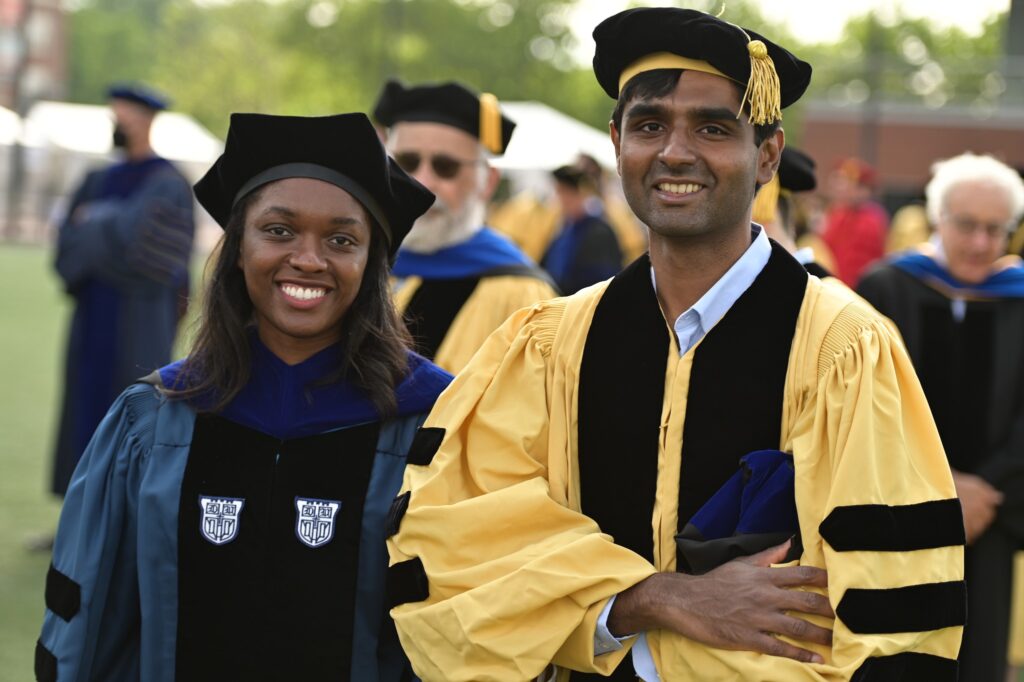
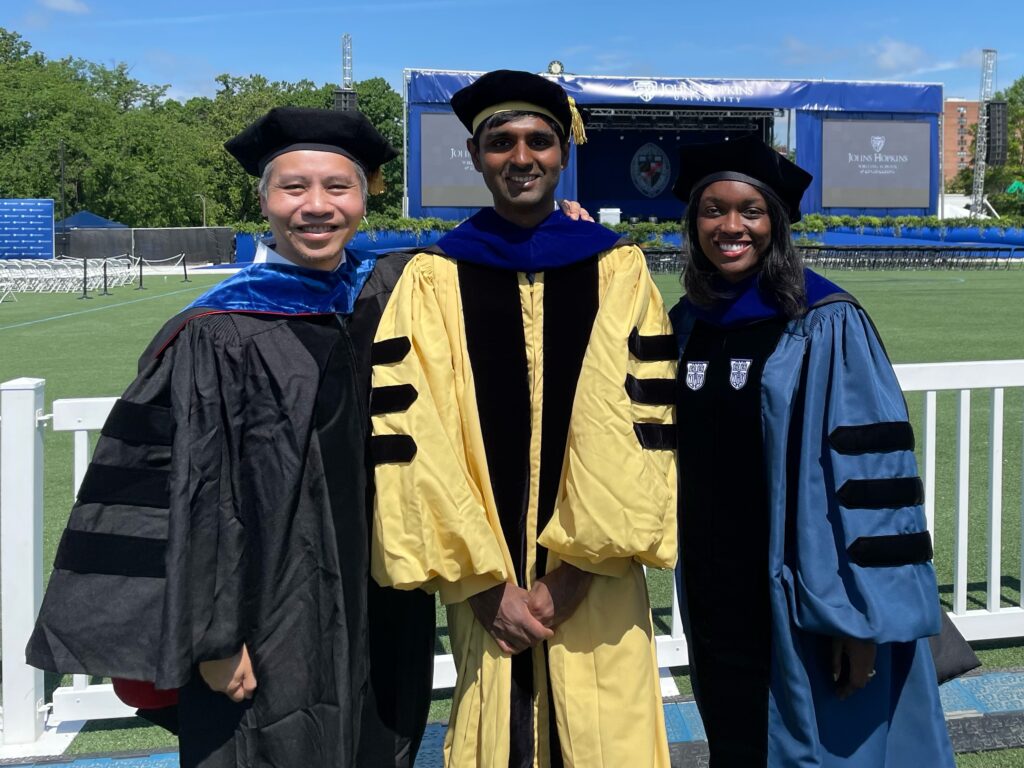
 Congratulations to Mardava Gubbi on his successful completion of the ECE Department preliminary thesis research proposal and seminar requirement!
The topics discussed in Mardava’s seminar are summarized in the following peer-reviewed publications:
Congratulations to Alycen Wiacek for winning the New Investigator Award from the American Institute of Ultrasound in Medicine (AIUM)! Alycen was selected to present her research in the New Investigator Scientific Session Plenary at the AIUM 2022 Annual Meeting. She discussed her three first-author papers on the clinical implications of spatial coherence features for breast ultrasound:
Alycen was selected as the winner of this symposium, alongside Prof. Brooks Lindsey from Georgia Institute of Technology.
 Congratulations to Prof. Muyinatu Bell on her election to the American Institute for Medical and Biological Engineering (AIMBE) College of Fellows! AIMBE Fellows represent the top 2% of medical and biological engineers. In addition, Prof. Bell is one of only four Assistant Professors to be elected at this career stage, out of 1,500 fellows elected in the past 10 years! This significant achievement highlights Prof. Bell’s outstanding research contributions and impactful advocacy for her field.
Prof. Bell was nominated, reviewed, and elected by peers and members of the AIMBE College of Fellows for pioneering contributions to development of ultrasonic and photoacoustic medical imaging systems, including coherence-based beamforming, photoacoustic-guided surgery, and deep learning applications.
Published less than two years ago in June 2020, Application of the generalized contrast-to-noise ratio to assess photoacoustic image quality received the honor of being a top-cited paper in the journal Biomedical Optics Express in January 2022. This paper investigates a newly developed, probability-based, generalized contrast-to-noise (gCNR) when applied to photoacoustic images. We recommend gCNR as a new standard for assessment of novel photoacoustic beamforming and image formation techniques.
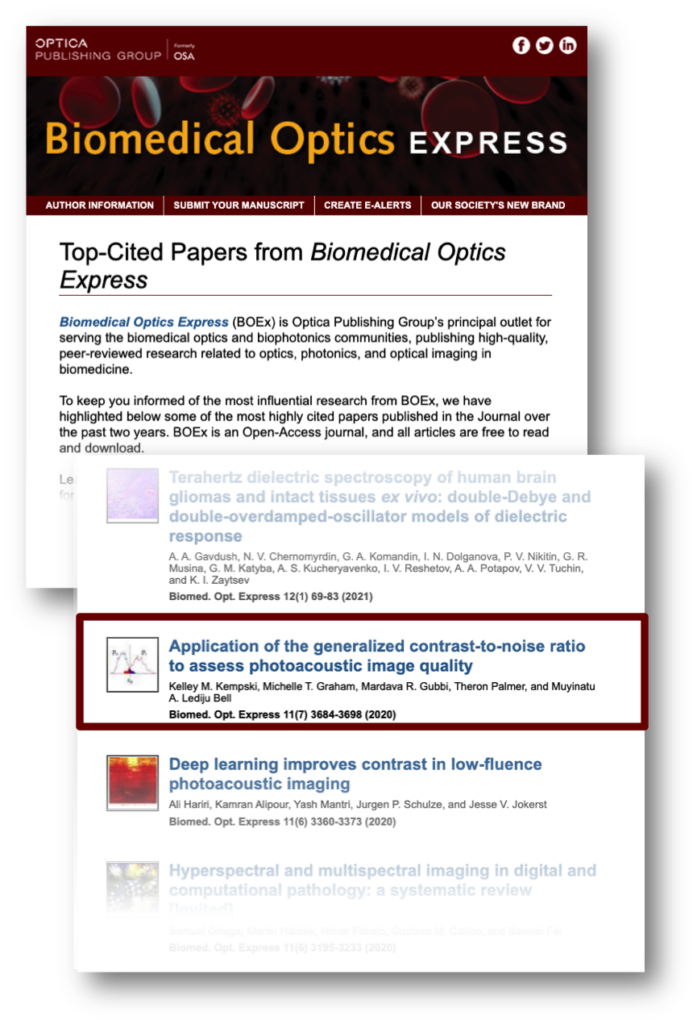
Congratulations to Kelley, Michelle, Mardava, Theron, and Prof. Bell for contributing this foundational development for the photoacoustics and biomedical optics community!
Four PULSE Lab abstracts were accepted to various SPIE conferences this year.
SPIE Photonics West took place January 22-27, 2022, and the following work was presented by Michelle and Eduardo.
PULSE Lab PhD candidates Michelle Graham and Eduardo Gonzalez delivered two poster presentations at SPIE @PhotonicsWest this year. I was unable to attend, but I enjoyed seeing all of the updates, and I hope to return next year! pic.twitter.com/eYEDqEIGCv
— Bisi Bell (@MuyinatuBell) January 27, 2022
SPIE Medical Imaging will take place February 20-24, 2022, and the following work will be presented by Ben Frey.

In addition, Prof. Bell was invited to speak at SPIE Optics + Photonics, which will take place August 22-25, 2022, where she will deliver the presentation:
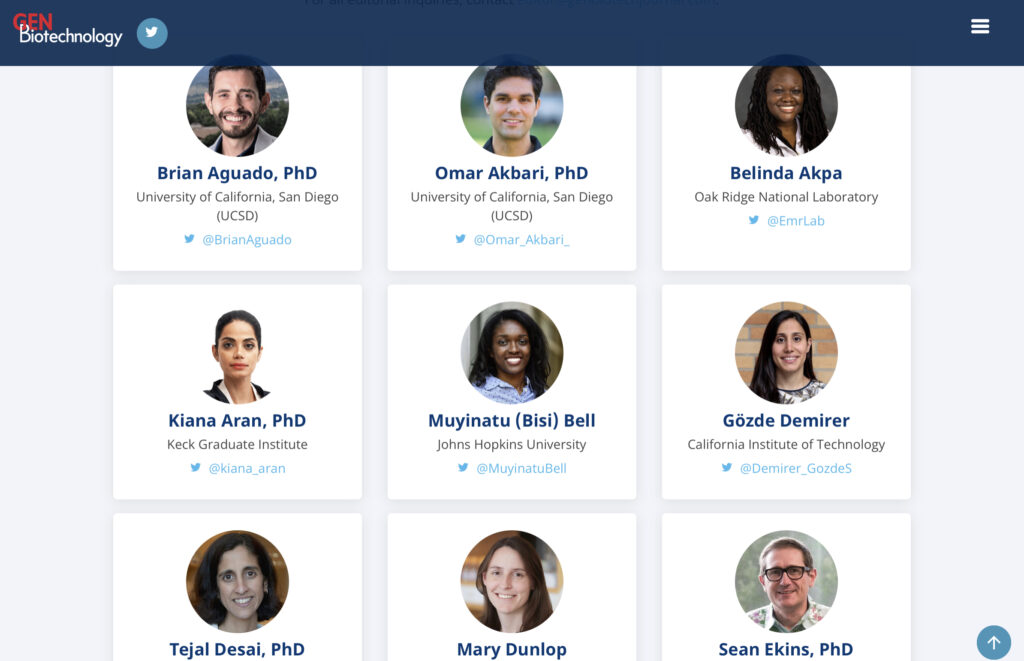
GEN Biotechnology is a new peer-reviewed journal launching in early 2022, focused on exceptional groundbreaking research across all aspects of biotechnology. Prof. Bell is one of the inaugural members of the Editorial Advisory Board. Submission instructions for your groundbreaking biotechnology research that validates and showcases advances in technology development and scientific and medical applications are available here.
Congratulations to Mardava Gubbi for successfully disseminating his work to the general public at the 2021 Maryland STEM Festival! The event was live streamed with the recording now available on Youtube. Mardava was the first of 5 presenters.
Mardava describes work that was also presented to a technical audience at the 2021 IEEE International Conference on Robotics and Automation (ICRA). His associated peer-reviewed conference paper is entitled, “Deep Learning-Based Photoacoustic Visual Servoing: Using Outputs from Raw Sensor Data as Inputs to a Robot Controller.”
Alycen Wiacek and Jessica Su each received the distinction of being selected as scholars of the Achievement Rewards for College Scientists (ARCS) Foundation, Metropolitan Washington Chapter, for the 2021-2022 academic year. Jessica is the 2021-2022 Bill & Marilynn Sweetser Undergraduate Scholar. Alycen is the 2021-2022 JCM Foundation Graduate Scholar. Congratulations Alycen and Jessica!
Prof. Bell is a featured IEEE TMI Associate Editor for the month of October! Check out her profile here.
Congratulations to Alycen Wiacek! She was named to the 2022 Class of Siebel Scholars — a highly selective group of individuals representing the top graduate students in the world. Alycen was recognized in the bioengineering category, and she is the only student not enrolled in the JHU BME PhD program to be recognized in this category this year. Alycen is also the first JHU ECE PhD student to receive this outstanding recognition.

The following PULSE Lab abstracts were accepted for presentation during the 2021 IEEE International Ultrasonics Symposium (IUS) to be held on September 11-16, 2021 online (due to COVID-19).
Congrats to Alycen, Eduardo, Michelle, Kelley, and Mardava!
In addition to co-authoring the above publications:
Symposium website: https://2021.ieee-ius.org
Congrats to Benjamin Frey! He was our summer Research Experience for Undergraduates (REU) student who conducted a virtual summer research project with us. His research topic was centered on deep learning applied to lung ultrasound imaging of COVID-19 patients. His outstanding work earned him a second place presentation award at the 2021 Computational Sensing and Medical Robotics (CSMR) REU Final Presentations Award Ceremony. Ben joins a long list of PULSE Lab REU students to win this award.
Special thanks to Ben’s postdoc mentor, Lingyi Zhao, for helping to make Ben’s project such a resounding success!
Within its first month of publication, Photoacoustic-Guided Surgery from Head to Toe, an invited review co-authored by Alycen Wiacek and Prof. Bell, received the honor of being a top 10 download from the journal Biomedical Optics Express. This invited review covers multiple aspects of the use of photoacoustic imaging to guide both surgical and related non-surgical interventions and includes a discussion of complete systems and tools needed to maximize success.
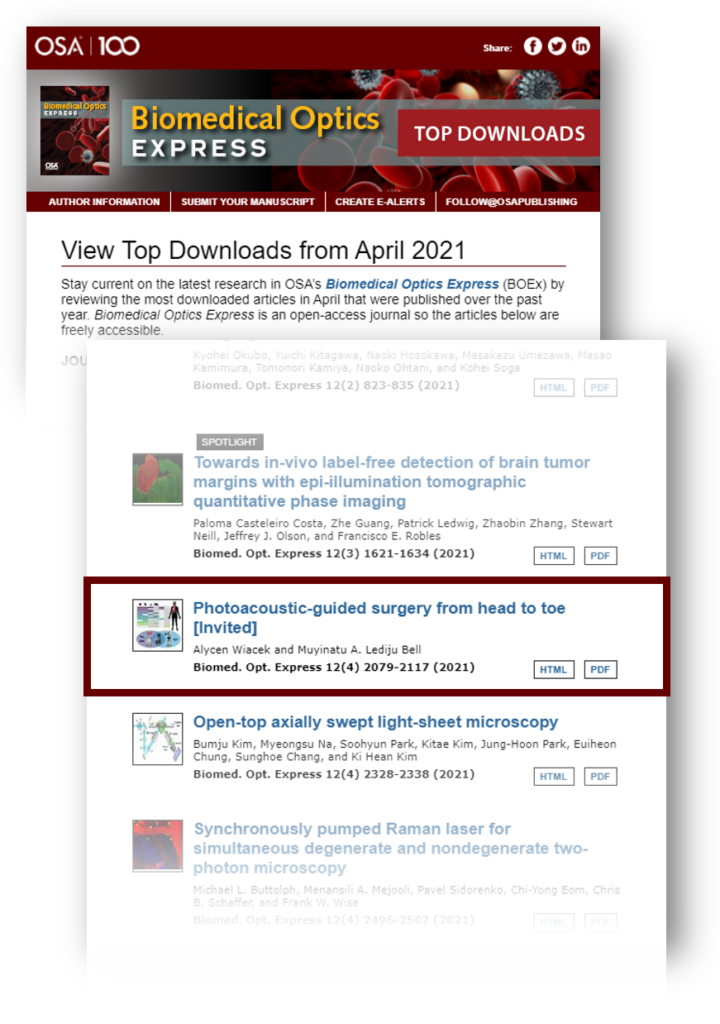
Congratulations to Alycen and Prof. Bell for capturing the attention of the biomedical optics community!
Congratulations to PULSE Lab member Dr. Arun Nair! He successfully defended his PhD dissertation on May 25, 2021. Arun was co-advised by ECE Profs. Bell and Tran. His defense presentation was entitled Machine Learning for Beamforming in Ultrasound, Radar, and Audio. Arun, his fellow labmates, and his co-advisors celebrated with an outdoor dinner and a delicious cake creation from PULSE Lab member Kelley Kempski. Arun’s post-graduate plans are to work for Amazon, Inc. in the Bay area.


Prof. Bell delivered a total of 17 invited talks to date in 2021 (compared to 13 in 2020 and over 70 talks total). Here is a summary of the 2020-2021 talk titles, dates, and locations, with additional highlights, announcements, and links to recordings wherever available:
2021
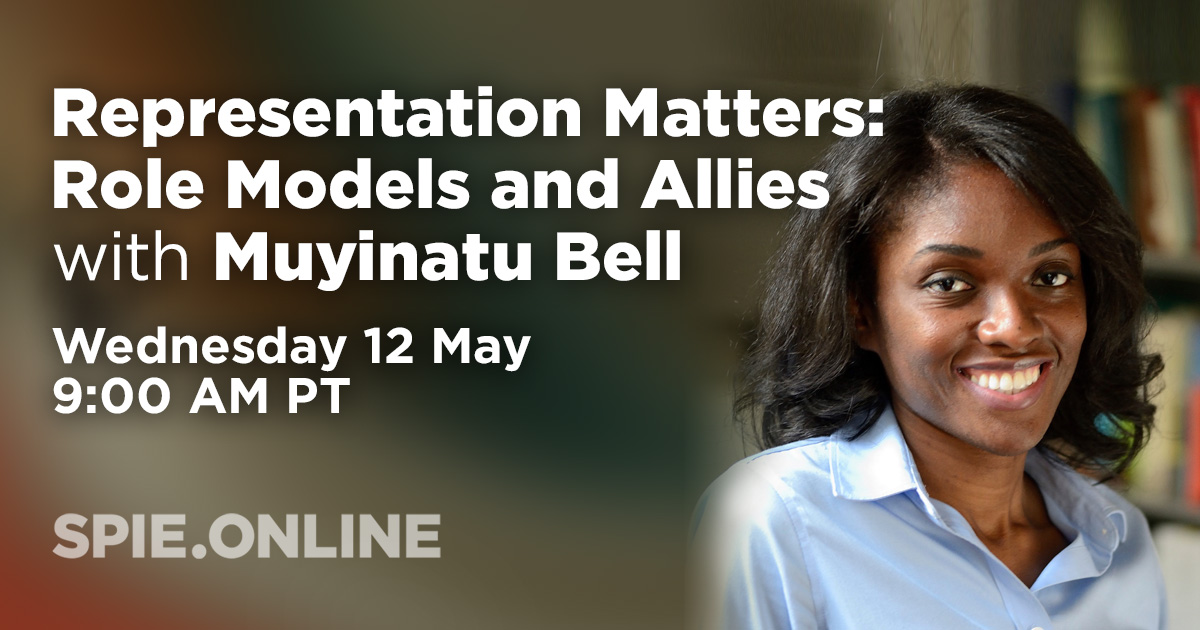
2020
Excellent invited talk by @MuyinatuBell at @RyersonSci on her work on #photoacoustic imaging. After the talk a @iBESTResearch lab tour to showcase work of @RyersonGraduate students. Also, a 500+ page Ph.D. thesis snuck in the discussions 😮 #research #bioengineering pic.twitter.com/3w78saj5VX
— Michael Kolios (@MichaelKolios) March 2, 2020
CANCELLED or POSTPONED DUE TO COVID-19
 Congratulations to Michelle Graham on her successful completion of the ECE Department preliminary thesis research proposal and seminar requirement!
Details about Michelle’s proposal seminar are available here: https://engineering.jhu.edu/ece/events/thesis-proposal-michelle-graham/?instance_id=1075#.YLSFAS33ZOk.
The topics discussed in Michelle’s seminar are summarized in the following publications:
Journal Articles
Conference Proceedings
Congratulations to Prof. Bell! She was appointed as the John C. Malone Assistant Professor of Electrical and Computer Engineering, Biomedical Engineering, and Computer Science, effective March 15, 2021.
Congratulations to Alycen Wiacek on her successful completion of the ECE Department preliminary thesis research proposal and seminar requirement!
Details about Alycen’s proposal seminar are available here: https://engineering.jhu.edu/ece/events/thesis-proposal-alycen-wiacek/?instance_id=1066#.YGna5khKi8o.
The topics discussed in Alycen’s seminar are summarized in the following publications:
Journal Articles
Conference Proceedings
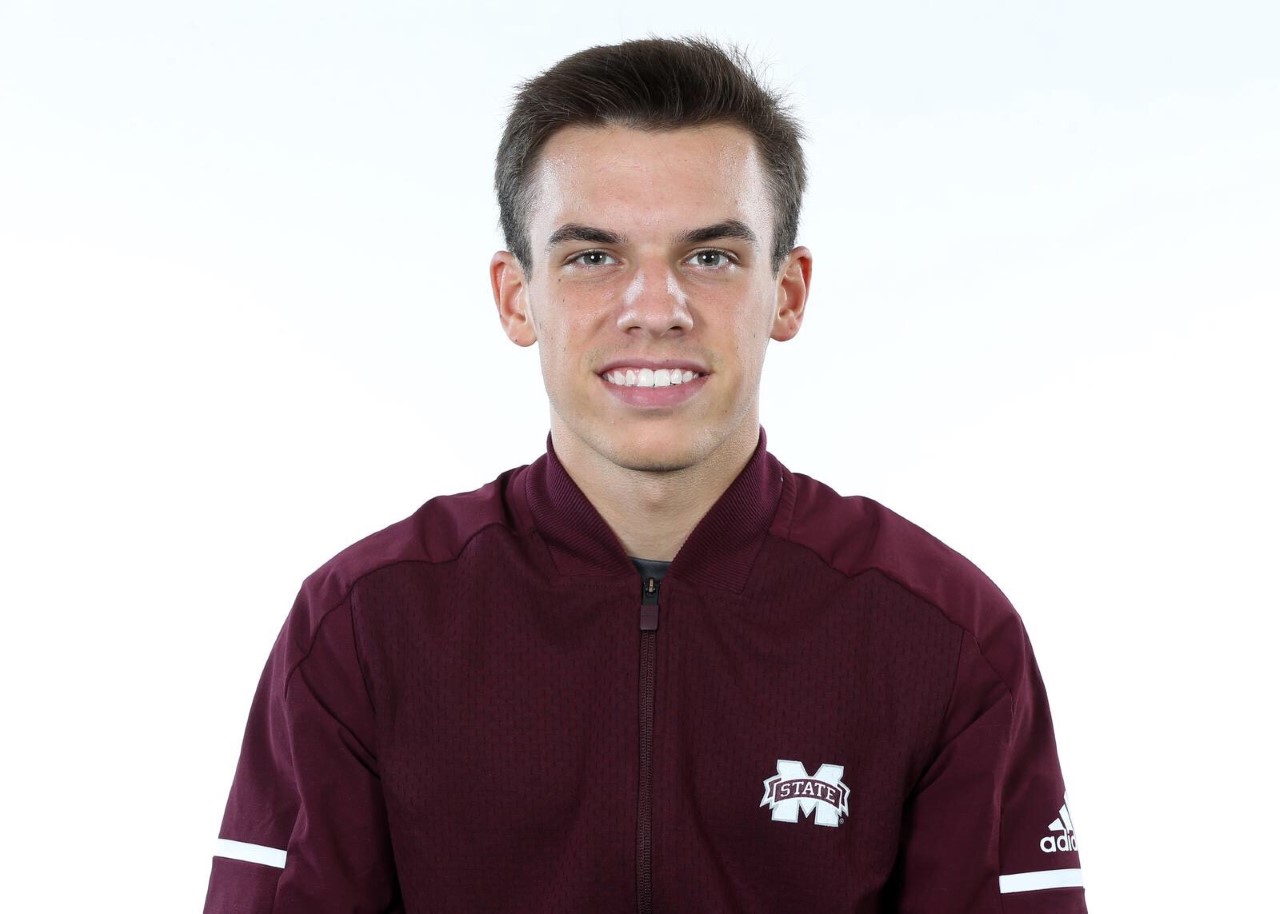
Congratulations to Reese Dunne, our 2020 summer REU student, who was recently selected to receive the 2021 Barry S. Goldwater Scholarship! The Goldwater Scholarship Program is one of the oldest and most prestigious national scholarships in the natural sciences, engineering, and mathematics in the United States. This program seeks to identify and support college sophomores and juniors who show exceptional promise of becoming the nation’s next generation of research leaders.
After completing summer research in the PULSE Lab through our NSF-Funded CSMR REU Program, Reese returned to complete his undergraduate studies at Mississippi State University. Reese is now his university’s only Goldwater Scholar in 2021 and his university’s 6th winner since 2012. Reese’s additional successes since departing from our program and winning the program’s 2nd Best Presentation Award include winning the 2nd place award in the Biological Sciences and Engineering category at his school’s Fall 2020 Undergraduate Research Symposium and winning the Best Oral Presentation award in the STEM category at his state-wide Mississippi Honors Undergraduate Conference. Reese presented his summer research with us to secure these outstanding wins.
Mississippi State University News (re: Goldwater)
Mississippi State University News (re: Undergraduate Research Symposium)
 Congratulations to Mardava Gubbi! His paper, Deep Learning-Based Photoacoustic Visual Servoing: Using Outputs from Raw Sensor Data as Inputs to a Robot Controller, was accepted for presentation at the IEEE International Conference on Robotics and Automation (ICRA), Xi’an, China, May 30 – June 5, 2021. This peer-reviewed paper was also accepted for inclusion in the conference proceedings.
ICRA is the IEEE Robotics and Automation Society’s flagship conference and the premier international forum for robotics researchers to present and discuss their work.
Congrats again on this significant achievement, recognition, and milestone, Mardava!
Five PULSE Lab abstracts were accepted to SPIE Photonics West. This conference is taking place virtually, March 6-11, 2021.
This work spans two tracks within the SPIE Photonics West BiOS Conference:
In addition to these five PULSE Lab contributions:
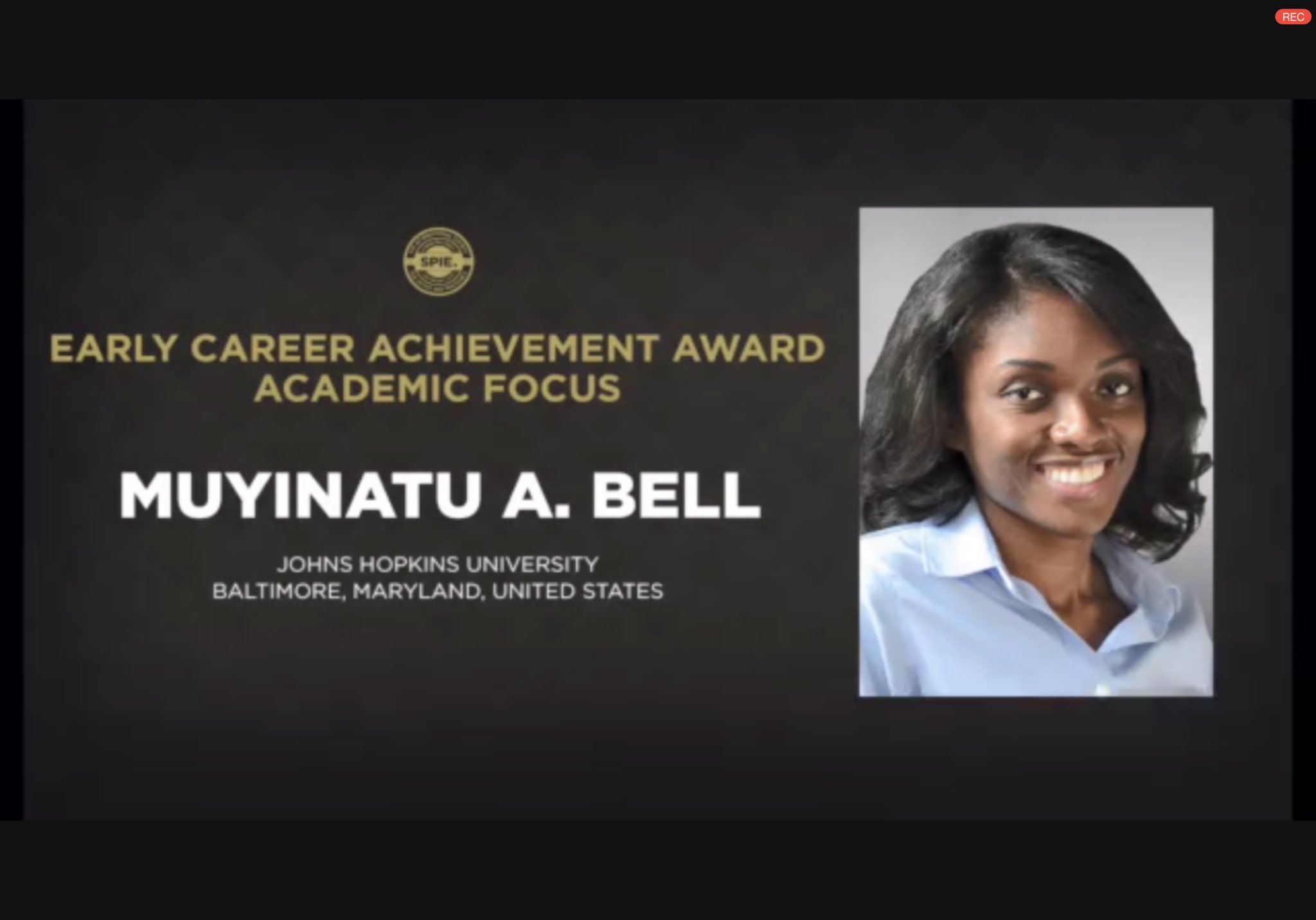

Congratulations to Prof. Bell, who was selected to receive the 2021 SPIE Early Career Achievement Award. This award recognizes excellence in academia, particularly with regard to significant and innovative technical contributions in the engineering or scientific fields of relevance to SPIE. The SPIE Awards Committee made this recommendation in recognition of Prof. Bell’s pioneering contributions to photoacoustic imaging for surgical guidance, including innovative technology designs, novel deep learning applications, informative spatial coherence beamforming theory, and visionary clinical possibilities.
Congratulations to Eduardo González! His first-author journal paper entitled Combined ultrasound and photoacoustic image guidance of spinal pedicle cannulation demonstrated with intact ex vivo specimens was accepted to the journal IEEE Transactions on Biomedical Engineering.
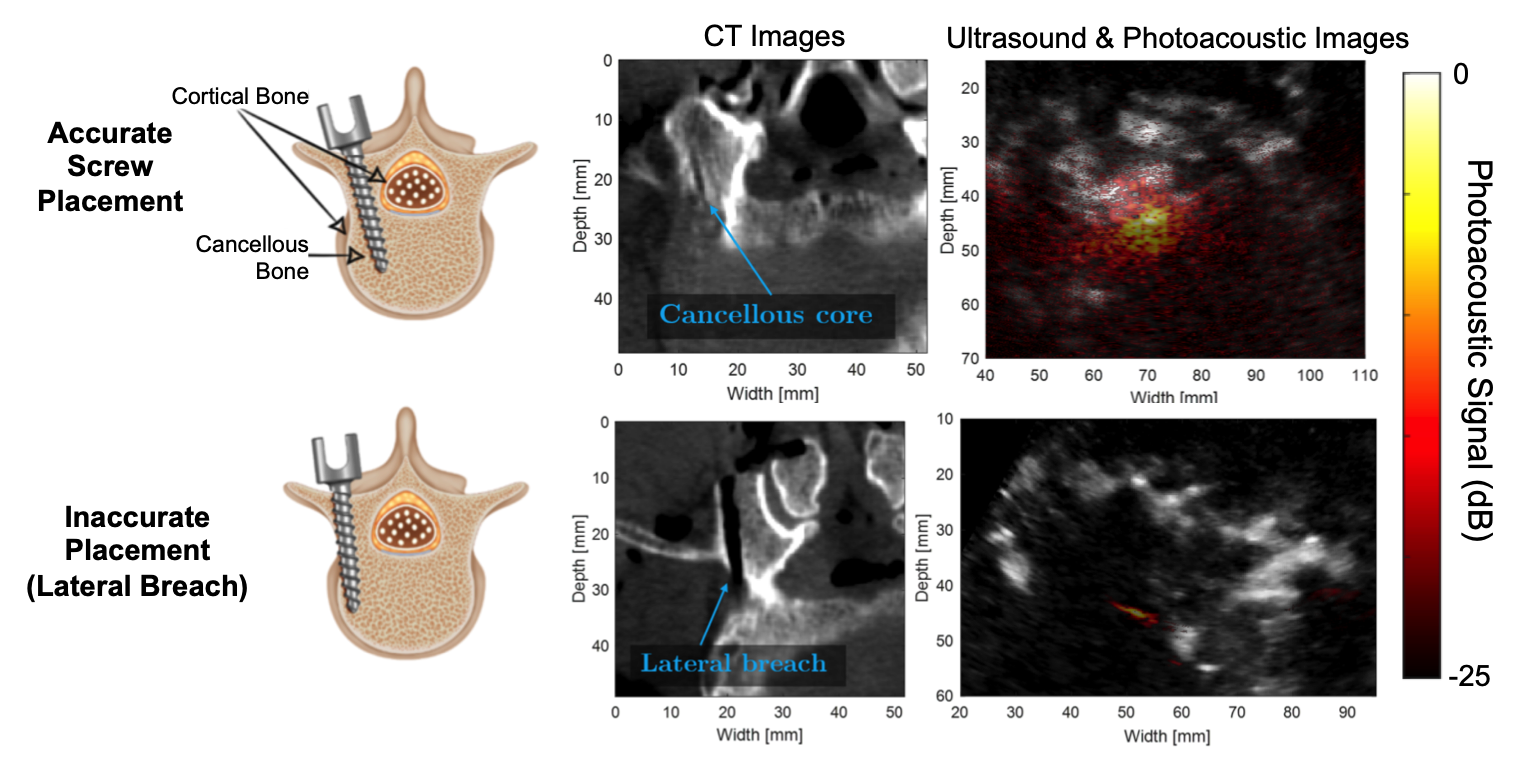 This paper presents the first known combined ultrasound and photoacoustic image guidance system with software capabilities that are optimized for pedicle cannulation in posterior spinal fusion surgery. We demonstrate that both amplitude- and coherence-based beamforming methods are mutually beneficial for this task. Specifically, coherence-based beamforming of ultrasound images improved the visualization of bone for ultrasound-to-CT registration, while coherence-based beamforming of photoacoustic images improved target localization, which is important for tracking tool tips during pedicle hole creation. As shown in the figure, amplitude-based photoacoustic beamforming differentiated signals associated with an optical fiber place inside a pedicle hole (which is ideal for screw placement) from signals associated with an optical fiber touching cortical bone (which is characteristic of an impending bone breach that needs to be avoided). This proposed combination of imaging modalities and beamforming methods is promising to assist surgeons with identifying and avoiding accidental bone breaches during spinal fusion surgeries.
These new findings nicely complement our previous findings demonstrating that photoacoustic-based differentiation is possible prior to the creation of any holes, which is advantageous for correctly determining an appropriate starting point for hole creation. Together, these findings represent a complete system that can be used prior to and during pedicle hole creation for spinal fusion surgeries.
Citation: González E, Jain A, Bell MAL, Combined ultrasound and photoacoustic image guidance of spinal pedicle cannulation demonstrated with intact ex vivo specimens, IEEE Transactions on Biomedical Engineering (accepted December 17, 2020) [pdf]
 Prof. Bell was awarded $1M from the NSF to advance cardiac procedures with the broader goal of replacing fluoroscopy one day. The objective of this award is to apply theoretical spatial coherence models and experimental optical analyses to understand the limits of a novel, integrated robotic-photoacoustic imaging system for guiding cardiac surgeries and interventions. This work will be completed in collaboration with Jonathan Chrispin, MD at Johns Hopkins Medicine.
More details on the basic principles of the proposed approach are available in our initial journal publication on this topic:
This work has also been featured in the following articles and press releases:
We additionally have a pending patent for these ideas.
 Alycen Wiacek and Kelley Kemspki were selected to receive the MICCAI Student Participation Award! The MICCAI Society provided 50 of these awards non-author student member registrations to support online participation from diverse members of the global scientific community, considering the virtual nature of the MICCAI 2020 conference this year. The award selection committee included representation from the MICCAI Student Board, the MICCAI Society Diversity Working Group, Women in MICCAI, and the MICCAI 2020 Conference Organization. This selection committee was chaired by the MICCAI awards coordinator. Congrats to Alycen and Kelley on their selection!
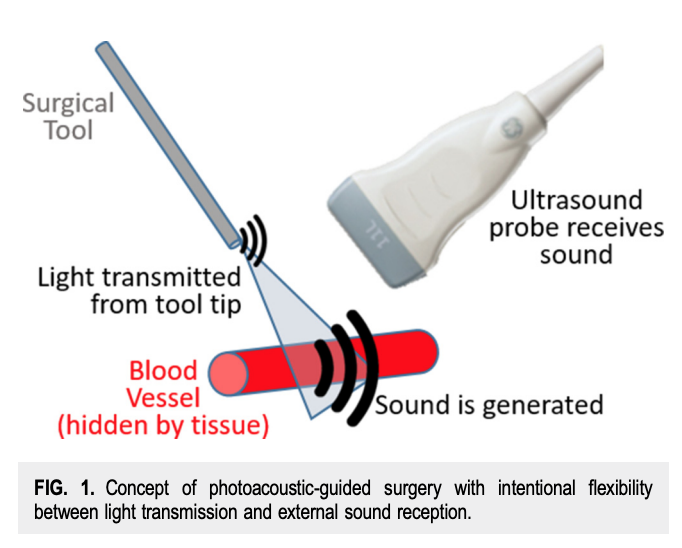 Prof. Bell shares her thoughts on Photoacoustic imaging for surgical guidance: Principles, applications, and outlook in an invited Perspective that was recently published in the Journal of Applied Physics. According to the journal’s website: Perspective articles are written to present an expert viewpoint on topics currently generating a lot of interest in the research community. While perspectives generally provide a brief overview of the topic, their main purpose is to provide a forward looking view on where progress in a particular research area is heading.
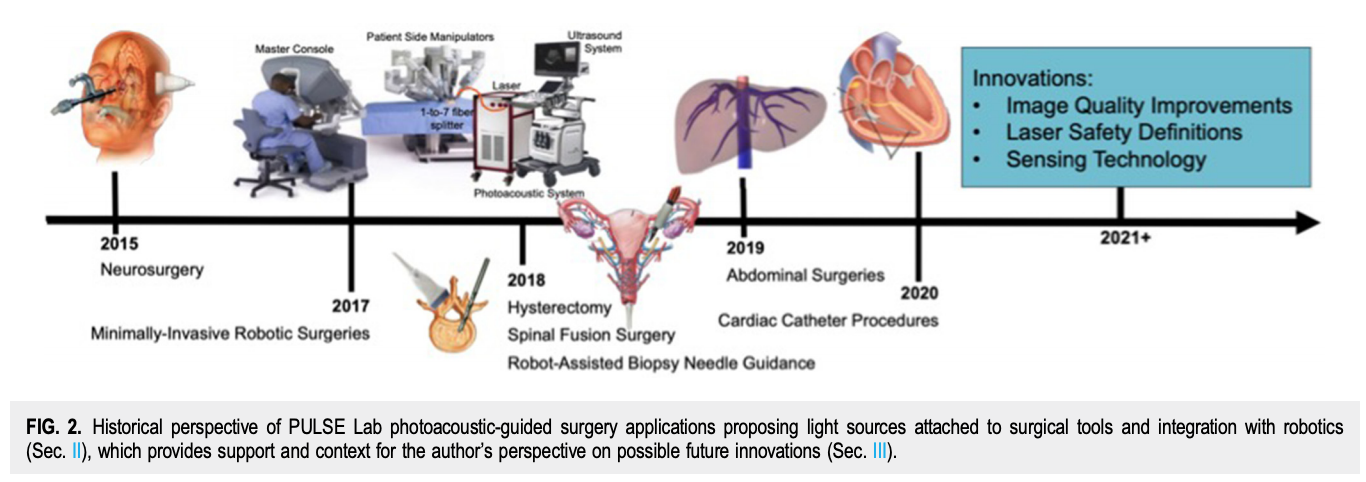
Citation: Bell MAL, Photoacoustic imaging for surgical guidance: Principles, applications, and outlook, Journal of Applied Physics, 128(6):060904, 2020 [pdf]
Congratulations to Kelley Kempski! Her first-author journal paper entitled Application of the generalized contrast-to-noise ratio to assess photoacoustic image quality was published in Biomedical Optics Express.
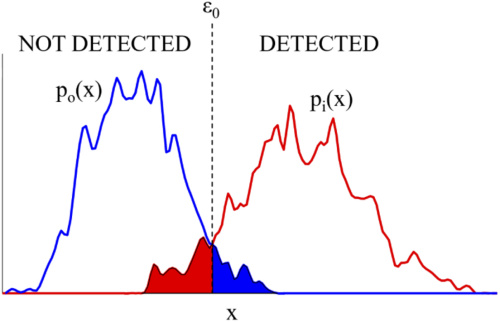 This paper investigates a newly developed, probability-based, generalized contrast-to-noise (gCNR) when applied to photoacoustic images. More traditional metrics experience large variations when a target is fully detectable with additional increases bearing no impact on photoacoustic target detectability. In addition, gCNR is robust to changes in traditional metrics introduced by applying a minimum threshold to image amplitudes. Therefore, gCNR has promising potential to provide additional insight, particularly when designing new beamformers and image formation techniques and when reporting quantitative performance without an opportunity to qualitatively assess corresponding images (e.g., in text-only abstracts). We recommend gCNR as a new standard for assessment of novel photoacoustic beamforming and image formation techniques.
Citation: Kempski KM, Graham MT, Gubbi MR, Palmer T, Bell MAL, Application of the generalized contrast-to-noise ratio to assess photoacoustic image quality, Biomedical Optics Express, 11(7), 3684-3698, 2020 [pdf]
Congratulations to Eduardo González! His first-author journal paper entitled GPU implementation of photoacoustic short-lag spatial coherence imaging for improved image-guided interventions was accepted to Journal of Biomedical Optics.
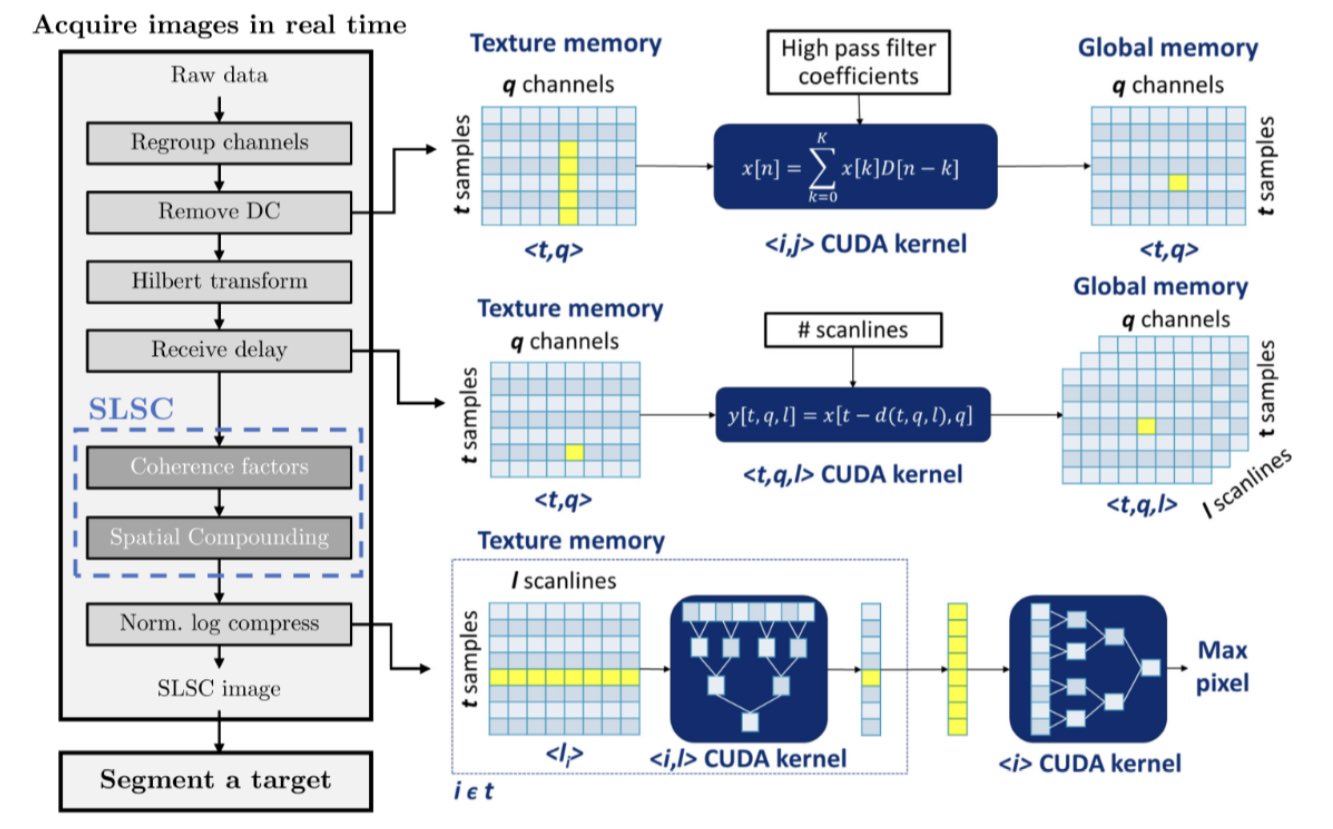 This paper introduces the first known real-time implementation of short-lag spatial coherence (SLSC) beamforming for photoacoustic imaging and applies this real-time algorithm to improve signal segmentation during photoacoustic-based visual servoing with low-energy lasers. Results are promising for the use of low-energy, miniaturized lasers to perform GPU-SLSC photoacoustic-based visual servoing in the operating room with laser pulse repetition frequencies as high as 41.2 Hz.
Citation: González E, Bell MAL, GPU implementation of photoacoustic short-lag spatial coherence imaging for improved image-guided interventions, Journal of BiomedicalOptics, 25(7):077002, 2020 [pdf]
 The following PULSE Lab abstracts were accepted for presentation during the 2020 IEEE International Ultrasonics Symposium (IUS) to be held on September 6-11, 2020 online (due to COVID-19).
Congrats to Alycen, Eduardo, Michelle, Kelley, and Mardava!
Prof. Bell also collaborated with colleagues on the following work that will be presented at IEEE IUS 2020:
In addition to the above presentations, Prof. Bell will give an invited lecture on the topic:
Symposium website: https://2020.ieee-ius.org
Congratulations to Michelle Graham! Her first-author journal paper entitled Simulations and human cadaver head studies to identify optimal acoustic receiver locations for minimally invasive photoacoustic-guided neurosurgery was accepted to the journal Photoacoustics.
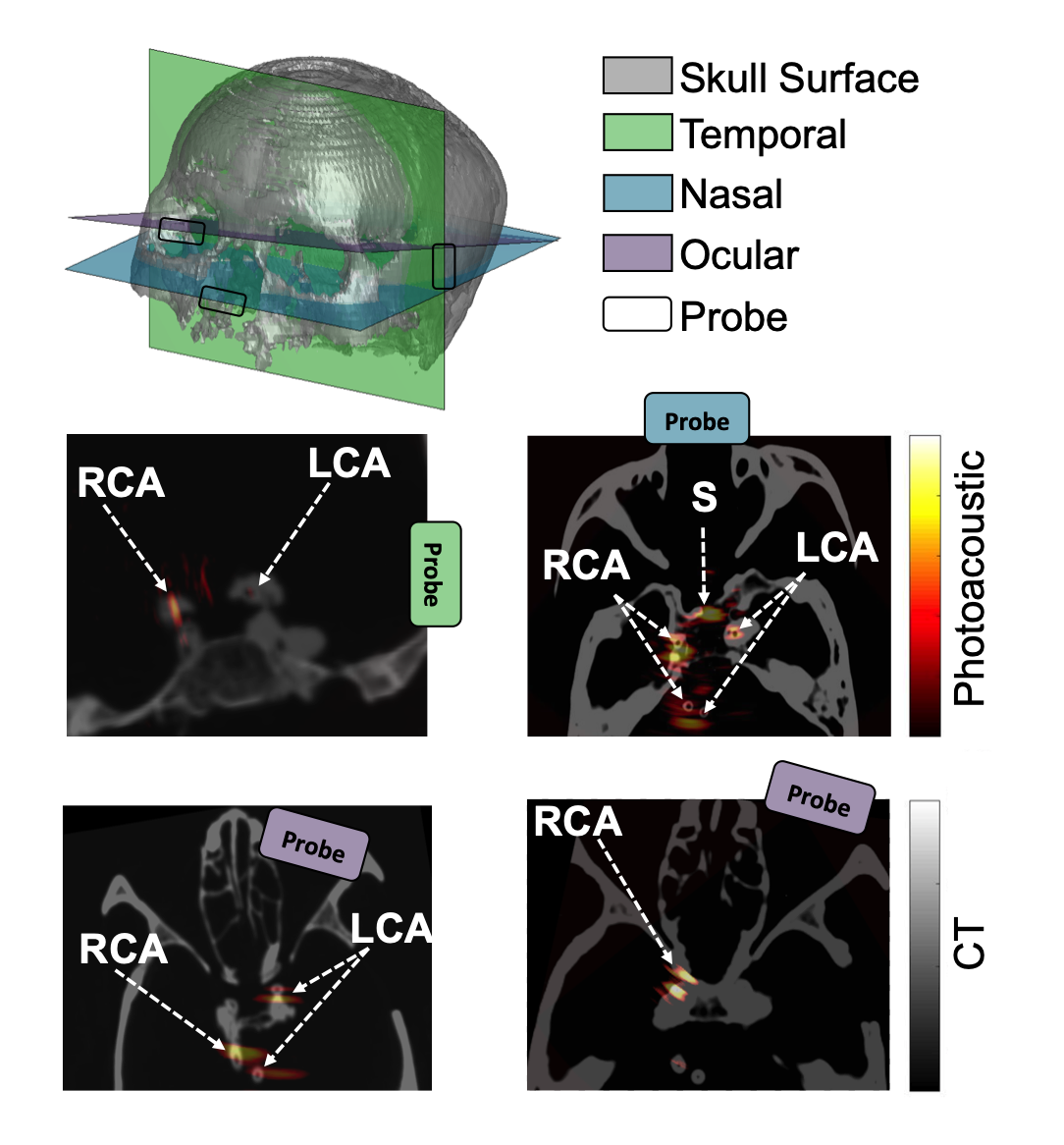
 This paper presents simulation and experimental studies performed with both an intact human skull (which was cleaned from tissue attachments) and a complete human cadaver head (with contents and surrounding tissue intact) to investigate optimal locations for ultrasound probe placement during photoacoustic-guided surgeries of the skull base. The combined simulation and experimental results newly introduce the eye as a suitable acoustic window for surgical guidance. We also demonstrate a light delivery design that is suitable for patient use. Results are generally promising toward identifying, quantifying, and overcoming major system design barriers for progression to future patient testing.
Citation: Graham MT, Huang J, Creighton FX, Bell MAL, Simulations and human cadaver head studies to identify optimal acoustic receiver locations for minimally invasive photoacoustic-guided neurosurgery, Photoacoustics, 19:100183, 2020 [pdf]
Congratulations to Michelle Graham! Her first-author journal paper entitled Photoacoustic Spatial Coherence Theory and Applications to Coherence-Based Image Contrast and Resolution was accepted to the journal IEEE Transactions on Ultrasonics, Ferroelectrics, and Frequency Control.
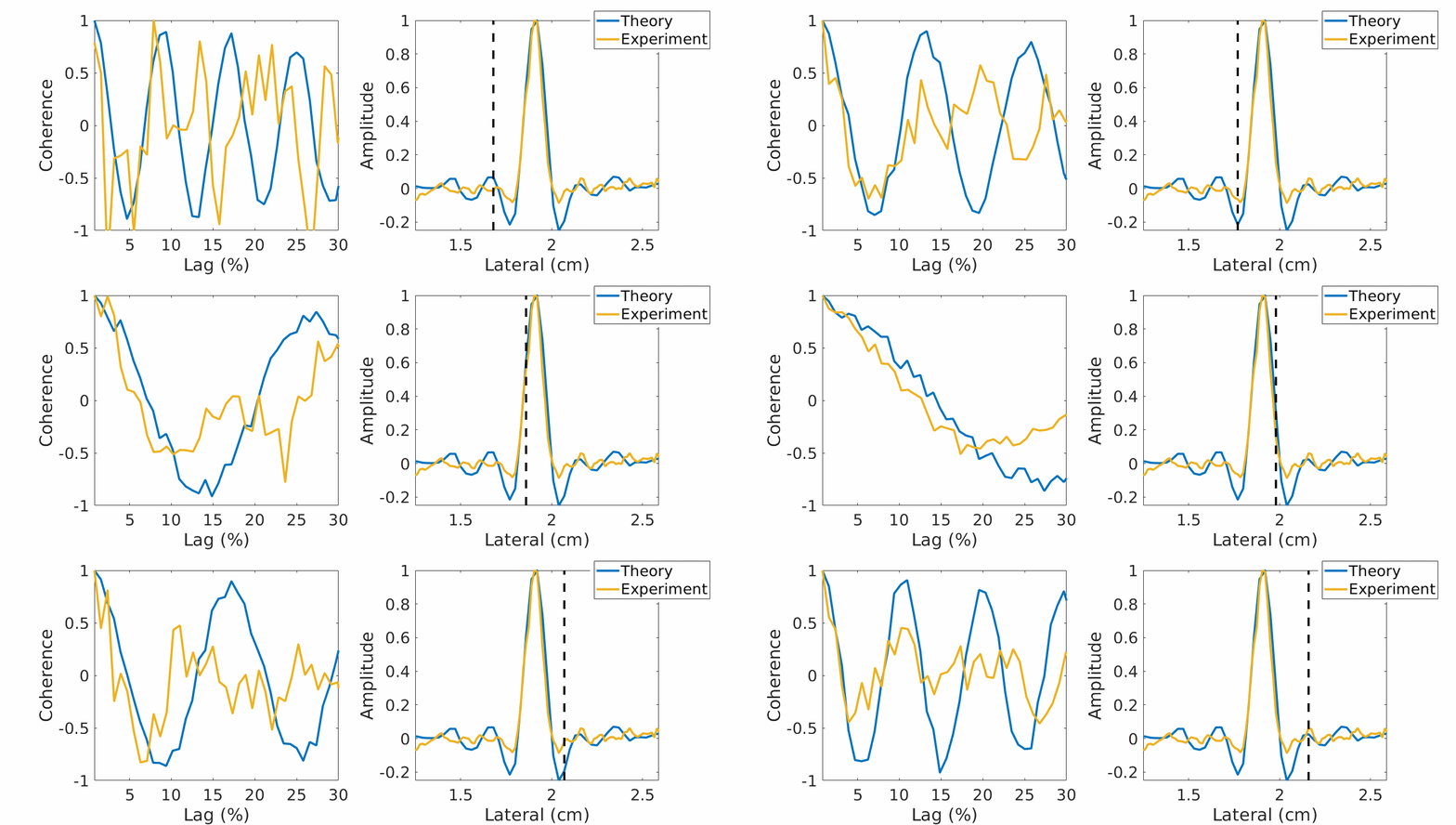 This paper presents the first known theoretical derivation for photoacoustic spatial coherence functions, demonstrating excellent agreement with experimental results, particularly in the short spatial lag region, which is represented as a percentage of the receive aperture (click on the .gif to see for yourself). The coherence functions theory can be described by relating the van Cittert Zernike theorem to photoacoustics. We achieved the associated incoherent source requirement by modeling a photoacoustic target as a collection of spatially incoherent absorbers. This theory was then used to hypothesize and test previously unexplored principles for optimizing photoacoustic short-lag spatial coherence (SLSC) images, including the influence of the incident light profile on photoacoustic spatial coherence functions and associated SLSC image contrast and resolution.
Citation: Graham MT, Bell MAL, Photoacoustic Spatial Coherence Theory and Applications to Coherence-Based Image Contrast and Resolution, IEEE Transactions on Ultrasonics, Ferroelectrics, and Frequency Control (accepted May 26, 2020) [pdf]
Congrats to Reese Dunne! He was our summer Research Experience for Undergraduates (REU) student who conducted the first ever virtual summer research project with us. His research topic was centered on a comparison of compressional and elastic wave simulations for presurgical planning of photoacoustic guided neurosurgery, building on recently published paper from the PULSE Lab. His outstanding work earned him a second place presentation award at the 2020 Computational Sensing and Medical Robotics (CSMR) REU Final Presentations Award Ceremony. He joins a long list of PULSE Lab REU students to win this award.
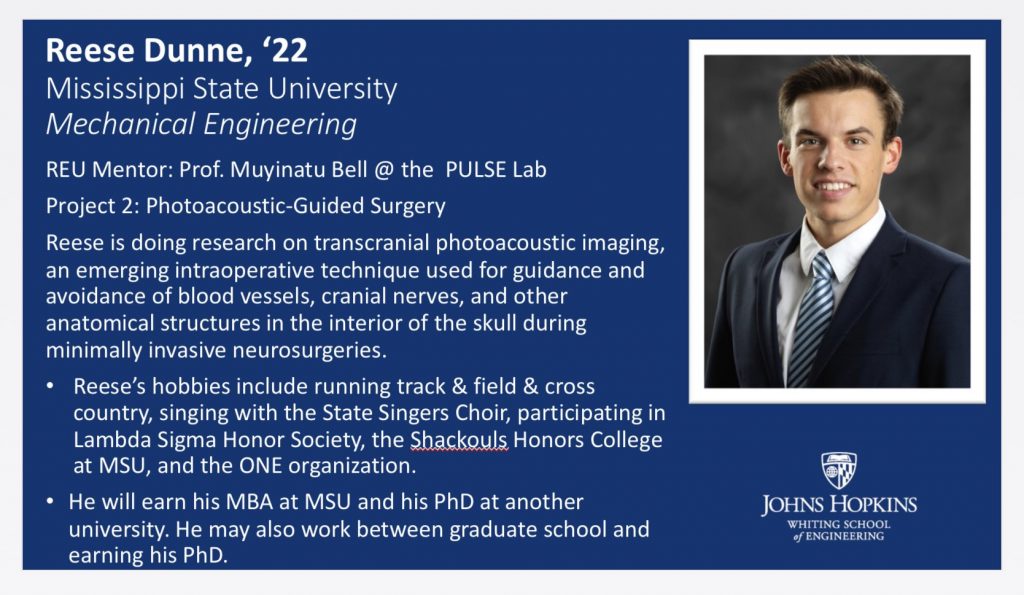
Special thanks to Reese’s graduate student mentor, Michelle Graham.
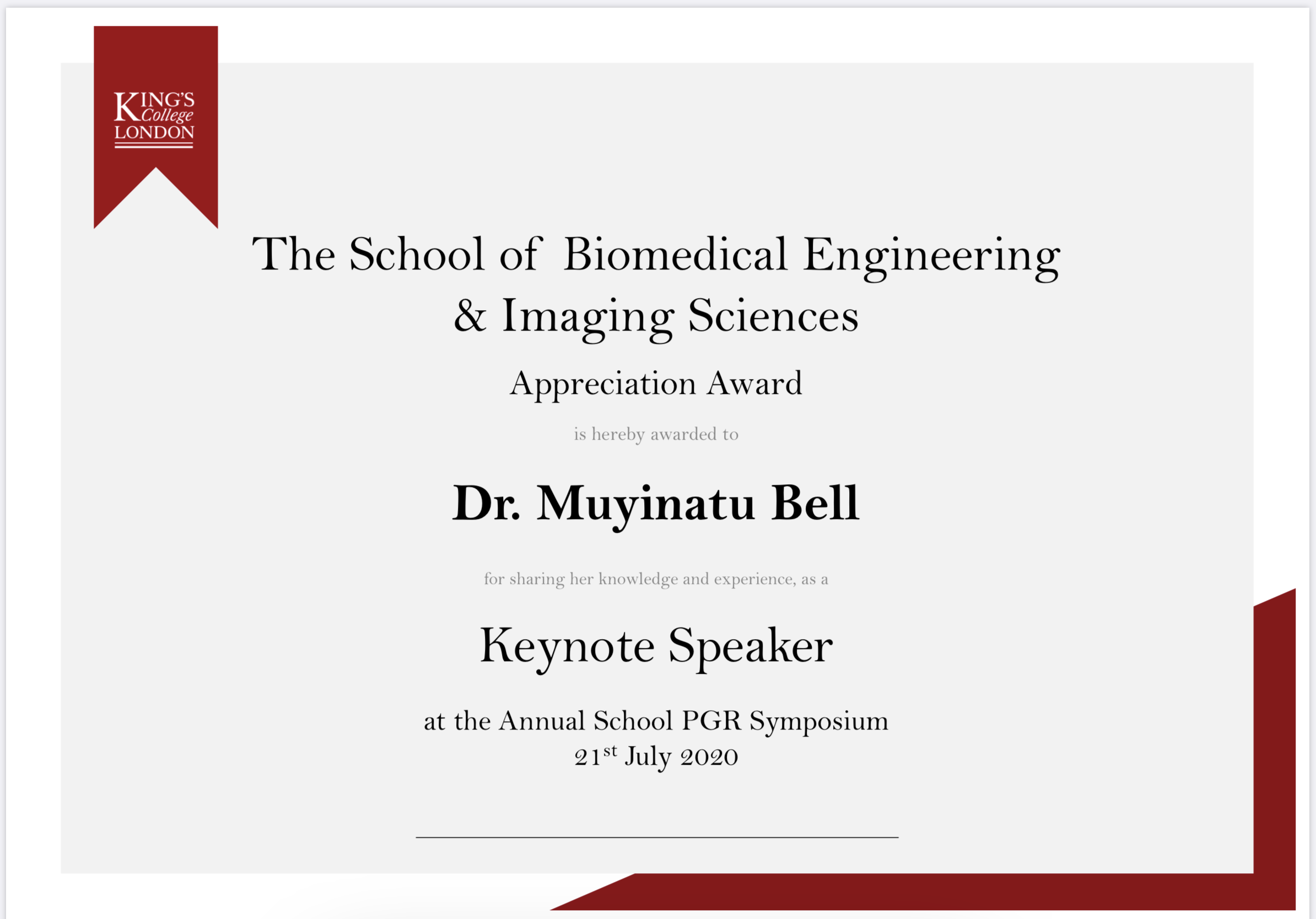
Prof. Bell was invited to give a keynote presentation at the annual King’s College London School of Biomedical Engineering and Imaging Sciences (BMEIS) Postgraduate Research (PGR) Symposium. Her presentation was delivered via Microsoft Teams on the topic “Photoacoustic Imaging for Surgical and Interventional Guidance,” which included a discussion of her career path. After this presentation, she received a thoughtful appreciation award for her participation:
Congratulations to Arun Nair! His first-author journal paper entitled Deep learning to obtain simultaneous ultrasound image and segmentation outputs from a single input of raw channel data was accepted to IEEE Transactions on Ultrasonics, Ferroelectrics, and Frequency Control. The paper will appear in the journal’s special issue on Deep Learning in Medical Ultrasound – from image formation to image analysis.
 This paper explores the use of deep neural network (DNNs) as alternatives to delay-and-sum beamforming. The DNNs learned information directly from raw channel data to simultaneously generate both a segmentation map for automated ultrasound tasks and a corresponding ultrasound B-mode image for interpretable supervision of the automation. Although the focus was visualization and segmentation of anechoic targets surrounded by tissue, the concept can be adapted to any specific task of interest. Overall, the DNNs successfully translated feature representations learned from simulated data to phantom and in vivo data, which is promising for this novel approach to simultaneous ultrasound image formation and segmentation.
Citation: Nair AA, Washington K, Tran T, Reiter A, Bell MAL, Deep learning to obtain simultaneous ultrasound image and segmentation outputs from a single input of raw channel data, IEEE Transactions on Ultrasonics, Ferroelectrics, and Frequency Control (accepted May 6, 2020) [pdf]
Prof. Bell was invited to join the Editorial Board of IEEE Transactions on Medical Imaging as an Associate Editor. The list and profiles of IEEE T-UFFC Associate Editors are maintained here.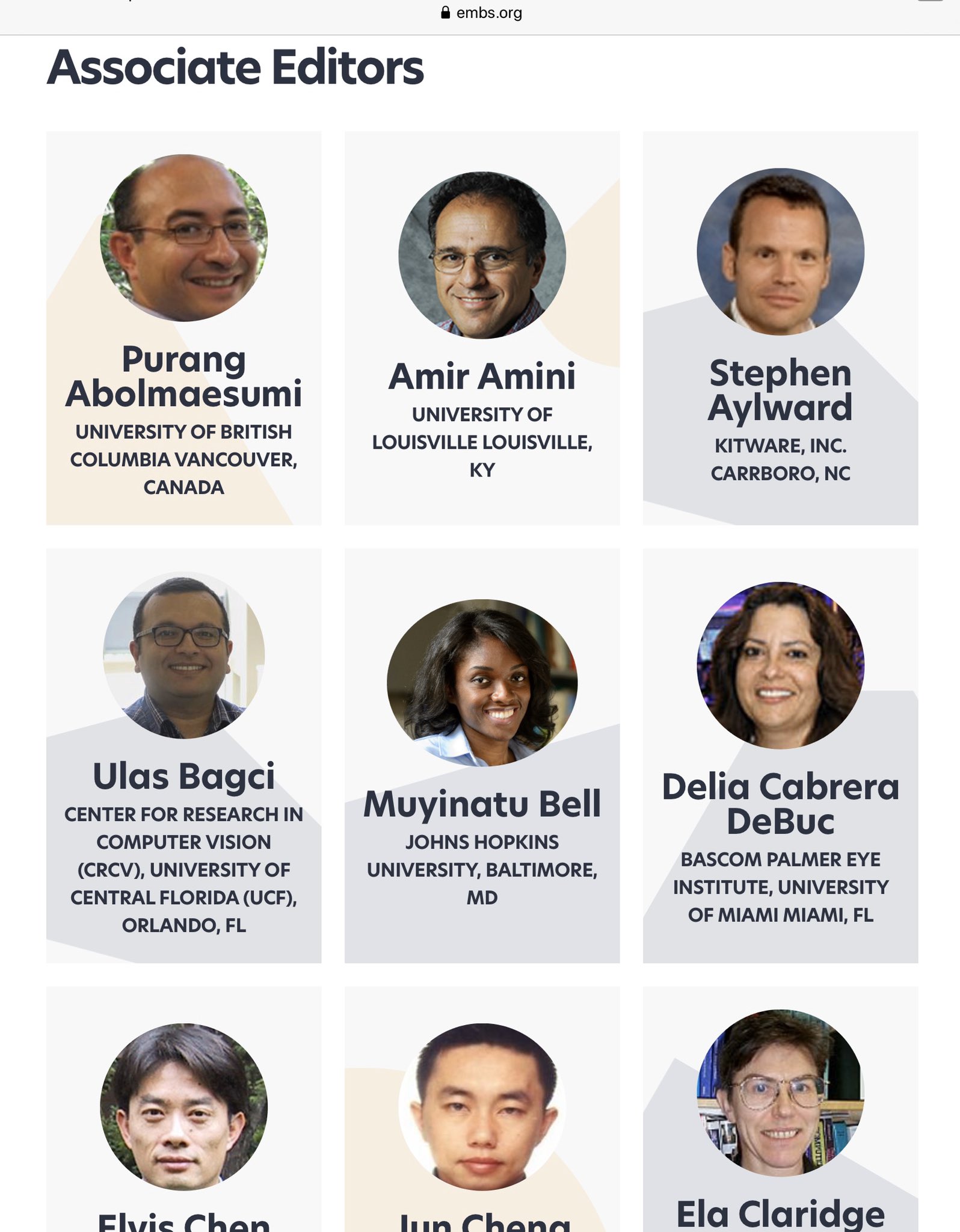
 Congratulations to Alycen Wiacek! Her first-author journal paper entitled CohereNet: A Deep Learning Architecture for Ultrasound Spatial Correlation Estimation and Coherence-Based Beamforming was accepted to IEEE Transactions on Ultrasonics, Ferroelectrics, and Frequency Control. The paper will appear in the journal’s special issue on Deep Learning in Medical Ultrasound – from image formation to image analysis.
This paper presents details of a novel deep neural network (DNN) architecture, named CohereNet, that was trained to estimate spatial correlation functions. The DNN-estimated correlation functions were then used to create short-lag spatial coherence ultrasound images at a faster rate than a CPU approach and with more accuracy than a GPU approach. Results were generalizable across multiple phantoms, in vivo datasets, ultrasound transducers, and ultrasound system manufacturers not included during training. CohereNet has additional potential benefits in low-power DNN-based FPGA implementations of coherence-based beamforming for miniaturized ultrasound imaging systems. In addition, CohereNet has potential utility in other areas of ultrasound imaging that require fundamental cross-correlation calculations, including elastography, speckle tracking, sound speed correction, and other advanced beamforming algorithms, such as minimum variance beamforming.
Citation: A. Wiacek, E. González and M. A. L. Bell, “CohereNet: A Deep Learning Architecture for Ultrasound Spatial Correlation Estimation and Coherence-Based Beamforming,” IEEE Transactions on Ultrasonics, Ferroelectrics, and Frequency Control, accepted March 20, 2020 [pdf]
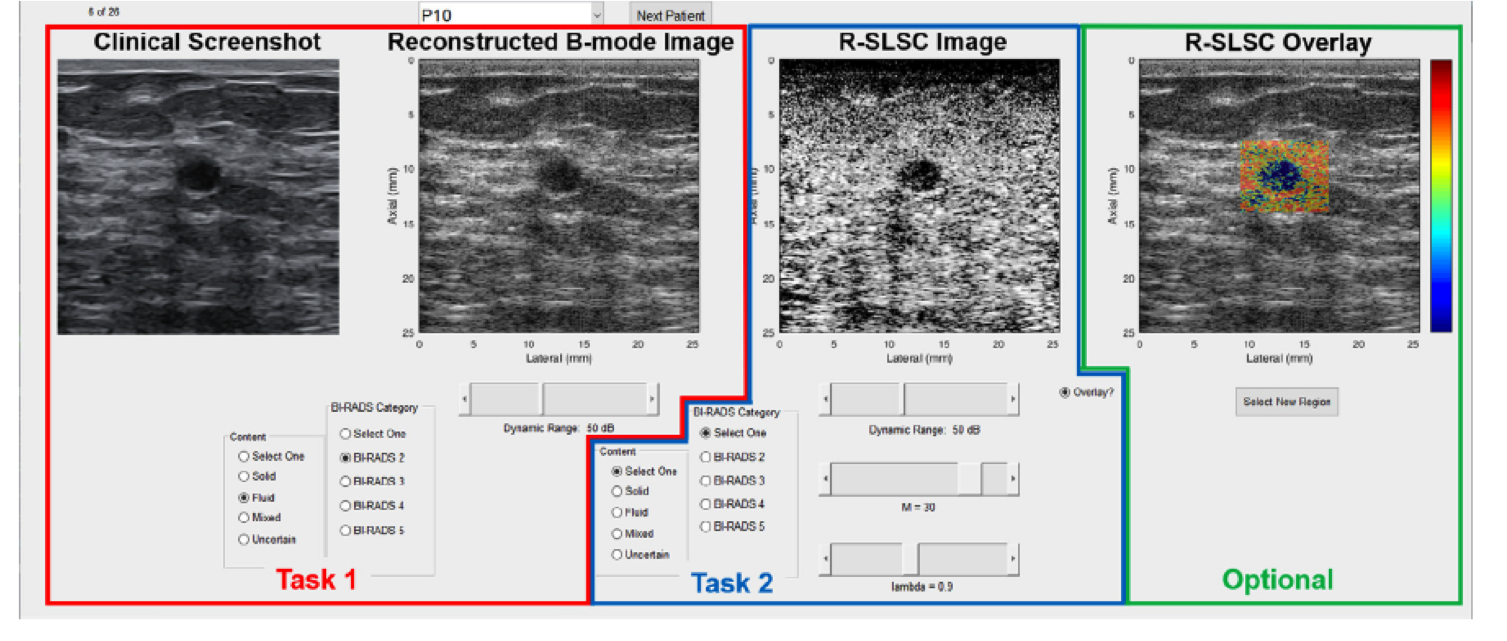 Congratulations to Alycen Wiacek! Her first-author journal paper entitled Coherence-based beamforming increases the diagnostic certainty of distinguishing fluid from solid masses in breast ultrasound exams was accepted to Ultrasound in Medicine & Biology. A major highlight of this paper is the inclusion of a task-based user study to determine the ability of coherence-based beamforming, specifically robust short-lag spatial coherence (R-SLSC) imaging, to assess breast mass content and ultimately impact clinical care.
The information from R-SLSC images reduced the uncertainty of fluid mass content from 47.5% to 15.8%, and the number of fluid-filled masses recommended for biopsy was reduced from 43.3% to 13.3%. This work is the first to investigate coherence-based beamforming in breast ultrasound to inform clinical decision making, highlighting the potential of this novel technique to improve diagnostic certainty and to reduce the number of unnecessary biopsies of of fluid-filled breast masses.
Citation: A Wiacek, E Oluyemi, K Myers, L Mulen, MAL Bell, Coherence-based beamforming increases the diagnostic certainty of distinguishing fluid from solid masses in breast ultrasound exams, Ultrasound in Medicine and Biology, accepted January 20, 2020 [pdf]
The PULSE Lab recently returned from SPIE Photonics West 2020, after enjoying multiple opportunities for exposure throughout various aspects of this grand annual event with 23,000+ attendees. First, Professor Bell was invited to give a Hot Topics presentation during the conference Plenary session. She was selected as the inaugural Journal of Biomedical Optics speaker for having the most impactful paper in 2019.
Three PULSE Lab students additionally presented aspects of their work on this hot topic.
Michelle Graham presented “Photoacoustic image guidance and robotic visual servoing to mitigate fluoroscopy during cardiac catheter interventions”
Alycen Wiacek presented “Dual-wavelength photoacoustic imaging for guidance of hysterectomy procedures”
Eduardo Gonzalez presented “A GPU approach to real-time coherence-based photoacoustic imaging and its application to photoacoustic visual servoing”
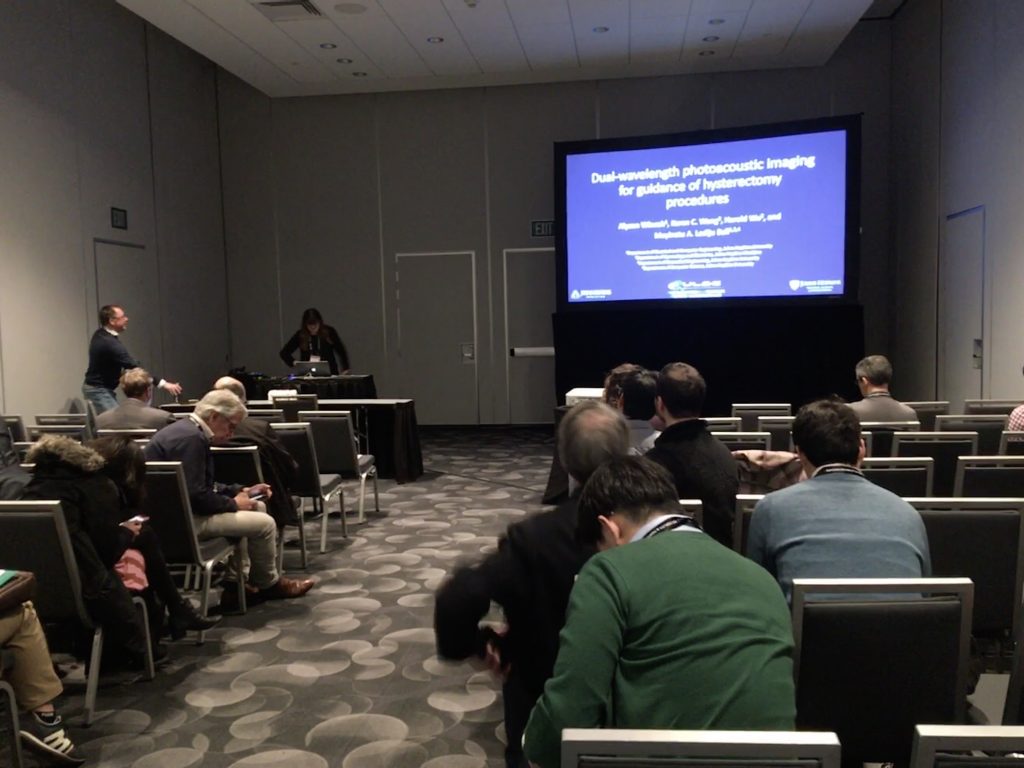
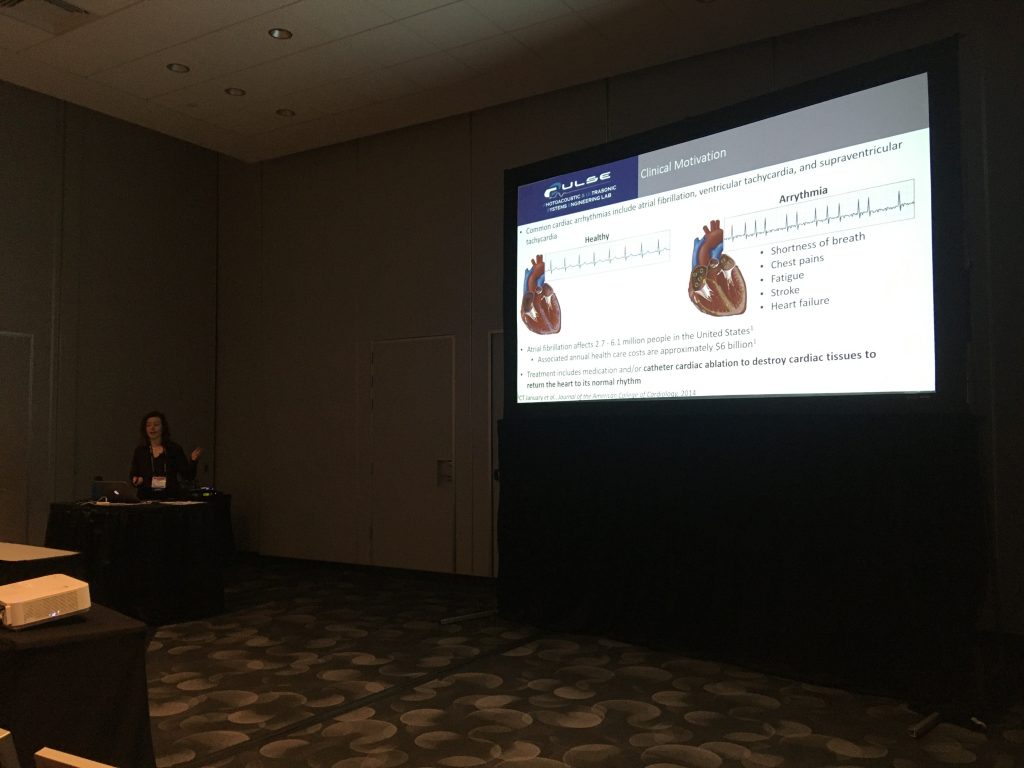
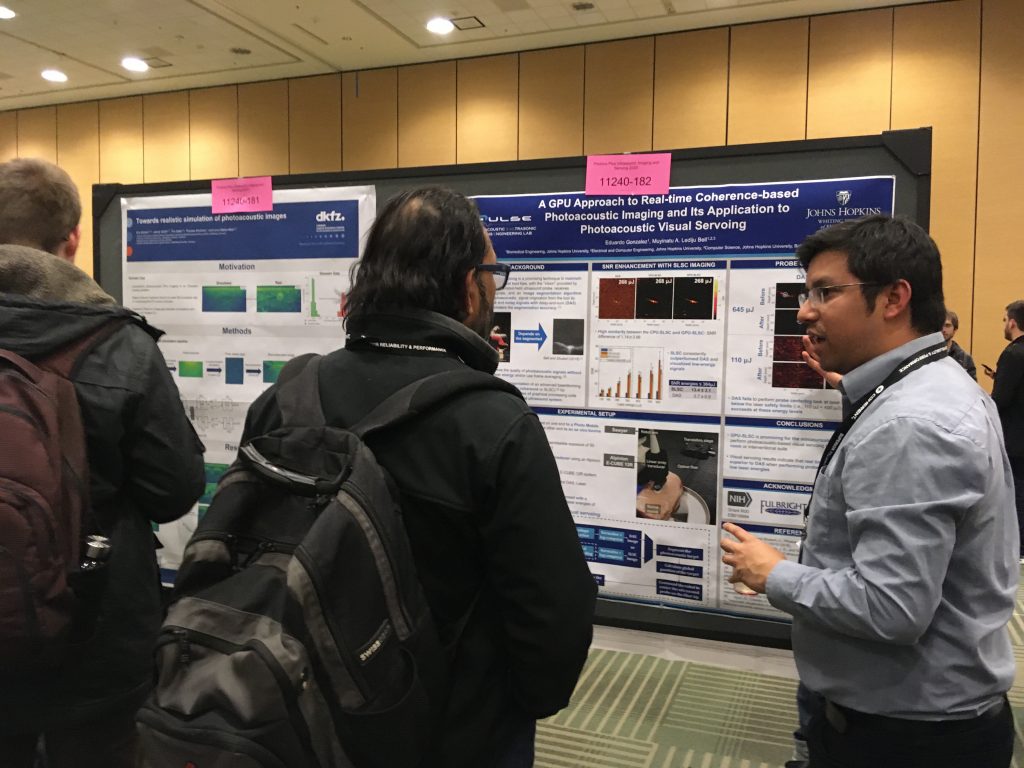
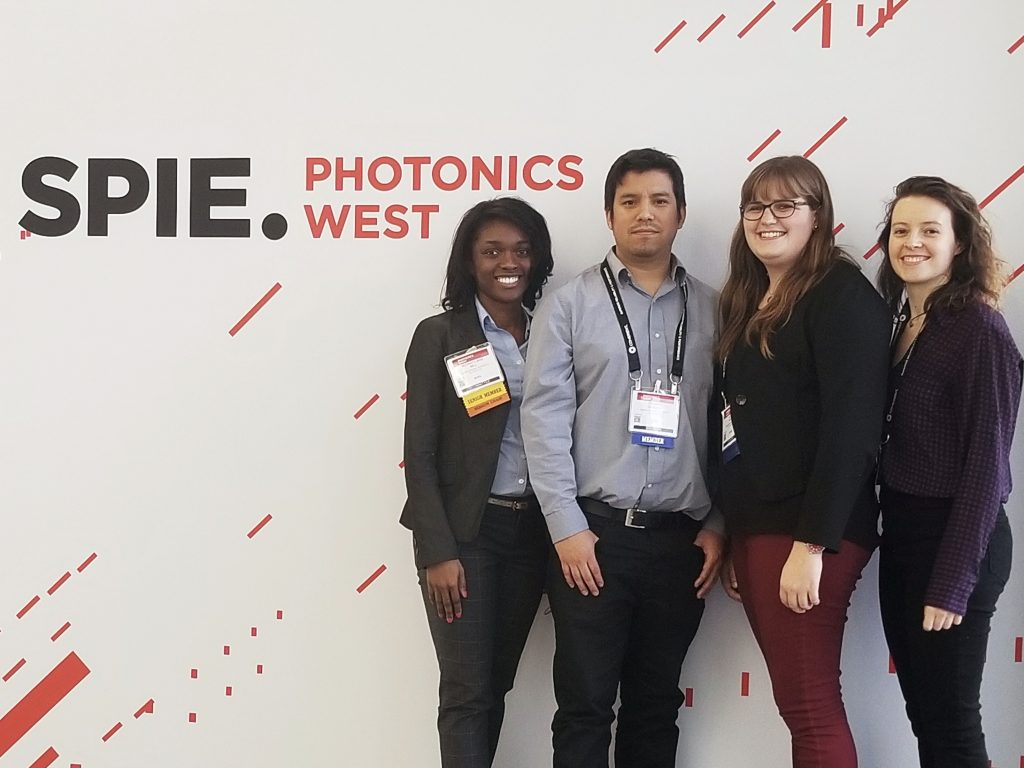
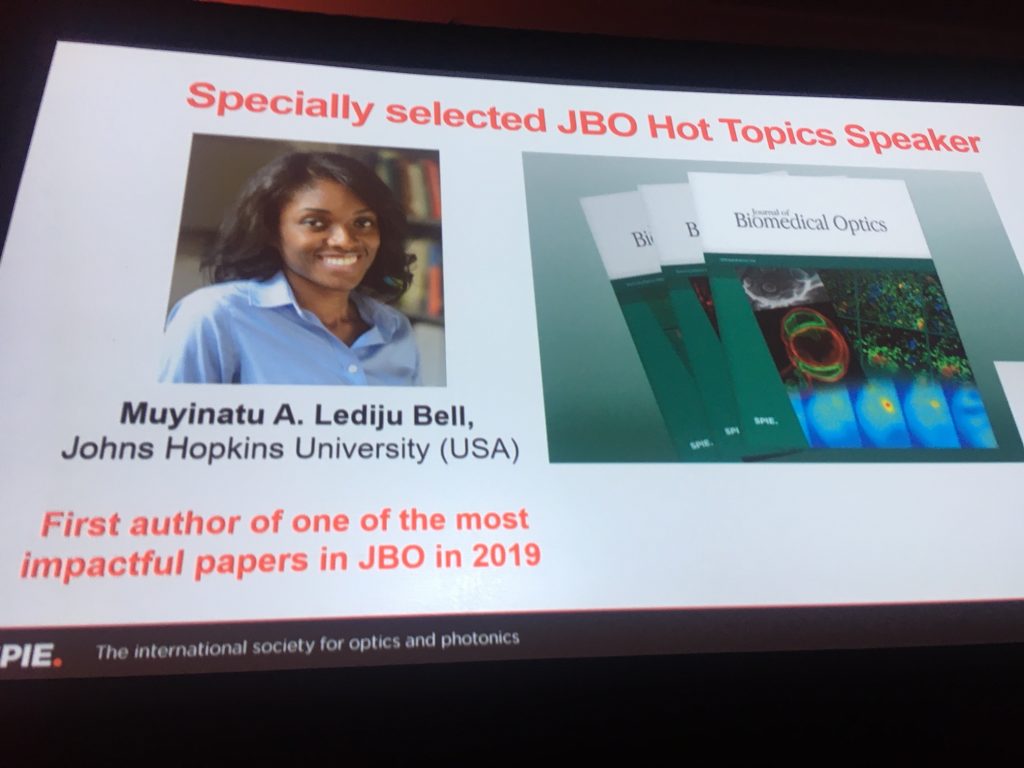
In addition to these four technical presentations, PULSE Lab members who were involved in the first known in vivo demonstration of photoacoustic image guidance for abdominal surgeries were featured in the Show Daily Weekend Edition (see pg. 3).
LaserFocusWorld Announcement (see first paragraph & “Hot Topics and Other Plenaries” section)
 Congratulations to Prof. Bell for being selected to receive the inaugural IEEE UFFC Star Ambassador Lectureship Award! This award from the IEEE Ultrasonics Ferroelectrics and Frequency Control Society is intended to support early career professionals with the delivery of technical talks highlighting their research. Up to $2,500 of support is provided to create new contacts and promote new collaborations with colleagues and students at academic institutions, national laboratories and local industry.
Three PULSE Lab abstracts were accepted to SPIE Photonics West. This conference will take place February 1-6, 2019 at the The Moscone Center in San Francisco, California.
This work spans two tracks within the SPIE Photonics West BiOS Conference:
In addition to these three PULSE Lab contributions, Prof. Bell was invited to present her research during the BiOS Hot Topics Plenary Event on Saturday, February 1, 2020.
8:15 PM – 8:25 PM
Photoacoustic Imaging Assistants for Minimally Invasive Surgeries and Procedures
LaserFocusWorld Announcement (see first paragraph & “Hot Topics and Other Plenaries” section)
 IEEE is the world’s largest technical professional society and serves professionals involved in all aspects of the electrical, electronic, and computing fields and related areas of science and technology. Congratulations to Prof. Muyinatu Bell, who was elevated to the grade of IEEE Senior Member this year, an honor that is only bestowed on those who have made significant contributions to the profession.
IEEE Senior Members are eligible to hold executive IEEE volunteer positions, can serve as a reference for other applicants for Senior Membership, and are invited to participate on the panel to review Senior Member applications.
The full IEEE criteria for elevating members to the Senior Member grade includes ten years of professional experience, five years of significant performance, and three references from current IEEE members holding Senior Member, Fellow, or Honorary Member grades.
Congratulations to Arun Nair! He thought outside of the box and used the same beamforming principles implemented in our ultrasound projects during his summer internship at Snap, Inc. in New York City, NY, resulting in a best paper award at the 27th ACM International Conference on Multimedia in Nice, France.
 Congratulations to Kendra Washington, our summer Research Experience for Undergraduates (REU) student and Leadership Alliance Scholar from Georgia Institute of Technology. Her first-author abstract to the Biomedical Engineering Society (BMES) meeting was accepted as as part of the Undergraduate Research & Design track. She will present in the Biomedical Imaging and Instrumentation session.
Title:
Effect of Raw Ultrasound Data Downsampling on Small Cyst Segmentation with Deep Neural Networks
Authors:
Kendra Washington, Arun Nair, Muyinatu A. Lediju Bell
 PULSE Lab grad student Eduardo González was selected by the IEEE International Ultrasonics Symposium Organization Committee to receive a Student Travel Award to attend the 2019 IEEE International Ultrasonics Symposium taking place October 6-9, 2019 at the Scottish Event Campus in Glasgow, Scotland. Eduardo will give an oral presentation on his work entitled GPU implementation of coherence-based photoacoustic beamforming for autonomous visual servoing of a needle tip. Congratulations Eduardo!
 Congratulations to Kelley Kempski! Her first author paper entitled, In vivo photoacoustic imaging of major blood vessels in the pancreas and liver during surgery, was accepted to the Journal of Biomedical Optics. This work is the first to demonstrate in vivo blood vessel visualization with possible applications to a range of photoacoustic-guided pancreatic and liver surgeries.
Special thanks to Alycen Wiacek, who mentored Kelley on this project in her role as Kelley’s graduate student mentor through the Research Experience for Undergraduates (REU) Computational Sensing and Medical Robotics (CSMR) summer program. This program was recently renewed with 3 more years of funding support from the National Science Foundation.
Citation: Kempski K, Wiacek A, Graham M, González E, Goodson B, Allman D, Palmer J, Hou H, Beck S, He J, Bell MAL, In vivo photoacoustic imaging of major blood vessels in the pancreas and liver during surgery, Journal of Biomedical Optics, 24(12):121905, 2019 [pdf]
Related News:
Kelley Kempski Wins Best Presentation Award
SPIE Photonics West 2019 Recap
 SPIE Senior Members are members of distinction honored for their professional experience, active involvement with the optics community and SPIE, and significant performance that sets them apart from peers. Prof. Muyinatu Bell was one of 106 members elected to join this list of distinguished individuals this year.
Congratulations to Alycen Wiacek. Her first-author abstract to the Biomedical Engineering Society (BMES) meeting was accepted as an oral presentation!
Title:
Coherence-Based Beamforming to Improve the Diagnostic Power of Breast Ultrasound Imaging
Authors:
Alycen Wiacek, Eniola Oluyemi, Kelly Myers, Susan Harvey, Muyinatu A. Lediju Bell
 Four PULSE Lab abstracts were accepted for presentation during the 2019 IEEE International Ultrasonics Symposium (IUS) to be held on October 6-9, 2019, at the Scottish Event Campus in Glasgow, Scotland.
Congrats to Alycen, Eduardo, Michelle, and Arun!
Symposium website: https://attend.ieee.org/ius-2019/
 Congratulations to Prof. Bell, who was selected to receive a competitive ORAU Ralph E. Powe Junior Faculty Enhancement Award, which is designed to help ORAU member institutions retain their best young faculty members. This award will provide seed funding for the project entitled, Robust Short-Lag Spatial Coherence Imaging of Hypoechoic Breast Masses, which focuses on development and patient testing of a novel beamforming method developed in the PULSE Lab to differentiate fluid-filled masses from solid breast masses with greater certainty than the current ultrasound beamforming methods used in breast clinics today. Fluid-filled masses are often benign, but with current uncertainty rates, many fluid-filled masses undergo the same costly, time-consuming, and anxiety-provoking diagnostic work-ups as malignant masses, which are often solid.
The long-term goal of this research is to improve breast cancer screening and detection for the benefit of patients and for the redistribution of more healthcare system resources to cancer patients who need them most.
Related Highlights:
 Kelley Kempski, an undergraduate researcher in the PULSE Lab during Summer 2018 and winner of the NSF CSMR REU Best Presentation Award, received one of the highly competitive NSF GRFP Fellowships. We are excited to welcome Kelley back to our lab this fall! Kelley was admitted into the Johns Hopkins BME PhD program, and we are thrilled that she has chosen to pursue her graduate studies with us.
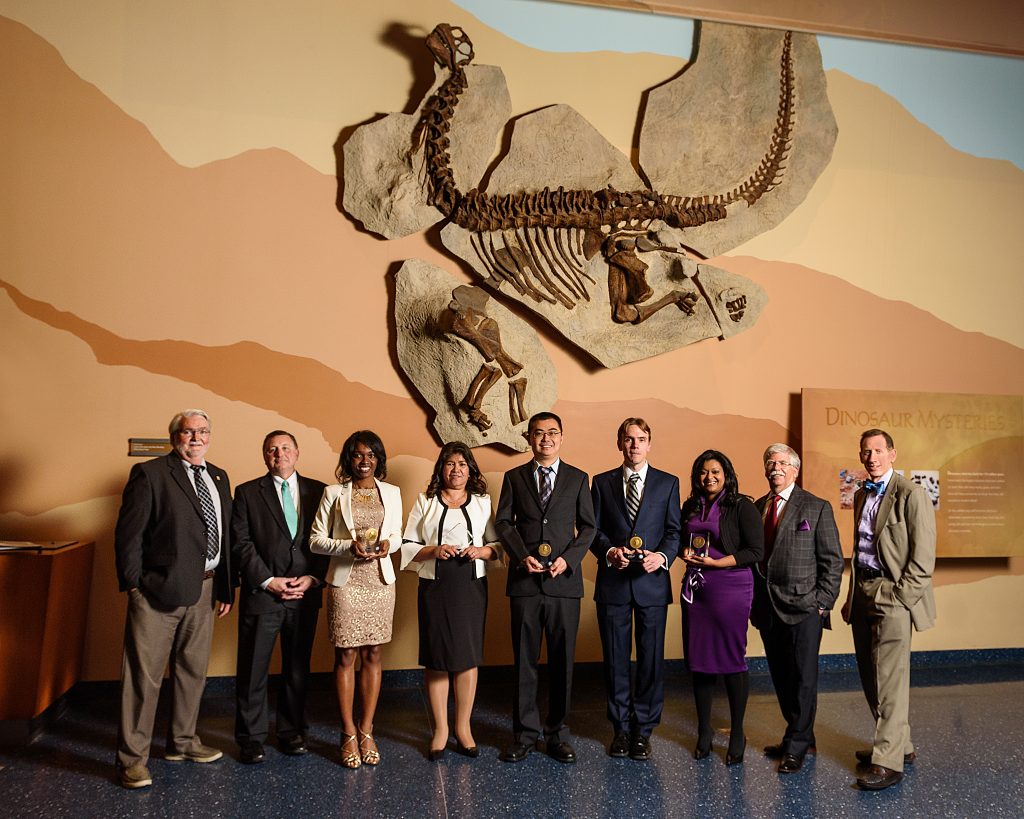
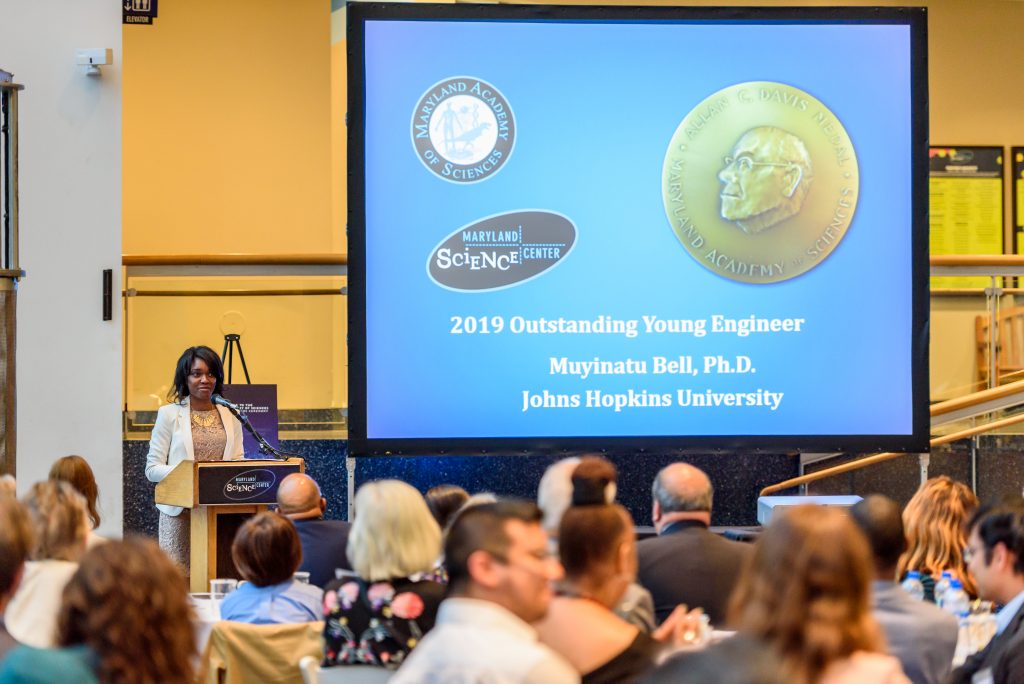
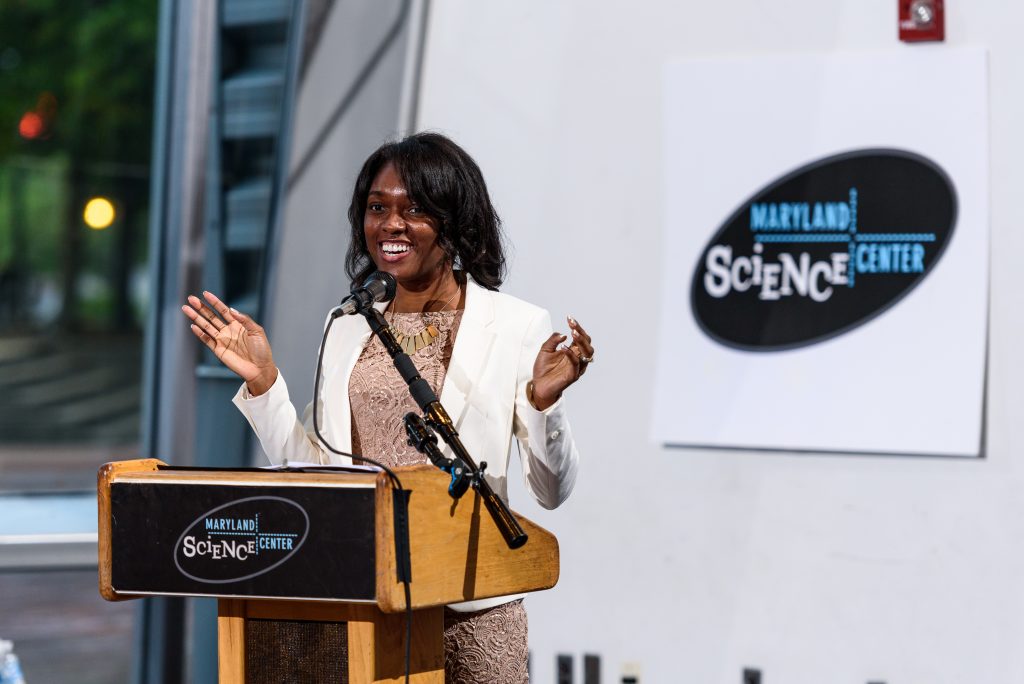
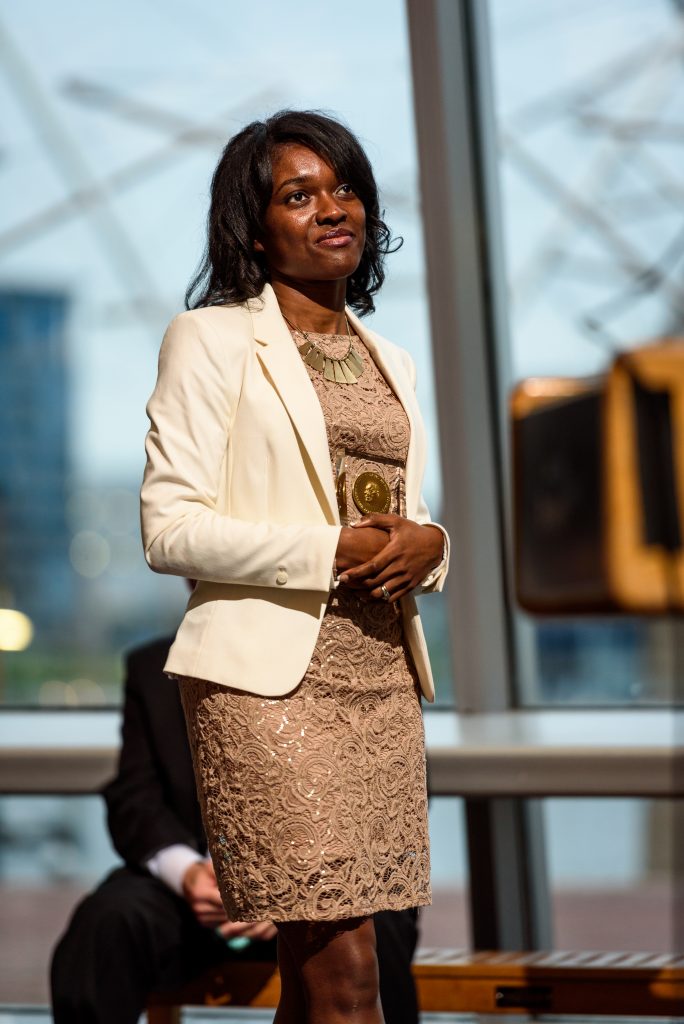
 Congratulations to Prof. Bell who was named as Maryland’s Outstanding Young Engineer by the Maryland Academy of Sciences and the Maryland Science Center. This award recognizes, encourages, and increases public awareness of the important work and accomplishments of young engineers, age 35 and under, residing in the state of Maryland. Important factors in the final decision are the recipient’s contributions to the advancement of his or her field of research, the possibility that this work could become a game changer, and the prospect of the recipient to rise to national and international prominence in the next 5-10 years.
Prof. Bell is recognized for her pioneering and innovative contributions to the field of photoacoustic-guided surgery. These innovations include novel light delivery systems that attach to surgical tools, coherence-based and deep learning beamforming techniques to clarify images, and integration of photoacoustic imaging systems with surgical and interventional robots. The award is accompanied by the Allan C. Davis medal and a cash prize.
Maryland Science Center Press Release
Whiting School of Engineering Announcement
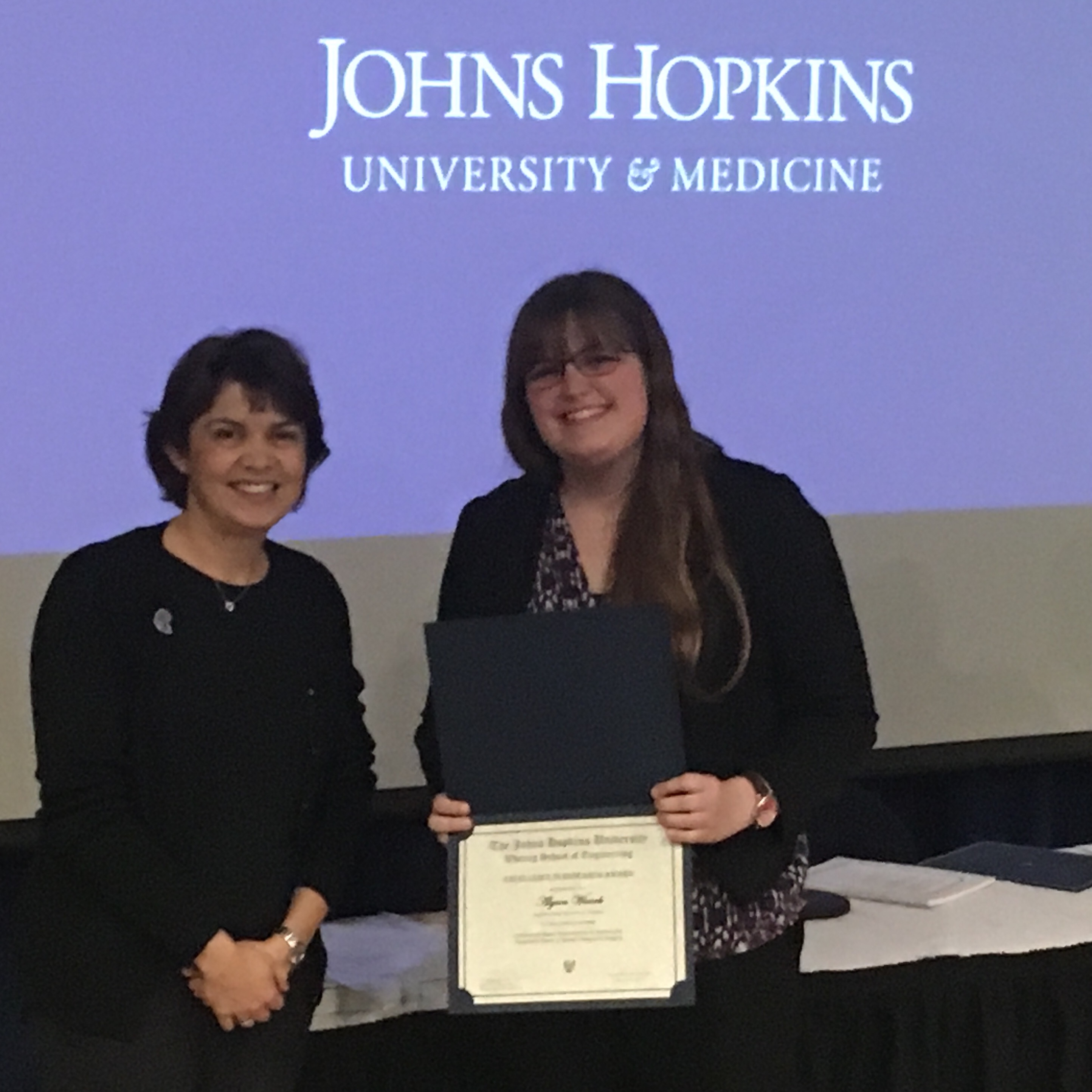 Congratulations to Alycen Wiacek! She won the Whiting School of Engineering Trainee Award at the DOM/WSE Hopkins Research Retreat, a joint retreat with the Department of Medicine (DOM) and Whiting School of Engineering (WSE), which took place on Friday, March 1, 2019 at the School of Medicine’s East Baltimore Campus. This award highlights one graduate student or postdoc within the WSE who submits a written statement clearly explaining the broad significance of his or her research to engineering, the major research hypothesis or question, the research approach and findings, and the relationship between this research and the applicant’s early career goals. Alycen presented her work on Coherence-Based Beamforming to Improve the Diagnostic Power of Breast Ultrasound Imaging. She was one of five finalists from multiple engineering departments across WSE.
Prof. Efie Kokkoli from the JHU Department of Chemical and Biomolecular Engineering announced and presented Alycen with the award, which includes a $500 prize.
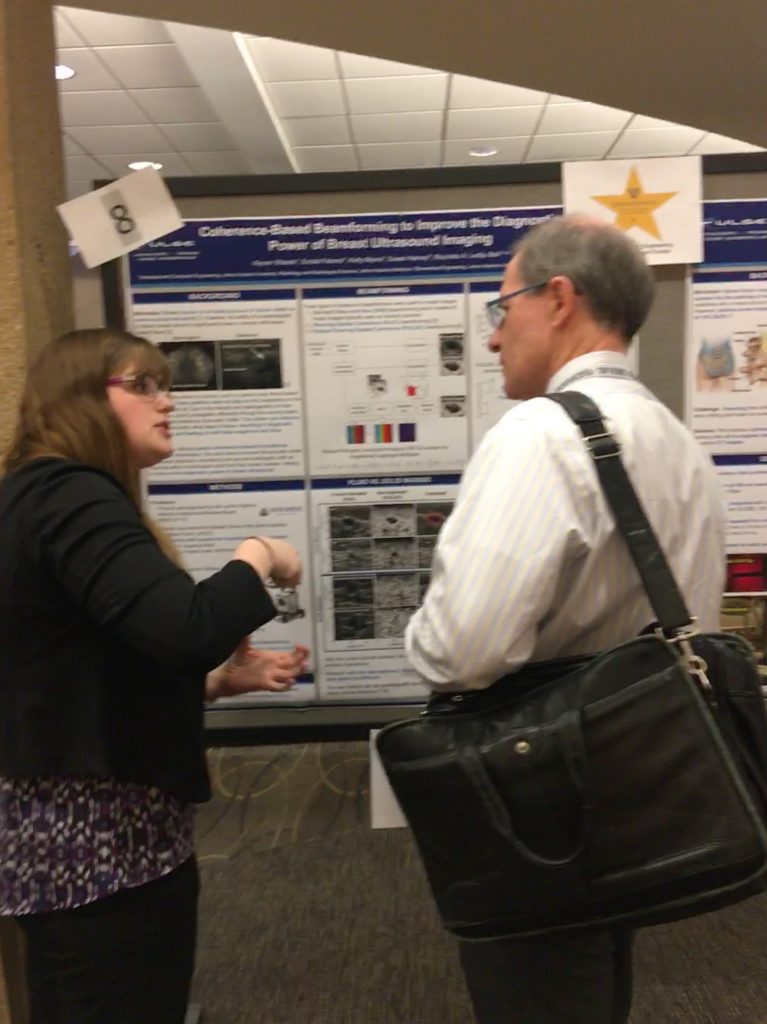
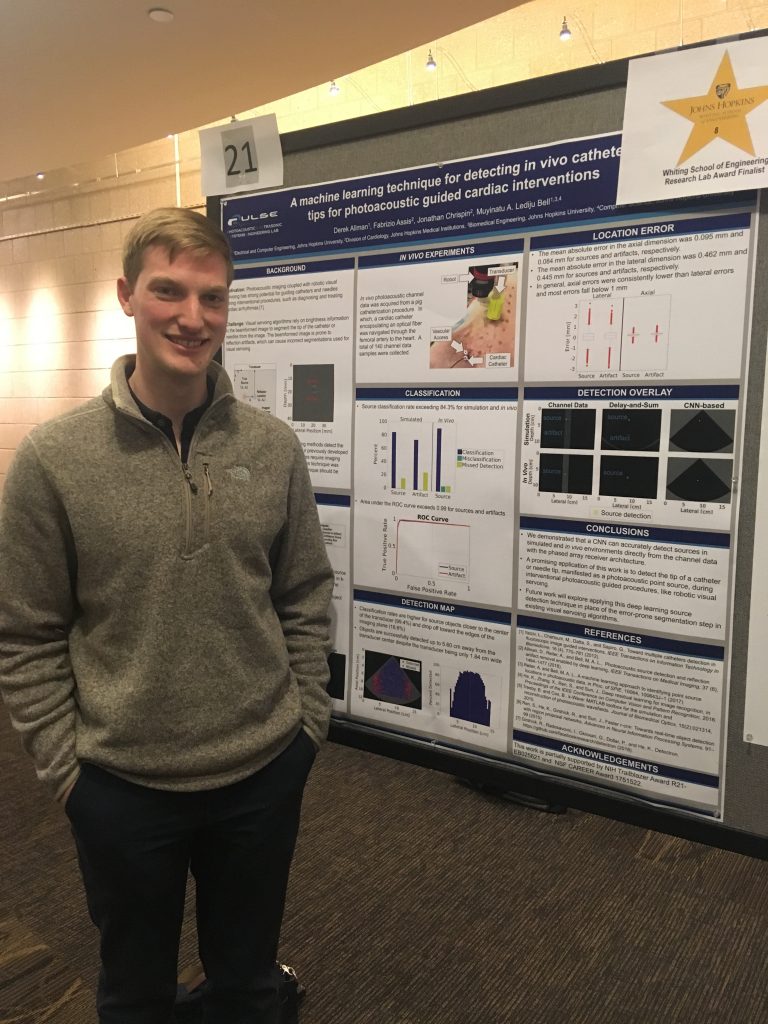
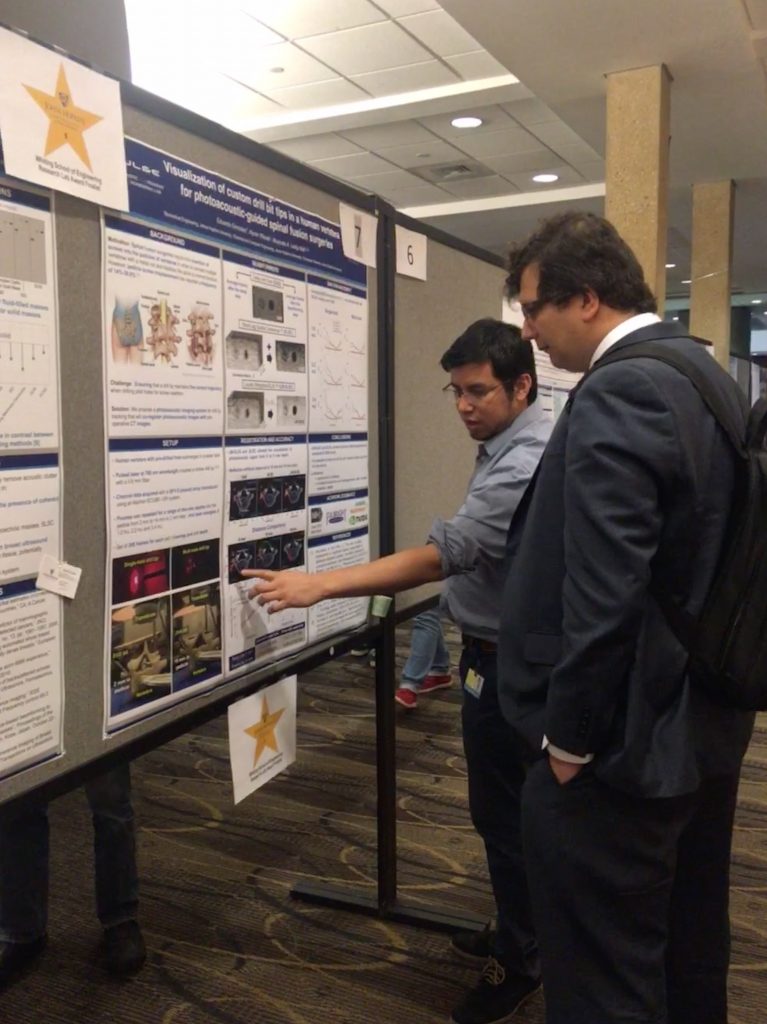
Also at the retreat, the PULSE Lab was recognized as one of three finalists for the WSE Lab Excellence Award. The lab was well represented with excellent poster presentations by Alycen, Eduardo, and Derek:
 Congratulations to Prof. Muyinatu Bell who was selected by the Alfred P. Sloan Foundation as a 2019 Sloan Research Fellow in Physics. The Sloan Research Fellowships are provided to stimulate fundamental research by early-career scientists and scholars of outstanding promise. These two-year fellowships are awarded in recognition of distinguished performance and the unique potential of recipients to make substantial contributions to their field. A total of 126 Sloan Research Fellowships are awarded annually with only 23 awarded in Physics this year.
“Sloan Research Fellows are the best young scientists working today,” says Adam F. Falk, president of the Alfred P. Sloan Foundation. “Sloan Fellows stand out for their creativity, for their hard work, for the importance of the issues they tackle, and the energy and innovation with which they tackle them. To be a Sloan Fellow is to be in the vanguard of twenty-first century science.”
The 2019 Sloan Research Fellows each receive a two-year fellowship in the amount of $70,000 to further their research.
Sloan Foundation Press Release
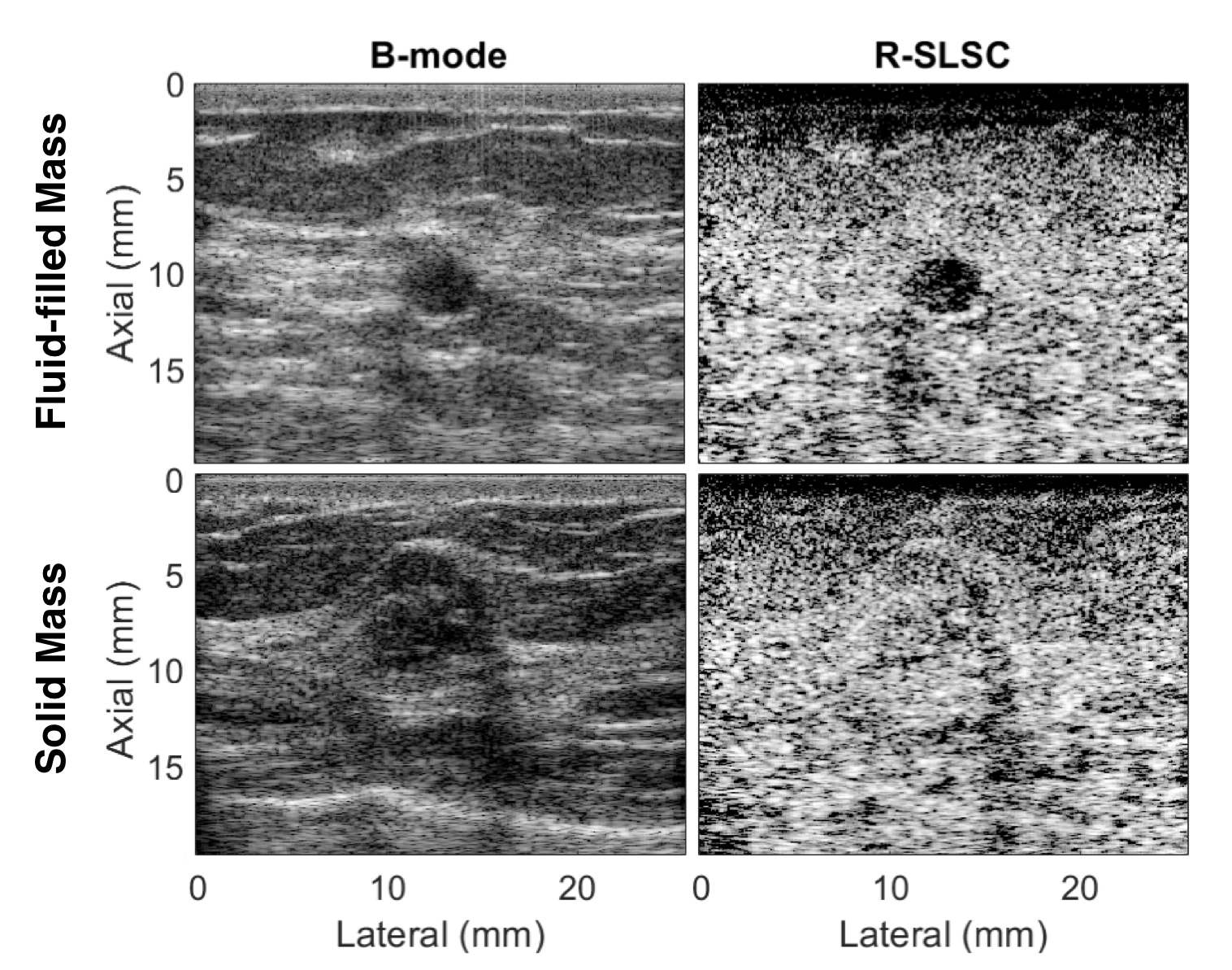 Congratulations to Alycen Wiacek! Her first-author journal paper entitled “Robust Short-Lag Spatial Coherence Imaging of Breast Ultrasound Data: Initial Clinical Results” was accepted to the IEEE Transactions on Ultrasonics, Ferroelectrics, and Frequency Control. This paper will appear in the Special Issue on Pilot Clinical Translation of New Medical Ultrasound Methodologies.
This work is the first to investigate the application of short-lag spatial coherence (SLSC) imaging — and two new variations of this method developed in our lab (i.e., M-Weighted SLSC imaging and Robust SLSC imaging) — to breast ultrasound data. The two newer approaches revisit the lag summation step of SLSC imaging to achieve additional robustness to coherence outliers through weighted summation of individual coherence images (i.e., M-weighting) and through the application of robust principal component analysis (i.e., Robust SLSC, or R-SLSC).
An interesting finding from this initial investigation is that solid breast masses, which appear hypoechoic in traditional B-mode images, have similarly high coherence to that of surrounding tissue in these coherence-based images. This finding represents the first known instance of this phenomenon in hypoechoic ultrasound data from any type of tissue (including simulated, phantom, and in vivo liver data). This work shows great promise for implementing SLSC, M-Weighted SLSC, and/or R-SLSC imaging to distinguish between fluid-filled and solid hypoechoic breast masses, which has implications for improved breast cancer detection and screening, more streamlined diagnostic work ups, and reduced patient anxiety over suspicious breast mass findings.
Citation: A Wiacek, OMH Rindal, E Falomo, K Myers, K Fabrega-Foster, S Harvey, MAL Bell, Robust Short-Lag Spatial Coherence Imaging of Breast Ultrasound Data: Initial Clinical Results, IEEE Transactions on Ultrasonics, Ferroelectrics, and Frequency Control, accepted November 20, 2018 [pdf]
Also Available on Journal Website: https://ieeexplore.ieee.org/document/8548567
Prof. Bell recently joined the Editorial Board of the IEEE Transactions on Ultrasonics, Ferroelectrics, and Frequency Control (T-UFFC) as an Associate Editor. The list and profiles of IEEE T-UFFC Associate Editors are maintained here.
Our journal paper entitled Photoacoustic-based visual servoing of a needle tip was accepted for publication in Scientific Reports. Check out this video for a demonstration of our robotic photoacoustic assistant!
Citation: Bell MAL, Shubert J, Photoacoustic-based visual servoing of a needle tip, Scientific Reports, 8:15519, 2018 [pdf]
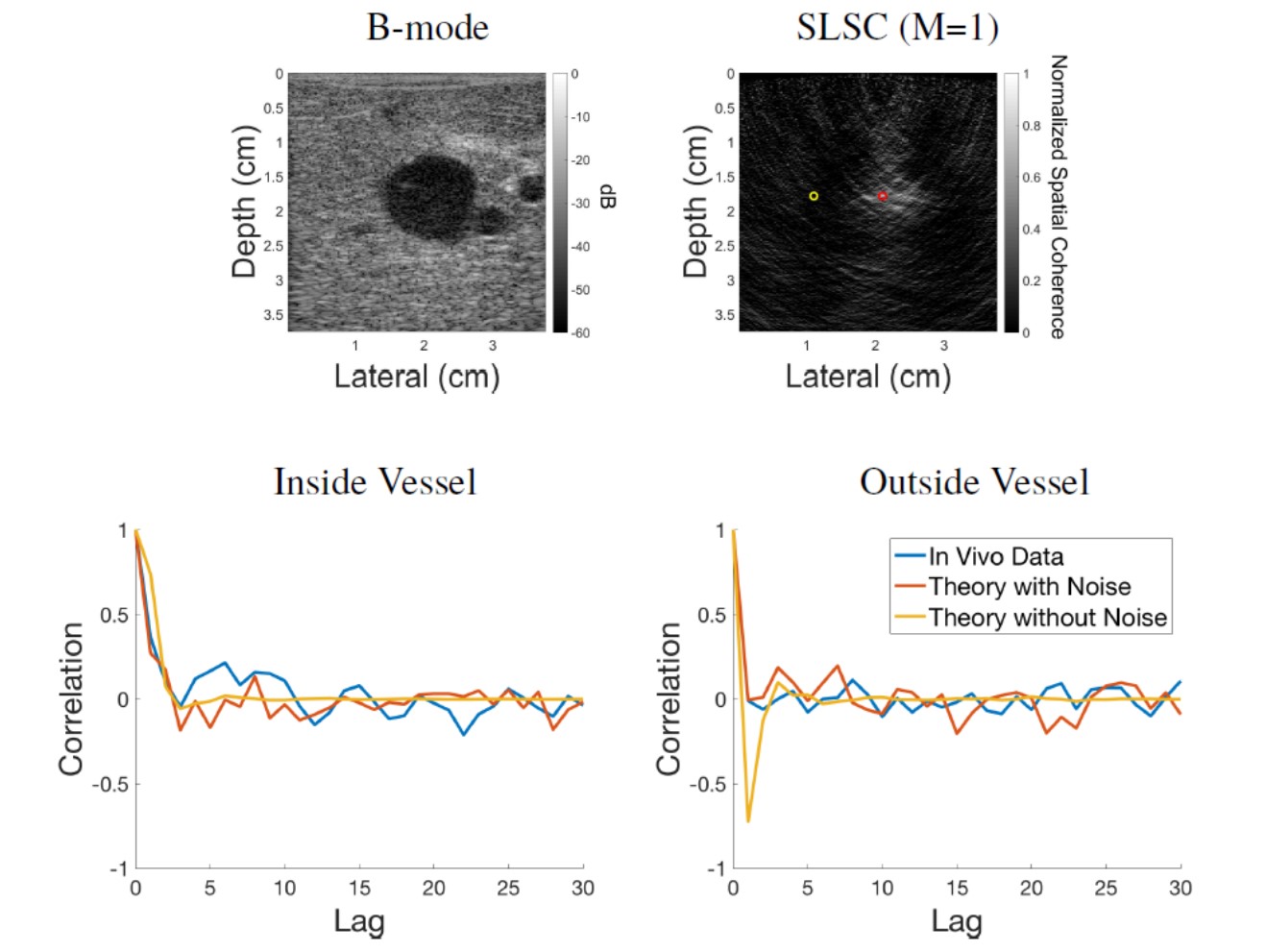 Our journal paper entitled Additive noise models for photoacoustic spatial coherence theory was accepted for publication in Biomedical Optics Express. This paper introduces two noise models for photoacoustic spatial coherence theory that compare favorably with experimental measurements. It will appear in the journal’s feature issue Topics in Biomedical Optics from the OSA Biophotonics Congress 2018.
Citation: B Stephanian, MT Graham, H Hou, MAL Bell, Additive noise models for photoacoustic spatial coherence theory, Biomedical Optics Express, 9(11):5566-5582, 2018 [pdf]
Five PULSE Lab abstracts were accepted to SPIE Photonics West. This conference will take place February 2-7, 2019 at the The Moscone Center in San Francisco, California.
4 February 2019 • 11:30 – 11:50 AM
5 February 2019 • 6:00 – 8:00 PM
5 February 2019 • 6:00 – 8:00 PM
5 February 2019 • 6:00 – 8:00 PM
5 February 2019 • 6:00 – 8:00 PM
This work spans two tracks within the BiOS Conference:
Photonics West BiOS Conference website: https://spie.org/conferences-and-exhibitions/photonics-west/bios
Congratulations to Alycen Wiacek on passing her ECE Department Qualifying Exam!